












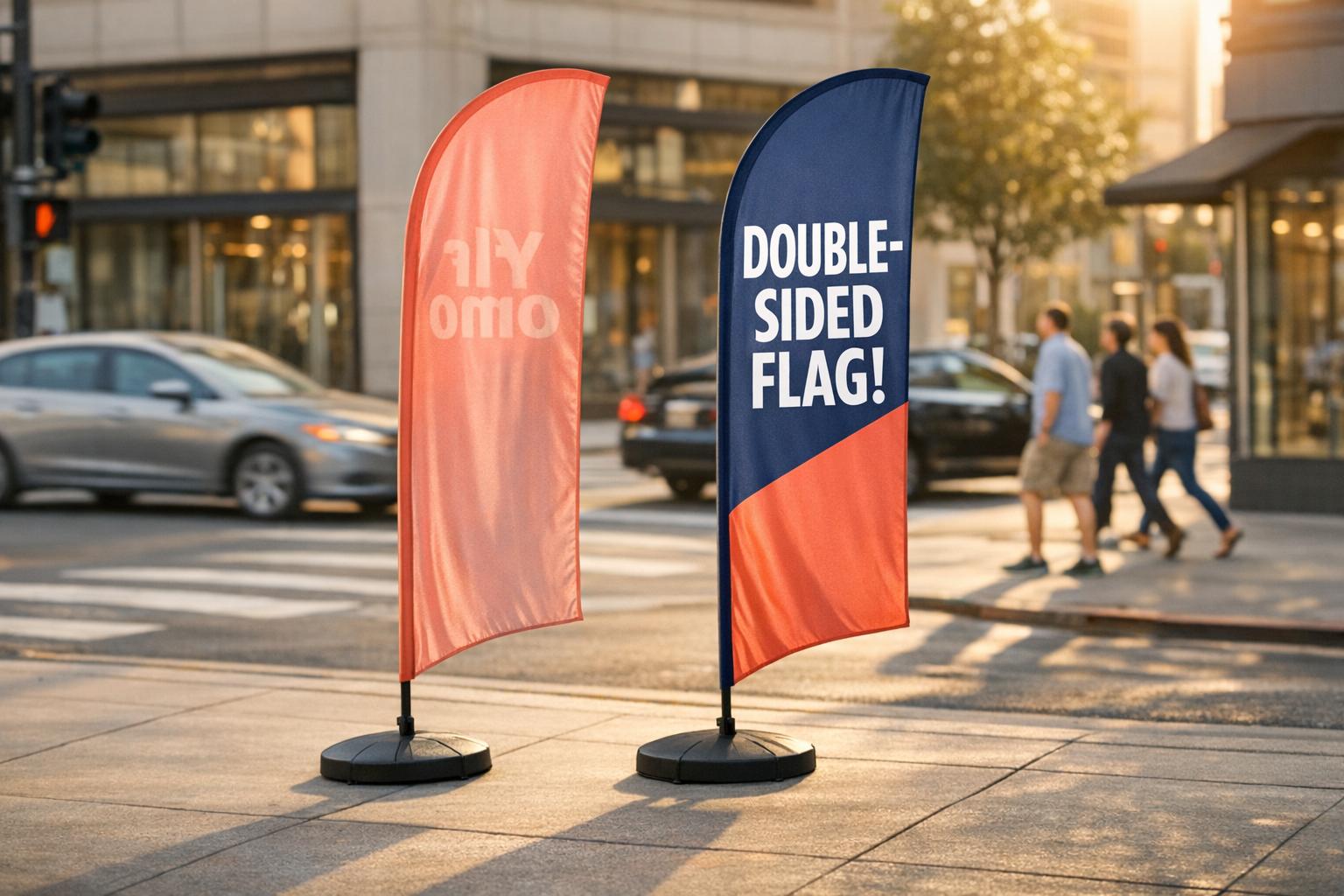
Double-sided feather flags are a smart choice for high-traffic areas if visibility from multiple directions is key to your marketing strategy. These flags ensure clear, vibrant messaging on both sides, making them ideal for intersections, festivals, or open plazas. While they cost more upfront (about $90–$110 compared to $40–$60 for single-sided flags), their durability and ability to display different designs on each side can provide better long-term ROI. Single-sided flags, on the other hand, are more budget-friendly and work well for one-way traffic or short-term campaigns but lack the clarity and reach of double-sided options in busy settings.
Quick Overview:
- Single-Sided Flags: Cheaper ($40–$60), lightweight, visible from one side, best for one-way traffic or short-term use.
- Double-Sided Flags: Higher cost ($90–$110), visible from all angles, durable, and ideal for heavy, multi-directional traffic.
If your goal is maximum visibility and longevity in busy environments, double-sided flags are worth the investment.
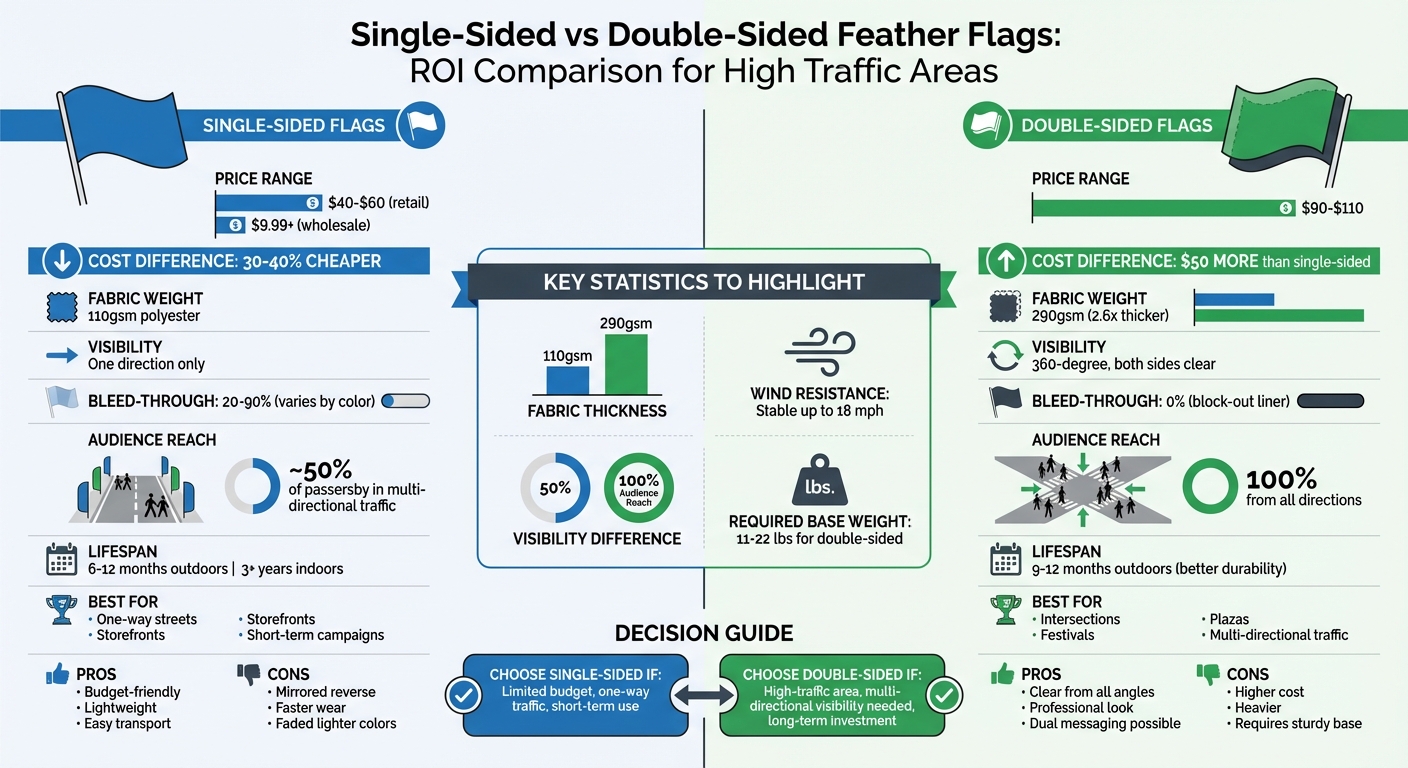
Single-Sided vs Double-Sided Feather Flags: Cost and ROI Comparison
1. Single-Sided Feather Flags
Single-sided flags are crafted from a single layer of 110gsm polyester. Retail prices for these flags generally range between $40 and $60, while wholesale rates can start as low as $9.99. This makes them the most affordable option, costing about 30% to 40% less than their double-sided counterparts.
However, they do come with a drawback: limited visibility. Since the design is printed on only one side, the text and images aren’t clear when viewed from the back. The degree of bleed-through – how much of the design is visible on the reverse side – varies between 20% and 90%, depending on the printer and ink used. Darker colors like red, black, and navy blue tend to show through more prominently, while lighter shades appear faint.
"Single-sided flags work best in all situations but they are best suited for one-way streets and/or when attention can only be seen one way." – Feather Flag Nation
In areas with heavy, multi-directional foot traffic, single-sided flags are less effective, catching the attention of only about 50% of passersby. They perform best in settings where people approach from a single direction, such as storefronts on one-way streets, trade show booths backed by a wall, or roadside advertising targeting drivers moving in one direction.
If you’re calculating ROI, single-sided flags are ideal for short-term campaigns or when you need multiple flags on a small budget. Their outdoor lifespan is typically 6 to 12 months, though they can last over 3 years indoors. While they are less durable than double-sided flags due to their thinner material, their lower cost and lighter weight make them a great choice for temporary promotions. Plus, the lighter fabric flutters more easily in mild winds, which can enhance visibility. Up next, we’ll explore how double-sided flags address these limitations.
sbb-itb-c623e60
2. Double-Sided Feather Flags
Double-sided feather flags are built with a clever three-layer structure: two printed fabric layers stitched together with a block-out liner in between. This design, paired with a 290gsm fabric thickness (compared to 110gsm for single-sided flags), ensures vibrant colors and durability. The block-out liner prevents any text or images from showing through, so your message appears crisp and clear on both sides – no mirroring or fading.
These flags typically cost about $50 more, with prices ranging from $90 to $110. While the upfront cost is higher, the payoff is significant in high-traffic areas. Each side displays fully readable graphics, essentially giving you two billboards in one. This increased visibility is perfect for places like open plazas, festivals, or busy intersections where grabbing attention from multiple angles can directly boost your return on investment (ROI). However, the added benefits also call for a sturdier setup to withstand the extra weight and wind resistance.
"Double-sided flags offer unmatched visibility from all angles. Each side displays a fully readable, high-resolution graphic that ensures your message is never missed – whether it’s viewed from the front, back, or side." – Andrea Gibbs, Creative Growth Lead + Senior Display Consultant, Lush Banners
The extra weight of these flags not only makes them more stable but also gives them a more professional, commanding look. To ensure long-term performance, heavy-duty fiberglass poles and bases weighing 11 to 22 lbs are recommended. This sturdier setup helps the flag endure wind and reduces wear and tear, extending its lifespan and improving your ROI over time.
Another standout feature is the ability to print different messages on each side. This effectively doubles your promotional space without needing additional flags. This flexibility is especially useful in crowded areas where visibility is at a premium. If your location sees traffic from multiple directions or requires visibility from over 25 yards away, double-sided flags ensure your message gets noticed from every angle.
Next, we’ll explore how these benefits contribute to long-term ROI.
Cost and ROI Comparison
Single-sided flags are priced between $40 and $60, while double-sided flags range from $90 to $110, carrying a 30–40% higher price tag.
That higher cost comes with added durability, which improves ROI over time. Double-sided flags use 290gsm fabric, making them 2.6 times thicker than the 110gsm material found in single-sided flags. This thicker fabric reduces wear and tear caused by flapping, extending the flag’s outdoor lifespan. Both flag types typically last 9 to 12 months, but double-sided flags withstand harsher conditions better, meaning you’ll replace them less often. For year-round campaigns in busy areas, this durability directly translates to fewer replacements and lower long-term costs.
In high-traffic locations, the combination of durability and 360-degree visibility makes double-sided flags a standout choice. Visibility and engagement are key drivers of ROI. Double-sided flags display clear graphics on both sides, unlike single-sided flags, which show a mirrored and faded image with 50% to 70% bleed-through on the reverse. Busy intersections or open plazas benefit greatly from the full visibility of double-sided flags. However, for one-way streets or storefronts where only one side is visible, single-sided flags can provide better value.
It’s worth noting that double-sided flags require sturdier bases and premium fiberglass poles to support their added weight, which increases setup costs. On the other hand, single-sided flags pair well with standard hardware, keeping initial costs lower. For short-term campaigns, single-sided flags are often the more economical option. But for long-term installations in high-traffic areas, the durability and visibility of double-sided flags can justify the higher upfront investment.
Performance in High-Traffic Environments
When it comes to wind resistance, double-sided flags shine. Their three-layer design – two printed fabric layers with a block-out liner – adds weight, helping them remain stable even in windy conditions. While standard feather flags perform well in winds up to 18 mph, double-sided flags have reduced fluttering due to their heavier construction, ensuring more consistent visibility. In contrast, single-sided flags flutter more in light breezes, which can lead to faster wear and tear. This added stability makes double-sided flags ideal for maintaining clear messaging in bustling, high-traffic areas.
The block-out layer is another key advantage. It prevents sunlight from bleeding through, keeping the graphics sharp and vibrant even under direct sunlight. Single-sided flags, on the other hand, can appear faded or washed out when backlit. Andrea Gibbs, Creative Growth Lead at Lush Banners, emphasizes:
"The more weight you have on a flag or banner, the more authoritative and eye-catching your design will be."
Readability is crucial in busy environments where you only have a few seconds to grab attention. Double-sided flags ensure clear, correctly oriented text on both sides, making them readable from any direction. Single-sided flags, however, show a mirrored, backward image on the reverse side, with only 50% to 70% color bleed-through. This makes the text illegible for half of your audience. In areas like two-way streets, intersections, or open plazas where people approach from multiple directions, this difference directly impacts how many people can effectively read your message. Clearer messaging from all angles leads to better audience engagement and, ultimately, a higher return on investment (ROI).
For locations that experience constant foot and vehicle traffic from various directions, the combination of stability, opacity, and 360-degree readability makes double-sided flags the smarter choice. These advantages ensure your message remains visible and impactful throughout the day, directly contributing to better ROI in busy, multi-directional settings.
Pros and Cons
When comparing single-sided and double-sided flags, each type has its own strengths and drawbacks, depending on your needs and budget.
Single-sided flags are the most budget-friendly option, making them a great choice if you’re working with limited funds. They’re lightweight, which makes them easy to transport and set up. For simple designs – like a bold logo or a message with fewer than four words – the mirrored reverse side may not diminish their effectiveness.
That said, single-sided flags come with some challenges. The reverse side is mirrored, meaning text becomes unreadable from one direction. They also flutter more in light winds, which can lead to faster wear and tear. Additionally, the see-through nature of the material can make lighter colors look faded or washed out, especially when backlit.
On the other hand, double-sided flags address these issues with better visibility and design options. These flags provide full clarity from every angle, thanks to a block-out liner that eliminates transparency, even in direct sunlight. Their heavier weight reduces excessive flapping, helping them last longer in windy conditions. Plus, you can print different messages on each side – like "Open" on one side and "Sale" on the other – essentially giving you two promotional tools in one.
The downside? Double-sided flags come with a higher upfront cost and are heavier, requiring a sturdy fiberglass pole kit for proper support. Transporting them can also be a bit more cumbersome. However, their professional look and stability make them ideal for high-traffic areas like busy intersections, trade shows, or open spaces where visibility from all directions is key.
Conclusion
Deciding between single-sided and double-sided feather flags depends on factors like traffic flow, viewing distance, and your budget. If your audience approaches from various directions – such as at intersections, parking lots, or trade shows – double-sided flags are worth the extra cost. They ensure your message is visible and legible from every angle.
On the other hand, for locations with one-way traffic or flags placed against storefronts, single-sided flags can save money. But if your message is longer than five words or needs to be seen clearly from over 25 yards, double-sided flags are a better choice for maintaining a professional appearance.
Durability is another important consideration. Double-sided flags, made with 290gsm material compared to 110gsm for single-sided versions, are sturdier in windy conditions and last longer outdoors. Pairing them with strong fiberglass poles and heavy-duty bases helps manage their added weight, ensuring they stay stable and extend their lifespan – offering a better return on investment in the long run.
FAQs
How do I estimate ROI for a feather flag at my location?
To figure out the ROI of a feather flag, you’ll need to weigh the total costs – like purchase price, installation, and upkeep – against the benefits it brings, such as higher foot traffic or boosted sales. For instance, you can estimate the extra revenue the flag generates thanks to its visibility and divide that by the overall expenses. Double-sided flags can be a smart choice in busy areas since they’re easier to see from different directions, which could help attract more customers and improve your results.
What base and pole should I use for a double-sided feather flag?
For double-sided feather flags, opt for a design with two fabric panels stitched together. This ensures visibility from both sides. To keep the flag stable, choose a reliable base: a cross X base works well on hard surfaces, while a ground spike is ideal for outdoor setups.
When is single-sided still the better choice?
Single-sided feather flags are a smart choice when you’re working with a tight budget or need visibility from just one direction – think one-way streets or indoor settings. These flags are more affordable because the design is printed on one side, with a faint reverse image visible on the back. They’re perfect for straightforward messages, particularly when using darker colors that naturally seep through the fabric for better impact.