











Feather flags can last 6 to 12 months outdoors with proper care, but their lifespan depends on factors like material quality, weather exposure, and maintenance. High-quality 4 oz polyester flags with reinforced stitching can endure longer, especially if taken indoors during harsh weather or cleaned regularly. In contrast, cheaper materials may only last 2–3 months. Poles typically last 3 to 10 years, depending on their material.
Key Points:
- Material Matters: 4 oz polyester is more durable than lighter fabrics.
- Weather Impacts: UV rays, high winds, and rain can shorten lifespan.
- Maintenance Helps: Cleaning every 2–3 months and storing during storms extends durability.
- Cost Efficiency: Investing in better materials reduces replacement frequency.
By combining durable materials, smart usage, and regular upkeep, you can maximize the lifespan of your feather flags and protect your investment.
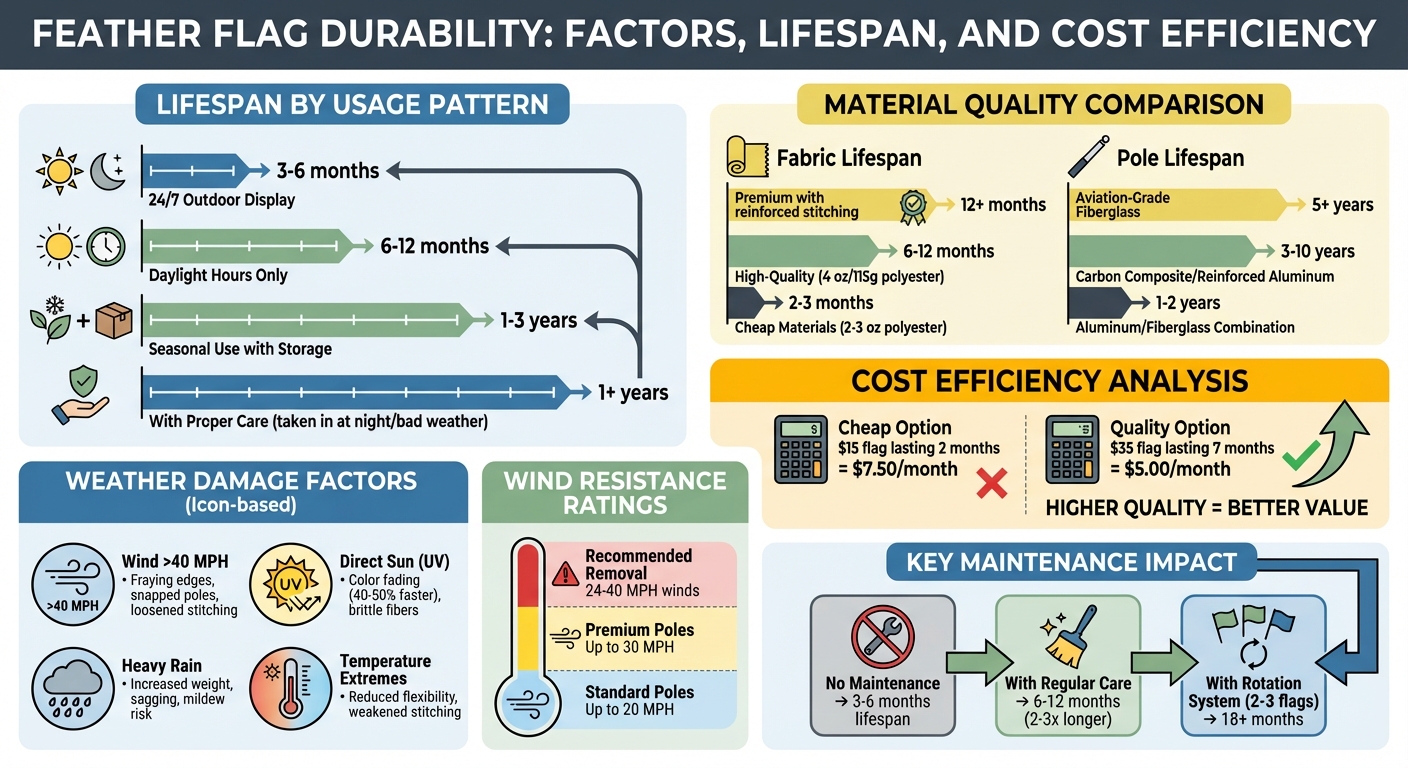
Feather Flag Lifespan Comparison: Usage Patterns, Materials & Weather Impact
How Long Feather Flags Last Outdoors
Feather flags are made up of custom printed feather flags and sturdy hardware. While the fabric will need periodic replacement, the poles and bases are designed to last much longer.
Fabric banners typically last between 6 months and 3 years, depending on how they’re used. If left on display continuously, the fabric may only last 3–6 months. Using the flag only during daylight hours can extend its life to 6–12 months, and seasonal use with proper storage can stretch its lifespan to 1–3 years or more.
"A flag that is taken in at night and during bad weather should last for at least a year, and could last a lot longer, whilst a flag that is left out permanently cannot be expected to last for more than 6 months at best." – Signwaves
While the fabric needs regular replacement, the hardware is much longer-lasting. High-quality poles can endure for years. Poles made from carbon composite or reinforced aluminum can last 3 to 10 years with proper maintenance. Aviation-grade fiberglass poles often last over 5 years, while aluminum/fiberglass combinations typically last 1–2 years. Most manufacturers offer warranties on hardware, usually ranging from 1 to 3 years.
Durability also ties into cost-effectiveness. For example, a $15 flag that lasts 2 months costs $7.50 per month, while a $35 flag lasting 7 months costs $5.00 per month. Investing in higher-quality materials and taking proper care of your flags not only extends their life but also helps you get the most out of your marketing budget.
sbb-itb-c623e60
Materials That Determine Feather Flag Durability
The lifespan of your feather flag depends heavily on the materials used. Three main factors come into play: the fabric, the stitching, and the printing method. Here’s a closer look at each.
Fabric weight plays a critical role. High-quality feather flags are made from 115g (4 oz) knitted polyester, known for its strength and resistance to wear. In contrast, lighter fabrics, like 2 oz or 3 oz polyester, tend to degrade faster. The 115g polyester can endure over 2,000 hours of direct sunlight, meeting ASTM G155 standards. For areas prone to strong winds or near the coast, mesh polyester – designed with about 30% open space – lets wind pass through, cutting wind resistance by 50% and reducing the strain that can tear solid fabrics.
Well-constructed stitching prevents premature damage. Double-stitched hems and reinforced pole sleeves are crucial for longevity. The fly end (the part of the flag farthest from the pole) faces the most stress from constant movement, making it prone to fraying and tearing if not properly reinforced. Elastic, reinforced sleeves also protect against abrasion caused by the pole. These design features work hand-in-hand with durable fabrics to extend the many uses of custom flags.
"The fly end always fails first because it experiences the most movement and stress. Proper hemming and reinforcement at the fly end significantly extends flag life." – Bannerfi
Dye-sublimation printing ensures vibrant, long-lasting colors. This process embeds the dye directly into the polyester at 200°C, making the colors resistant to cracking, peeling, or flaking. It also provides a colorfastness rating of 4-5 according to ISO 105-B02 standards. Single-sided flags benefit from 80-90% show-through on the reverse side, maintaining visibility from both directions. Additionally, many quality flags include a DWR (Durable Water Repellent) coating, which allows water to bead up and ensures the flag dries within 30-60 minutes after rainfall.
Weather Conditions That Affect Flag Lifespan
Weather plays a major role in determining how long your feather flags last. Knowing how different weather conditions affect your flags can help you take better care of them and plan for replacements when needed. Each element – whether it’s wind, rain, sun, or extreme temperatures – causes specific types of wear and tear that weaken the fabric and structure over time. Combined with your material choice and maintenance habits, these factors shape how well your flag performs outdoors.
High winds over 40 MPH can cause severe damage. Strong winds put immense pressure on seams, grommets, and fabric edges, often leading to fraying and loose stitching. Most standard flagpoles are designed to handle wind speeds of only 20–30 MPH. When winds exceed these limits, poles may bend or even snap. The fly end of the flag – where the fabric is most exposed – takes the brunt of the stress. Teardrop-shaped flags are especially vulnerable because their tight, curved design catches more wind than standard feather flags.
"Wind is the #1 cause of flag damage. Every gust stresses the fabric, seams, and stitching – especially along the fly end." – Tidmore Flags
Heavy rain weighs down the fabric and causes moisture-related issues. When polyester flags get soaked, they become heavier, which adds extra strain to the seams and pole system. If the wind picks up while the flag is wet, the added weight can amplify the stress on the structure. Storing a damp flag is also a bad idea – it can lead to mildew growth and weaken the fibers over time.
Direct sunlight leads to fading and fiber breakdown. UV rays are tough on synthetic materials like polyester. Colors, especially reds and blues, fade quickly under constant sun exposure. A flag left outside all day, every day, may only last about six months. However, bringing it in at night can extend its lifespan to a year or more. The daily cycle of heating during the day and cooling at night also causes the fibers to expand and contract, speeding up wear and tear.
Extreme temperatures take a toll on the fabric. Freezing temperatures can make polyester brittle, while ice buildup adds stress to the material. On the other hand, large temperature swings throughout the day weaken stitching and reduce the fabric’s ability to endure regular wind movement.
| Weather Factor | Primary Damage Type |
|---|---|
| Wind >40 MPH | Fraying edges, snapped poles, loosened stitching, pulled grommets |
| Heavy Rain | Increased fabric weight, sagging, mildew risk |
| Direct Sun (UV) | Color fading, brittle fibers, thinning material |
| Temperature Extremes | Reduced flexibility, weakened stitching, fabric cracking |
Maintenance Tips to Make Feather Flags Last Longer
Taking care of your feather flags can go a long way in keeping them looking vibrant and intact. Regular maintenance helps combat wear and tear from weather and daily use, ensuring your flags last as long as possible.
Start by inspecting your flags monthly for signs of damage. Pay close attention to the fly end – the part farthest from the pole – as it’s most exposed to wind and prone to fraying, loose stitching, or small tears. If you notice frayed edges, trim and re-hem them promptly using a sewing machine and nylon thread. Addressing these issues early can prevent them from becoming bigger, more expensive problems.
Cleaning your flags every 2–3 months is another key to longevity. Use lukewarm water and mild soap, and hand wash with a soft microfiber cloth or sponge to gently remove dirt. Avoid harsh chemicals like bleach or abrasive tools, which can damage the fabric and graphics. For small stains, spot cleaning with lukewarm water and a soft cloth should do the trick. Always air dry your flags – machine drying can lead to shrinkage or damage. Moisture left behind can cause mold and mildew, weakening the material over time.
"All of our banners and flags need to be hung and air dried in order to preserve their bright coloration and easily discernible graphic art." – Andrea Gibbs, Creative Growth Lead + Senior Display Consultant, Lush Banners
When not in use, store your flags properly to keep them in good condition. Ensure they’re completely dry before folding or rolling them, and store them in a cool, dry, and dust-free place away from direct sunlight. UV exposure can fade colors, even during storage. A protective carrying bag can help shield your flags from dust and accidental damage. For vinyl flags, roll them with the printed side facing inward to avoid permanent creases. Don’t forget to clean your flagpoles monthly – rust or corrosion from the pole can transfer to the fabric, causing stains or tears.
For larger displays, consider rotating your flags to give the fabric time to "rest." This recovery period helps preserve the fibers and can significantly extend the flag’s lifespan. Additionally, check your mounting hardware regularly, replacing worn zip ties or tension cords before they fail. These small maintenance steps not only keep your flags looking great but also prepare you to protect them during severe weather conditions. By following these tips, you’ll ensure your feather flags remain a striking and durable display for years to come.
Protecting Feather Flags During Severe Weather
Severe weather is one of the biggest dangers to feather flags, but taking the right precautions can help you avoid expensive damage. The first step? Take down your flags when wind speeds exceed safe levels. Standard poles are generally rated for winds up to 20 mph, while premium poles can handle up to 30 mph. Many manufacturers suggest removing flags once winds reach speeds of 24–40 mph, depending on the quality of your hardware.
In addition to routine maintenance, severe weather calls for extra measures. Always bring flags indoors during extreme conditions like heavy rain, thunderstorms, snowstorms, hurricanes, or freezing temperatures. These conditions can add water weight, make the material brittle, or strain the structure. If you bring your flags inside nightly, you could extend their lifespan from six months to over a year.
For situations where flags need to stay up in moderate winds, weighted bases are essential. A standard 34-lb water base works for most setups, but larger 14ft to 17ft flags require at least 44 lbs for stability. Look for bases with a 360° rotating spindle to reduce stress on the flag system, and consider adding a weighted "donut" for extra support.
Another way to protect your flags is by applying UV-protective sprays. Silicone-based waterproofing agents work well. Apply multiple thin coats to guard against sun and weather damage, and reapply after washing or heavy use. Just make sure the flag is clean and dry before spraying for the best results.
Selecting Durable Feather Flags That Last
When it comes to feather flags, their lifespan heavily depends on the quality of the materials and construction. Professional-grade flags are typically made with 4 oz (110–115gsm) polyester, a fabric that strikes a good balance between durability and print clarity. Cheaper, thinner options may seem appealing but are more prone to wear and tear.
"We typically recommend 115gsm polyester as the standard material for advertising flags due to its balance of durability and print quality." – Craig Noteboom, Founding Member of Banner World
Always check the fabric weight – anything under 4 oz is likely to wear out faster. Along with high-quality materials, attention to construction details is key to extending the flag’s life.
Look for reinforced stitching, especially at stress points, such as around the pole pocket. Many premium flags also include reinforced corners where the pole is inserted, which helps them withstand outdoor conditions better. Without these reinforcements, flags are more likely to tear in harsh weather.
Printing methods also play a role. Dye-sublimated graphics are particularly durable, retaining vibrant colors for 6–12 months even with outdoor exposure.
For the poles, carbon composite options with a 360° rotating spindle are a smart choice. These poles flex with the wind, reducing strain on the flag and increasing its longevity. High-end poles are often rated to handle winds up to 30 mph, while standard models are usually limited to around 20 mph.
If you’re considering double-sided flags, they do cost 40–60% more, but they come with a triple-layer design, including a blackout mesh liner. This design not only improves visibility on both sides but also enhances resistance to wind damage. For those prioritizing durability and willing to invest more, double-sided flags are an excellent option.
Conclusion
The lifespan of feather flags depends on three main factors: material quality, weather exposure, and maintenance. Flags made from durable 4 oz (110–115gsm) polyester with reinforced stitching typically last 6–12 months outdoors. In contrast, cheaper materials may only endure 2–3 months, making higher-quality options a better long-term investment.
Weather plays a big role in how long your flags last. Flags left outside 24/7 wear out 2–3 times faster than those taken indoors at night. In areas with intense UV exposure, like Florida or the Southwest, their lifespan can drop by 40–50% compared to regions with milder conditions.
"Maintaining your feather flags not only extends their lifespan but also protects your investment. Neglect can lead to premature wear and tear, fading, and damage, resulting in additional costs." – Andrea Gibbs, Creative Growth Lead + Senior Display Consultant, Lush Banners
To get the most out of your flags, combine smart material choices with regular upkeep. Cleaning them periodically, storing them during extreme weather, and rotating between 2–3 flags can help distribute UV exposure and wind stress. This rotation system can stretch a flag’s life from 6 months to over 18 months.
Worn-out flags – whether faded or frayed – diminish your brand’s visibility and professionalism. By investing in quality materials and practicing consistent care, you ensure your outdoor advertising stays impactful and polished.
FAQs
Is it worth buying a double-sided feather flag for outdoors?
Double-sided feather flags are a smart choice for outdoor use. They’re built to last, offer visibility from both sides, and work well in settings with larger crowds. While the price might be a bit higher, the added durability and dual-sided design make them a solid option for outdoor displays.
What base weight do I need for my flag height?
For a 12-foot feather flag, a base weight of about 2 pounds is generally enough to keep it stable outdoors. That said, the actual weight needed can depend on factors like wind conditions and the type of base you’re using. Be sure to account for local weather and surroundings to ensure the flag stays securely in place.
How do I stop mildew after rain?
To keep mildew at bay after rain, focus on maintaining good airflow and reducing moisture. Clear away debris that traps dampness, and regularly clean surfaces with lukewarm water and a soft cloth. Trim back trees and shrubs to improve ventilation and be cautious not to overwater plants. After rain, make sure outdoor items are thoroughly dried and stored properly to minimize damp conditions. Staying on top of these tasks can help stop mildew from developing or spreading.