








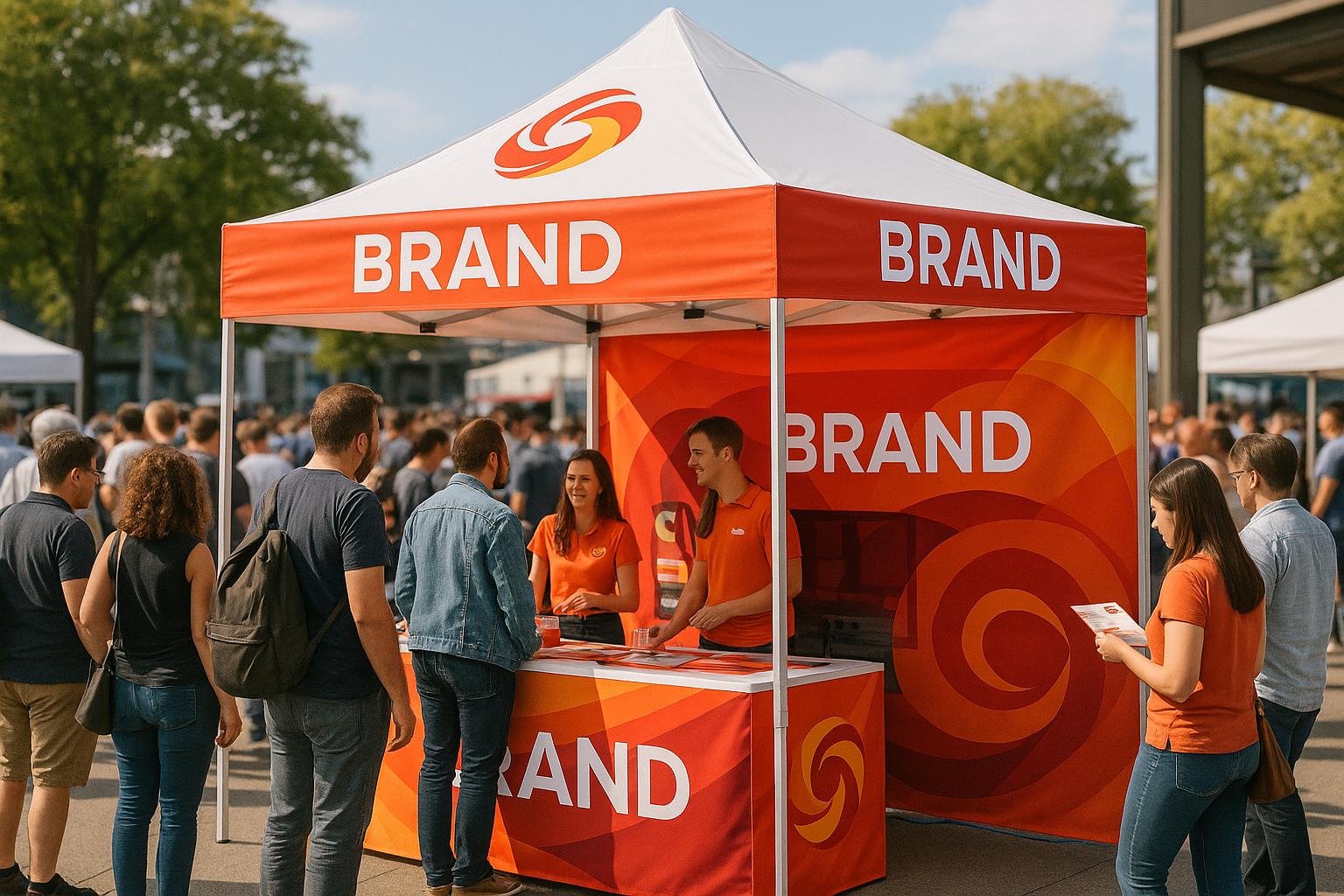
Want to stand out at events? A custom tent is your secret weapon. Here’s how to create one that grabs attention, boosts your visibility, and drives more visitors to your booth:
- Choose Bold Colors: Use high-contrast color combinations like yellow and black or blue and white to instantly catch the eye.
- Strategic Branding: Place your logo on the roof for distance visibility and key info like your website or tagline on the valances for easy reading up close.
- Engage with Features: Add lighting (like LED uplights) and interactive elements (like touchscreens or games) to make your booth memorable.
- Durable Materials: Opt for aluminum frames (lightweight and rust-resistant) and weatherproof fabrics like polyester with UV and water protection.
- Partner with Experts: Use digital mockups to perfect your design and work with experienced vendors for professional production.
Quick Tip: A well-designed tent not only attracts attention but can also boost sales – 96% of event-goers are more likely to purchase from branded setups.
Follow these steps to create a tent that stands out, performs well, and lasts for years.
1. Pick the Right Colors to Stand Out
Color has an incredible ability to influence emotions and behaviors almost instantly.
"Color plays a powerful role in human perception. It influences emotion, triggers memory, and sways decision-making often before a single word is spoken or read."
The colors you choose for your booth can mean the difference between blending into the crowd and drawing a steady flow of visitors.
How Colors Affect Customer Behavior
Every color sends its own message, and businesses that understand this can use it to their advantage. For example, warm tones like red and orange create a sense of energy and urgency.
Big brands have mastered the art of color psychology. Coca-Cola‘s bold red reflects energy, excitement, and passion, while Facebook’s blue conveys trust, reliability, and connection. Even subtle color choices can make an impact – research from the found that people wearing red were perceived as 30% more attractive.
Different industries also lean toward specific color palettes. Finance and law firms often stick to conservative tones like navy, charcoal, or deep green to build trust, while creative industries experiment with vibrant and playful combinations. In one case study, a carefully selected color scheme boosted visitor engagement by 30%.
With these insights in mind, you can use contrasting colors to make your booth stand out even more.
Use Contrasting Colors for Better Visibility
In a busy event space, contrast is your best friend. High-contrast designs grab attention quickly and effectively. For instance, bright yellow is hard to miss in any setting.
However, it’s important to consider how lighting conditions at the event might affect your colors. A design that looks perfect under indoor lighting could appear washed out in bright outdoor settings.
Here are some tried-and-true high-contrast color combinations that work well for custom tents:
- Black and white offers a classic and sophisticated appearance
- Red and white delivers a bold, energetic vibe
- Blue and white is a go-to for corporate events and trade shows
- Gold and black radiates luxury and exclusivity
- Green and white suggests freshness and eco-consciousness
- Yellow and black is highly visible and attention-grabbing
- Orange and gray creates a modern, energetic feel
You can also use contrasting colors to highlight important details like your company name, special offers, or booth number. Web navigation expert Jennifer Fleming emphasizes:
"Color and contrast show relationships between items, establish the importance, and most importantly draw attention."
Before finalizing your design, test your color choices in lighting conditions similar to those at the event. This ensures your booth looks just as eye-catching in real life as it does on paper. A thoughtful use of color can help your tent stand out and draw more visitors your way.
2. Place Your Branding and Messages Correctly
The way you position your branding can make the difference between a booth that stands out and one that blends into the background. It’s all about understanding how people navigate event spaces and where their attention naturally lands as they approach your tent.
Best Spots for Your Logo and Messages
After choosing attention-grabbing colors, the next step is to strategically position your branding for maximum impact.
Your tent provides several prime locations for showcasing your logo and messages. The roof is perfect for displaying your main logo – it grabs attention from a distance, helping visitors locate your booth quickly. However, for those standing nearby, branding at eye level on the tent walls is crucial for recognition and engagement.
Valances – the fabric strips just above eye level – are ideal for concise details like your company name, tagline, website, or social media links. To make the most of your tent’s branding potential, consider this layout:
- Peak/Roof: Highlight your main logo, brand name, or a bold product image to attract attention from afar.
- Valances: Use this space for quick, eye-level information like your website, phone number, or tagline.
- Walls: Leverage the larger surface area for product visuals, detailed messaging, or imagery that tells your brand’s story.
Make sure all sides of your tent contribute to your overall message. For example, you could display your website on one set of valances and your phone number on the opposite side, ensuring key details are visible no matter where visitors approach.
Balance Text and Images for Easy Reading
How you arrange text and images can make or break your design. To create a clear focal point, decide whether the text or image will take center stage. Images are great for setting the tone and adding context, but they should always support – not overshadow – your core message.
Reserve dedicated spaces for text to ensure readability. This might mean selecting images with natural blank areas for text overlays, editing photos to create space, or using contrasting colors to make text stand out.
"Keep messaging minimal but powerful. Your logo, brand colors, and a short tagline are often all you need to catch a passerby’s eye."
Avoid the temptation to cram every surface with information. A cluttered design can overwhelm visitors, making it harder for them to understand your message. Instead, focus on the essentials that clearly communicate what your brand offers.
When designing each panel of your tent, pay attention to visual weight and spacing. The design should look good both up close and from several feet away. Use consistent fonts, colors, and imagery throughout your tent to reinforce your brand identity and create a cohesive look across all event materials.
3. Add Features That Grab Attention
To truly stand out, incorporate lighting and interactive elements into your tent setup. These additions can transform your space from a simple booth into a lively, attention-grabbing centerpiece. Below are practical ways to use lighting and interactive features to draw in visitors and keep them engaged.
Use Lighting to Make Your Tent More Visible
Lighting isn’t just about visibility – it sets the tone and directs attention to key areas. The right lighting can enhance your tent’s appeal without overshadowing your message.
LED lights are a smart choice because they’re energy-efficient and emit minimal heat, making them perfect for long events where comfort and power usage are concerns.
Strategically place uplights to emphasize important features of your tent, while back-lighting can highlight your graphics or logo. For specific areas, like product displays, use task lighting to ensure they stand out.
Here’s how different lighting types can influence the mood of your tent:
| Type | Effect |
|---|---|
| Soft White | Creates a warm, welcoming vibe |
| Colored LEDs | Adds energy and vibrancy |
| String Lights | Offers a casual, festive touch |
If you want to add flair, color-changing lights can be a great option – but use them sparingly. Reserve these for focal points like reception desks or seating areas to avoid overwhelming your visitors with too much movement or color variation.
Before your event, double-check that all outlets are safely positioned and that lighting installations are secure, especially in high-traffic areas. Dimmers can be a helpful addition, allowing you to adjust brightness throughout the day as natural light changes.
Add Interactive Features to Engage Visitors
While lighting draws people in, interactive elements keep them engaged. These features can turn your tent into an experience visitors will remember long after the event is over. The key is to create meaningful interactions that connect attendees with your brand while also capturing valuable information.
Touchscreens are incredibly versatile. They let visitors explore product catalogs, take virtual tours, or dive into detailed information at their own pace. This is particularly useful for showcasing complex products or services.
Gamification is another effective way to engage passersby. Simple games, quizzes, or challenges displayed on digital screens can spark curiosity and encourage participation – all while reinforcing your brand’s message. Just make sure these activities are brief and directly tied to what your business offers.
Social media walls displaying live event hashtags can inspire visitors to share their experience online, amplifying your booth’s visibility beyond the event itself.
Interactive kiosks are another great tool. They not only engage visitors but also help you gather contact information through contest entries, feedback surveys, or personalized content requests.
For a more immersive experience, consider using Virtual Reality (VR) or Augmented Reality (AR). These technologies are perfect for showcasing products that are too large to bring to the event or for providing an interactive look at your services.
The trick is to ensure all these features work together seamlessly. Your lighting should enhance – not compete with – your interactive elements. Test your technology thoroughly before the event and have contingency plans ready to handle any technical hiccups. This way, you can focus on creating a smooth, memorable experience for your visitors.
sbb-itb-c623e60
4. Choose Durable and Functional Materials
When it comes to your event booth, looks aren’t everything. The materials you choose for your tent play a huge role in how well it performs and how long it lasts. Your tent needs to handle multiple events and unpredictable weather while maintaining a polished, professional appearance.
Compare Different Tent Fabric Options
The fabric of your tent is a key factor in its durability and functionality. Polyester is a solid option for most events because it resists stretching in gusty winds and holds up better under sunlight compared to nylon. For outdoor events where the weather can be a wild card, 16 oz. PVC vinyl stands out as a strong choice, offering excellent protection against rain, wind, and UV rays.
Our fabrics boast a 600 denier rating, which means they’re tough against tears and built to last. When choosing fabric, focus on features like UV resistance to prevent fading and cracking, waterproof coatings to keep your booth dry during sudden rain, and flame retardancy to meet safety standards. Laminated vinyl is another option worth considering – it’s budget-friendly and delivers strong UV protection, abrasion resistance, and vibrant graphics. For outdoor festivals and parties, high-quality polyester with a PVC coating is a reliable pick. On the other hand, reinforced vinyl is better suited for harsher environments, like coastal areas with salty air and strong winds.
Once you’ve settled on the right fabric, it’s time to think about the frame that will hold it all together.
Pick Frames for Stability and Long-Term Use
Your tent frame is the backbone of your setup, determining how stable, portable, and durable it will be. Aluminum frames are often the go-to choice for frequent setups because they’re lightweight – about a third the weight of steel – and highly resistant to rust. For added stability, aluminum pop-up tent legs are typically thicker, measuring 2 inches in diameter compared to steel’s 1-inch diameter.
While aluminum frames may cost more upfront, they pay off in the long run with better durability and performance. They can handle strong winds and repeated setups without bending or breaking. Anodized aluminum takes it a step further, offering a hardened surface that ensures the frame stays intact over time.
| Feature | Steel Frame | Aluminum Frame |
|---|---|---|
| Weight | Heavy | Lightweight and easy to set up |
| Durability | Prone to rust over time | Rust-resistant and long-lasting |
| Weather Resistance | Can corrode in wet conditions | Performs well in all weather |
| Portability | Hard to move and set up | Easy to transport and assemble |
| Cost | Lower upfront, higher upkeep | Higher upfront, better value long-term |
Steel frames might work for permanent setups or tight budgets, but for businesses attending multiple events, aluminum’s portability and low-maintenance nature make it a smarter choice. Look for frames with quick-lock push buttons and telescopic legs for faster, more secure setups. Reinforced crossbars are another feature to prioritize, as they add much-needed stability in windy conditions – especially important if your tent houses expensive gear or serves as your main customer interaction space.
No matter which frame material you choose, proper anchoring is non-negotiable. Outdoor events can bring sudden wind gusts, and a securely anchored frame ensures your tent – and everything inside it – stays safe. Investing in the right anchoring system prepares your booth for any event, rain or shine.
5. Turn Your Custom Tent Design Into Reality
With your design polished and materials selected, it’s time to bring your custom tent to life. This step involves thoughtful planning and partnering with the right professionals to ensure your vision becomes a show-stopping display.
Use Digital Mockups to Perfect Your Design
Digital mockups are a powerful tool for visualizing how your tent will look once completed. They allow you to experiment with different design elements, catch potential issues, and make adjustments – all without the cost of creating physical prototypes.
Using professional design software like Adobe Illustrator or Photoshop, you can create high-resolution mockups at 10% scale. To ensure crisp results, convert fonts to outlines and maintain consistent text formatting throughout production.For a more streamlined process, consider mockup tools with smart object layers. These let you easily swap graphics and tweak colors in seconds.
Mockups also give you a clear sense of how your design interacts with the tent’s structure. You can see how graphics flow over corners, where seams might disrupt visuals, and how everything fits together dimensionally.
Once you’ve finalized the digital design, the next step is finding a vendor capable of turning it into a reality.
Partner With the Right Vendor
The vendor you choose can make or break your custom tent project. Look for companies with extensive experience in custom tents – they’ll better understand your needs, handle logistics smoothly, and meet safety standards. Ask about their client experience and industries they’ve worked with to confirm they’re equipped to handle your specific requirements.
Material quality is a key topic to discuss. Vendors should offer durable materials like vinyl, PVC, or polyester, which are built to endure outdoor conditions. Make sure their tents also include safety features like fire-resistant fabrics and sturdy anchoring systems. Don’t forget to ask about weather resistance – your tent should stand up to wind, rain, and UV exposure.
"Experienced vendors build trust through consistent service and proven results."
Transparency is essential when it comes to costs. Confirm all fees, including those for design revisions and shipping. For example, logo recreation services often cost around $80 per hour, while simpler additions like iron-on decals range from $25 to $40.
Strong customer service and warranty policies are also signs of a reliable vendor. Companies that back their products with solid warranties and responsive support are more likely to deliver quality. Ask about maintenance tips, too – proper care can significantly extend your tent’s lifespan.
"Expert guidance offers insights that save you time, money, and unnecessary stress." –
Before production begins, carefully review the manufacturer’s plans and double-check all measurements. A trustworthy vendor will walk you through technical specs and help spot potential issues early on. Discuss the production method as well: dye-sublimation printing is ideal for pop-up tents, while vinyl canopies typically use latex printing. The right printing technique ensures your tent looks professional and meets your needs.
Finally, seek vendors who offer more than just tent production. Those who understand marketing strategy and provide quality accessories can elevate your tent’s visual appeal and help drive more attention to your booth. This collaborative effort ensures your tent not only looks great but also delivers the impact you envisioned.
Conclusion: Key Points for Designing a Crowd-Drawing Tent
Designing a custom tent that grabs attention starts with thoughtful planning and attention to detail. Bold colors serve as the first step in drawing visitors in, creating a visual magnet that sets the tone for the entire design.
Strategic branding is what transforms a good-looking tent into a high-performing marketing asset. Placing your logo and key messages where they’ll have the most impact is essential. Trade shows, for example, can account for up to 33% of a company’s annual new business, so every design choice should be made with ROI in mind.
Adding interactive features is another way to turn casual passersby into engaged participants. Studies show that interactive experiences can increase engagement by 94%, and 90% of marketers agree that in-person events are the most effective way to build customer relationships. Features like creative lighting, hands-on demonstrations, or games can create memorable interactions that leave a lasting impression.
"In the world of trade shows today, catching people’s attention is no feat. Using gamification presents an opportunity to stand out and attract visitors to your booth." –
The materials you choose also play a critical role in your tent’s performance. High-quality components, such as aluminum frames paired with durable polyester or vinyl canopies, can last 10–15 years. This durability is a worthwhile investment, especially when you consider that over 40% of marketers believe events outperform digital marketing as a channel. Partnering with experienced vendors ensures your vision is executed with precision, backed by transparent pricing and reliable support.
Ultimately, your custom tent is far more than just a shelter – it’s a dynamic marketing tool. By blending striking visuals, interactive elements, and durable materials, you can create a tent that not only draws crowds but also drives meaningful results for your business. Balancing aesthetics, functionality, and budget ensures that your tent becomes a true crowd magnet, helping you achieve your event goals.
FAQs
How can I make sure my custom tent’s colors stay vibrant and stand out in any lighting?
To ensure your custom tent remains eye-catching and vibrant in any lighting, start with UV-resistant fabrics. These materials help prevent fading caused by sun exposure, keeping your colors bold and lively. Opt for bright, reflective shades that hold their appeal, whether in low light or under harsh sunlight. For evening or indoor events, adding well-placed lighting can enhance your tent’s design and make your branding pop.
Don’t forget regular cleaning and upkeep – these simple steps go a long way in maintaining your tent’s color and overall appeal. With proper care, your tent will consistently turn heads and attract attention, regardless of the environment.
What should I consider when deciding between aluminum and steel frames for my custom tent?
When deciding between aluminum and steel frames for your custom tent, it’s important to weigh a few key considerations:
- Weight: Aluminum is significantly lighter than steel, making it a breeze to transport and set up. If your tent will be used for frequent events or needs to be highly portable, aluminum is a practical choice.
- Durability: Steel frames offer greater sturdiness and are ideal for larger tents or situations involving tough weather conditions. The trade-off? They’re heavier and might require more effort to manage.
- Corrosion Resistance: Aluminum naturally resists rust, meaning less upkeep in the long run. Steel, however, may require protective coatings to guard against corrosion over time.
- Usage: For quick setups or tents that will be used often, aluminum is a convenient option. On the other hand, if you’re planning a long-term, stationary installation, the strength of steel could be the better pick.
By considering these factors, you can choose the frame material that aligns with your event needs and logistical priorities.
How can interactive features like touchscreens and games make my booth more engaging?
Adding interactive elements like touchscreens and gamified activities can turn your booth into a lively and engaging destination. Touchscreens give visitors the chance to explore your products or services at their own pace, offering a hands-on experience that makes your brand more relatable and easier to understand. This kind of personal interaction often leaves a lasting impression, sparking curiosity and encouraging deeper connections.
On the other hand, gamification – think quizzes, challenges, or games with prizes – adds an element of fun that draws people in and keeps them around longer. Not only do these activities grab attention, but they also create memorable experiences that stick in attendees’ minds, helping your brand stand out. By weaving these interactive features into your booth, you can attract more visitors and leave them with a positive, lasting impression.