








Choosing the right tent size is crucial for showcasing your products, creating a pleasant shopping experience, and ensuring your brand stands out. Here’s a quick rundown:
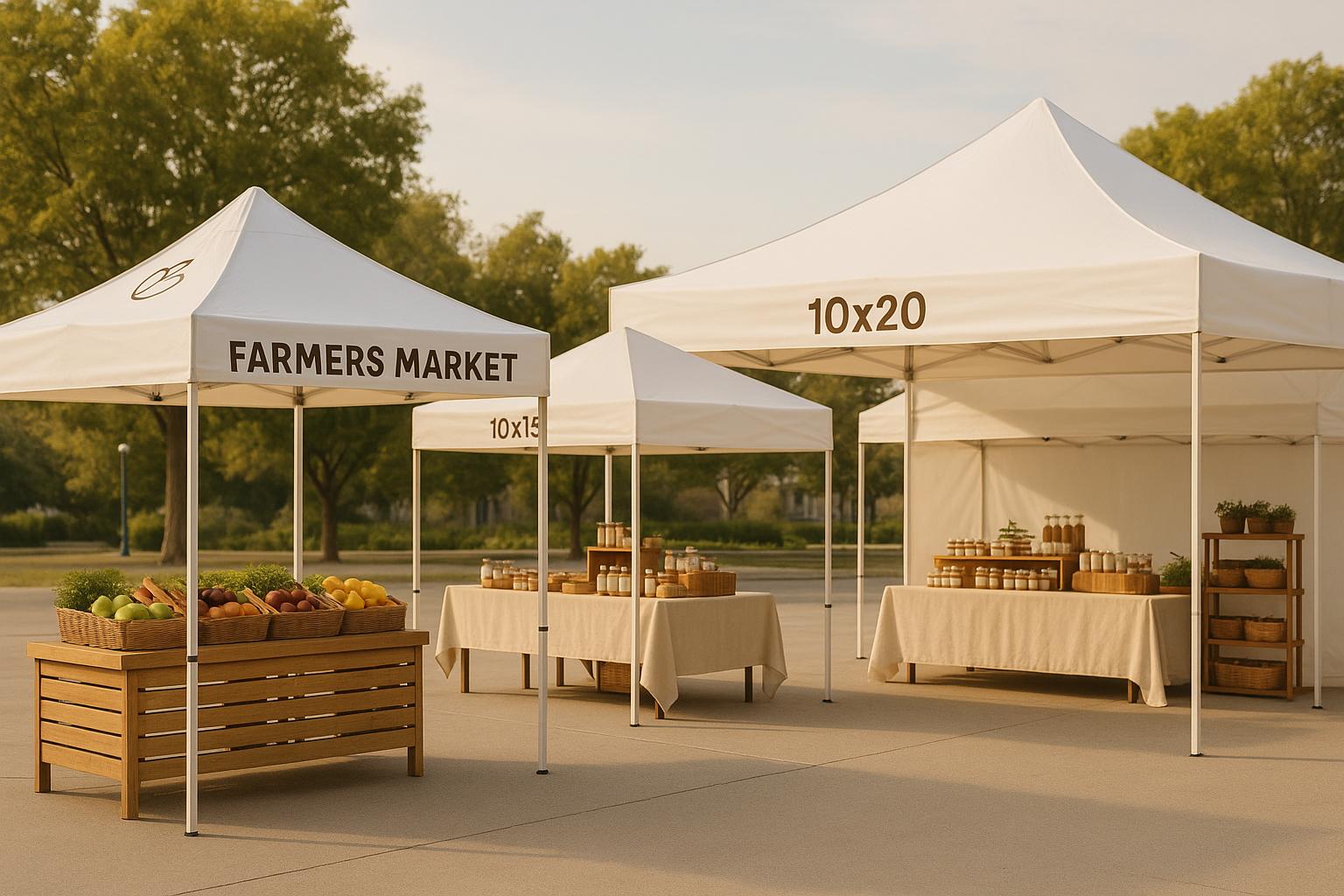
- 10×10 ft: The most popular size for farmers markets and trade shows. Fits standard booth spaces, offers enough room for displays, and is easy to set up.
- 10×15 ft or 10×20 ft: Ideal for larger product displays or pop-up shops, providing more space for customer flow and branding opportunities.
- 20×20 ft: Great for large-scale events or creating a spacious, immersive shopping environment.
Key factors to consider:
- Event space and booth size restrictions
- Product volume and display needs
- Expected foot traffic and customer comfort
- Budget, setup logistics, and transportation
For branding, custom-printed tents help you stand out. Options like logos, colors, and graphics can turn your tent into a marketing tool. Whether you’re starting small or scaling up, the right tent size and layout make a big difference in attracting customers and boosting sales.
Standard Tent Sizes and Their Uses
Common Tent Dimensions Explained
Pop-up tents come in a variety of sizes, including 5×5 ft, 8×8 ft, 10×10 ft, 10×15 ft, 10×20 ft, and 20×20 ft. Knowing these dimensions makes it easier to choose between compact, portable options and tents designed for larger setups.
Pop-Up Tents vs. Larger Structures
When we talk about "pop-up tents", we’re referring to lightweight, portable models. On the other hand, a 20×20 ft tent is better suited for events that need more space, offering a larger footprint to accommodate bigger crowds or setups.
Best Tent Sizes for Farmers Markets
Why 10×10 Tents Are Most Popular
The 10×10 ft tent is a go-to choice for many farmers market vendors because it strikes a practical balance between space and convenience. This size fits well within the standard booth dimensions most markets provide, making it an ideal option. It offers enough room to display products, store supplies, and allow for easy customer movement, all while being quick to set up. Plus, since 10×10 tents are so common, finding accessories or replacement parts is usually straightforward, making upgrades or repairs less of a hassle.
When to Use Larger or Smaller Sizes
While the 10×10 ft tent is versatile, other sizes might better suit specific needs. A smaller tent could be a smart choice if you’re showcasing a limited selection of products or testing the waters at a new market. These smaller setups are lighter, easier to manage, and perfect for solo operators. On the other hand, if you’re offering a wide variety of products or need room for a more elaborate display, a larger tent might be the way to go. Keep in mind, though, that bigger tents often require extra hands for setup and might not fit in all market spaces. Also, consider the local weather – choosing the right tent size can help you adapt to different conditions and create a setup that aligns with your goals.
How to Use Space Efficiently in Farmers Market Tents
Choosing the right tent size is just the first step; how you organize the space inside can make a big difference. Place your main display near the entrance to draw customers in and create a welcoming vibe. Use vertical elements like tiered shelving or hanging signs to maximize your display area without crowding the floor. Store extra items under tables or in bins to keep things tidy and make restocking quick. Finally, reserve a small, organized area for handling transactions and storing essential tools to keep your operation running smoothly throughout the day.
Best Tent Sizes for Trade Shows and Vendor Booths
Standard Booth Dimensions and Tent Options
When it comes to trade shows, the 10×10 ft tent stands out as the go-to choice for most vendors. Why? It perfectly matches the standard booth size typically allocated at these events. This compact setup not only makes the most of your space but also provides a practical and professional way to display your products and connect with attendees. Up next, we’ll dive into how capacity and setup requirements can help you make the most of your trade show display.
Tent Size Recommendations for Pop-Up Shops
Creating a Professional Retail Space
When setting up a pop-up shop, choosing the right tent size is key to creating a welcoming and functional retail space. The size of your tent shapes how customers experience your shop, influencing how long they stay and how much they engage with your products.
A 10×10 ft tent is suitable for minimal displays or single-category products, but it can feel tight and limit customer browsing. If you want to encourage shoppers to linger, a 10×20 ft tent is a better option. This size provides 200 square feet, making it easier to arrange perimeter displays and leave a central aisle for movement.
The layout is just as important as the tent size. Place your checkout area near the entrance to streamline purchases and avoid congestion. Use the back wall for eye-catching displays to draw customers further into the space. A central aisle of 3–4 feet ensures smooth traffic flow and prevents crowding.
For shops that require more browsing time or include seating, larger tents like a 20×20 ft are ideal. They offer better airflow and room for customers to relax while exploring your products.
Lighting also plays a big role in creating a professional atmosphere. Larger tents allow for varied lighting zones: use bright lights at the entrance to grab attention and softer lighting in display areas to create a comfortable shopping environment.
These considerations help you design a retail space that feels both inviting and practical.
One Large Tent vs. Multiple Smaller Tents
Deciding between one large tent or several smaller ones depends on your product selection and the type of shopping experience you want to provide. A 20×20 ft tent works well for showcasing complementary products in a unified space, creating a cohesive and bold display.
On the other hand, smaller tents can help organize distinct product categories. For example, you could use a 10×10 ft tent for fresh breads and another for packaged goods. This setup keeps things organized and allows staff to manage specific areas independently. It also encourages natural traffic flow as customers move between tents.
Smaller tents also offer flexibility. They’re easier to transport and arrange, making them a good option for smaller teams. To maintain a consistent look, use matching logos and colors across all tents.
However, for unpredictable weather, a single large tent provides better, continuous coverage. It’s also more cost-effective when you factor in frames, canopies, and custom printing. A large tent can make a strong, unified branding statement, while smaller tents require careful coordination to achieve the same effect.
Staffing is another factor to consider. A large tent typically needs two staff members, while multiple tents require dedicated teams for each, which can increase labor costs. However, with more staff, you can serve customers more efficiently during peak times.
Whether you opt for one large tent or several smaller ones, your choice will impact logistics, customer flow, and how your brand is perceived. Thoughtful planning ensures your setup works for both your team and your customers.
sbb-itb-c623e60
Factors to Consider When Choosing a Tent Size
Key Variables to Evaluate
Choosing the right tent size is essential to ensure your event runs smoothly and meets your goals. Here are some important factors to think about when deciding on the best size for your needs:
- Venue Space Allocation: Double-check the exact space available with the event organizers to avoid last-minute surprises.
- Product Volume and Display Needs: Consider the size and type of products you’ll be showcasing. If you’re selling smaller items, a compact tent might do the trick. But for larger or bulkier products, make sure there’s enough room to display everything comfortably.
- Expected Foot Traffic: For events with heavy visitor turnout, your tent layout should allow for easy flow and prevent overcrowding. This helps create a better browsing experience for attendees.
- Setup Logistics: Smaller tents are quicker and easier to set up, while larger ones might need more people and time to assemble properly.
- Weather Protection: Depending on the season and location, you may need features like sidewalls or extra ventilation. Keep in mind that these additions can slightly reduce the usable interior space.
- Budget Considerations: Factor in not just the tent cost, but also expenses for accessories, custom branding, and maintenance. Striking a balance between your budget and display needs ensures you get the most value.
- Transportation and Storage: Think about how the tent’s size will affect transport and storage. Compact tents are easier to handle, while larger ones might require specialized vehicles or extra storage space.
Matching Tent Size to Event Goals
Once you’ve nailed down the logistics, align your tent size with your primary event objectives:
- Brand Visibility: If increasing brand awareness is your goal, a larger tent with eye-catching custom printing can help you stand out in a crowded space.
- Sales Optimization: To maximize sales, select a tent that fits your inventory and display needs without leaving too much unused space. A well-planned layout can make a big difference.
- Customer Experience: Create a welcoming space where visitors feel comfortable browsing, interacting with your team, and checking out demonstrations. Ample space can make the experience more enjoyable and engaging.
- Multi-Event Flexibility: If you attend different types of events, look for modular tent systems. These can be adjusted or combined to work with various booth setups, giving you more versatility.
- Future Growth: While it’s important to meet your current needs, consider a tent with a little extra room for future expansion. Just be cautious – going too big might make your setup feel empty and less inviting.
Branding with Custom Printed Tents
Think of your tent as a giant, eye-catching billboard. The size you pick directly impacts how much branding space you have and how easily your message can be seen, even from a distance. A well-designed tent can draw in customers before they even notice your products or other signage.
Custom Printing Options for Different Tent Sizes
The size of your tent determines how much branding you can showcase, giving you a range of options to make an impact.
For a 10×10 ft tent, you’ve got 100 square feet to work with. That’s plenty of space for a bold canopy design featuring your logo or brand name, visible from above and at various angles. Add full-color graphics to one or more sidewalls, and don’t overlook the valance – the strip of fabric hanging from the canopy edge – for additional branding.
Larger tents, like 10×15 ft or 10×20 ft, provide even more room to showcase bigger logos, taglines, or high-quality product images that remain clear from a distance. Use the extra sidewall space to highlight essential brand elements, like your logo, product photos, or even social media handles. On the other hand, smaller 5×5 ft tents demand a simpler approach – stick to a clean, high-contrast logo to keep the design uncluttered.
When it comes to printing, you’ve got options. Dye-sublimation offers vivid, fade-resistant colors, while digital printing delivers sharp text and precise color matching. Both methods can cover the entire canopy surface, creating a polished, professional look.
Keep your event setting in mind when designing. For farmers markets, where customers approach from ground level, sidewall graphics and valances are crucial. At trade shows, where overhead views are more common, a striking canopy top is a must. For pop-up shops in busy outdoor spaces, 360-degree branding ensures you’re visible from all angles.
These choices allow you to create a tent that’s tailored to your needs and environment, as demonstrated by Peak Banner’s expertise.
Peak Banner‘s Custom Printed Tents
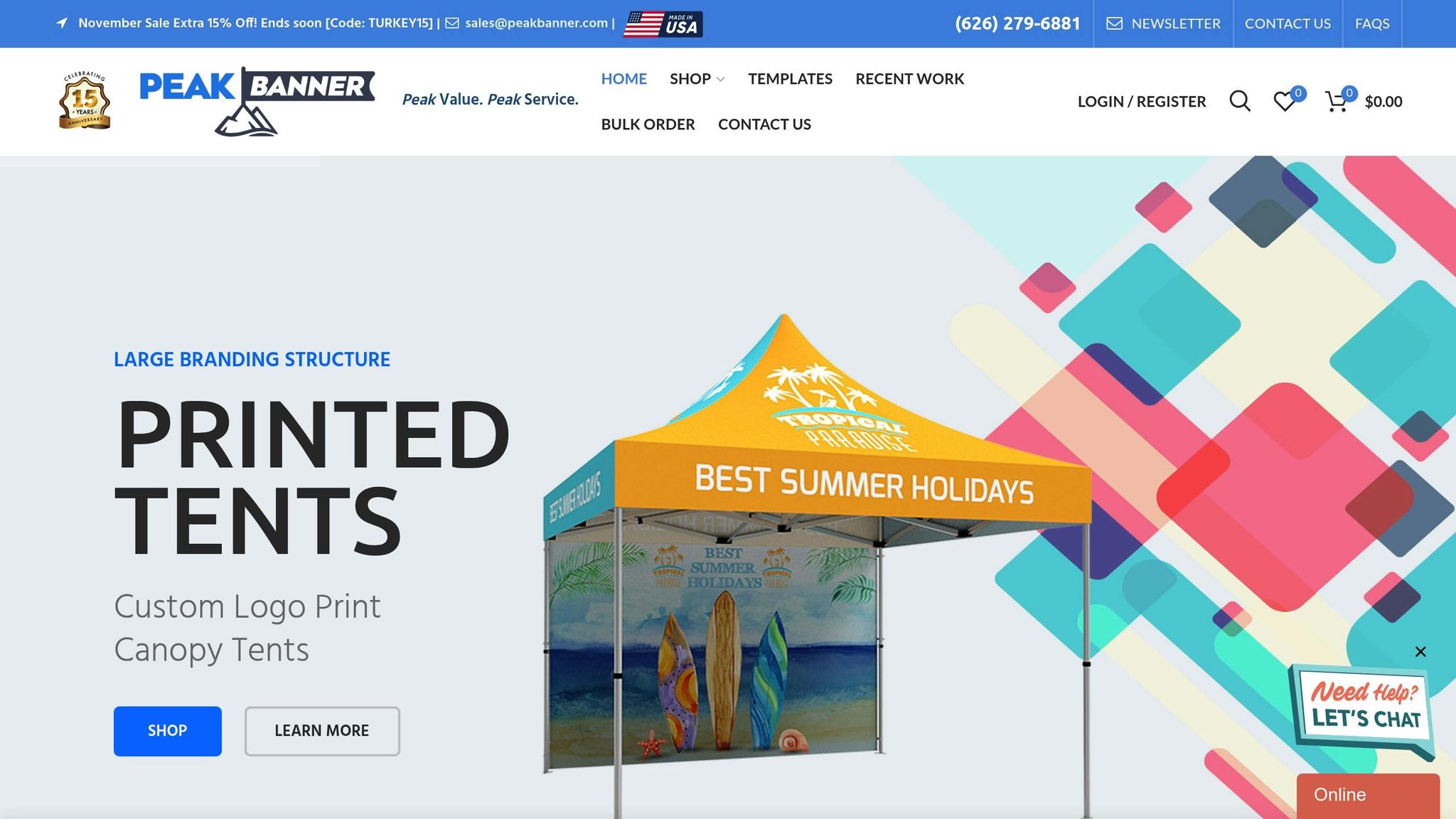
Peak Banner offers custom logo canopy tents starting at just $185, making it easy to turn your tent into a fully branded experience. Their full-color printing capabilities let you feature your logo, brand colors, product images, and messaging across every surface – canopy tops, valances, and sidewalls. This ensures your brand stands out, whether you’re at a bustling trade show or a local farmers market.
What sets Peak Banner apart is their in-house production. They manage everything directly, which means better quality control, faster production, and quicker shipping. Whether you’re looking for a compact 10×10 ft tent for regular events or a larger setup with multiple connected tents, their printing maintains a consistent, professional look across all sizes.
To complete your branding setup, consider pairing your tent with matching products like feather flags or table covers. A coordinated design reinforces your professionalism and builds trust with customers.
For businesses attending a variety of events, custom printed tents offer unmatched flexibility. They allow your branding to travel with you and adapt to different booth layouts, eliminating the need for separate signs for every occasion.
Conclusion
Selecting the right tent size goes beyond simply providing coverage for your products – it helps shape an event space that supports smooth customer movement and boosts your brand’s visibility. Standard options like a 10×10 ft tent offer a practical balance between functionality and cost. However, for events like pop-up shops or trade shows where extra room is needed for displays and better customer flow, upgrading to a 10×15 ft or 10×20 ft tent can make your setup feel more polished and welcoming.
Think about your event goals when choosing a tent. A smaller tent is perfect for quick transactions at farmers markets, while larger tents work well for creating immersive experiences at trade shows. Pop-up shops benefit from tent sizes that allow for easy browsing and comfortable navigation.
Adding custom printing to your tent can take your setup to the next level. A canopy featuring your logo, brand colors, and messaging turns your tent into a powerful marketing tool. It not only draws attention but also reinforces your brand identity at every event. With affordable printing options available, you can achieve a professional look that fits your budget, whether you’re just starting out or managing multiple locations.
Take time to evaluate your event needs, product displays, and the flow of customer traffic. The right tent choice lays the groundwork for successful events that not only drive sales but also leave a lasting impression of your business.
FAQs
What’s the ideal tent size for displaying products at a farmers market, trade show, or pop-up shop?
When deciding on the right tent size, think about your specific setup and goals for the event. Start by assessing the space needed for your products, tables, and any extra displays you plan to include. For many farmers markets, trade shows, or pop-up shops, a 10×10-foot canopy tent is a popular choice. It provides enough room for a couple of tables and still leaves space for customers to browse comfortably.
If you anticipate needing more room – whether for larger displays or to accommodate higher foot traffic – a 10×15-foot or 10×20-foot tent might be a better fit. Just be sure to factor in the event’s space limitations and design your layout to maximize both visibility and accessibility for potential customers.
How can custom-printed tents help boost my brand and make my booth stand out?
Custom-printed tents are an excellent way to make your brand stand out at events like farmers markets, trade shows, or pop-up shops. With your logo, brand colors, and messaging prominently displayed, these tents create a polished and attention-grabbing setup that draws people in and boosts brand visibility.
Beyond just catching the eye, these tents help solidify your brand identity, leaving a memorable impression on visitors. They’re a smart choice for businesses looking to increase their presence and connect with customers at any event.
Should I use one large tent or several smaller tents for my pop-up shop?
When choosing between one large tent or several smaller ones, it’s essential to weigh your specific needs, such as the space required for your products, displays, and customer movement. A single large tent can present a polished, unified appearance and is often easier to customize with branding like logos or signage. On the flip side, smaller tents provide more flexibility for different layouts, are simpler to transport, and can adapt more easily to varied event spaces.
Consider factors like setup time, storage, and how you plan to interact with customers. If the event space is tight or has an unusual shape, smaller tents could be the smarter choice. But if you’re aiming for a seamless brand presentation or need an open, roomy setup, a larger tent might suit your needs better.