








Custom 10×10 tents are a practical and effective way to make your brand stand out at events. They balance size and cost, fit standard booth spaces, and serve as mobile advertisements with bold designs and branding. These tents attract attention, offer shelter, and create a professional look that builds trust and recognition. Here’s what you need to know:
- Perfect Size: Fits typical 10×10 event spaces, easy to transport, and spacious enough for displays and interactions.
- Brand Visibility: Acts as a 360-degree billboard with bold colors and clear logos visible from all angles.
- Engagement: Creates inviting spaces for demos, conversations, and giveaways, turning visitors into leads.
- Durability: A long-term investment with reusable designs that lower costs over time.
- Practical Setup: Quick to assemble, weather-resistant, and easy to maintain for repeated use.
With smart placement, engaging booth layouts, and thoughtful design, custom tents not only increase foot traffic but also leave a lasting impression on attendees.
Benefits of 10×10 Tents for Events
Why 10×10 Is the Right Size for Events
Custom 10×10 tents – spanning 10 feet by 10 feet – are a go-to choice for event booths, and for good reason. Their 100-square-foot size aligns perfectly with the booth dimensions allocated at most trade shows, farmers’ markets, street fairs, and festivals. This means you can avoid paying extra for larger or oddly shaped spaces.
These tents are also incredibly practical. They’re lightweight, fold down neatly, and fit into a compact bag, making transportation a breeze. In most cases, they’ll even fit in a standard car, which simplifies the logistics of moving between events.
Despite their compact size, 10×10 tents provide plenty of room for a display table, product samples, and staff to interact with visitors – all while keeping the space open and inviting. They also typically offer enough height clearance to showcase vertical branding, ensuring your message is visible even in a crowded venue. This makes it easy for attendees to spot your booth, no matter how busy the event gets.
Now let’s dive into how these tents can amplify your brand’s visibility.
How Tents Draw Attention and Improve Brand Recognition
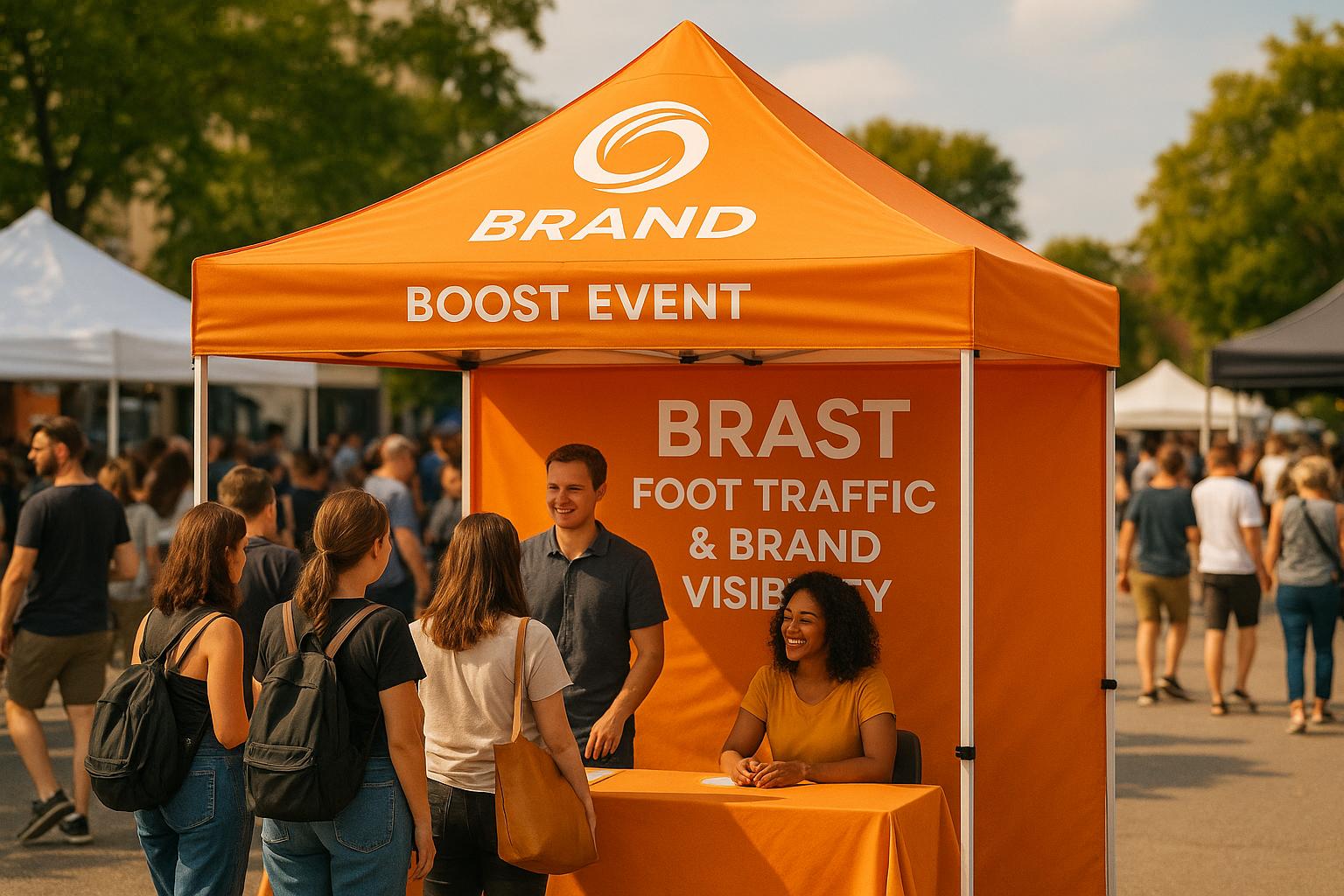
Custom 10×10 tents double as three-dimensional billboards, displaying your branding across the canopy and all sides. This 360-degree visibility ensures attendees approaching from any direction can see your logo or message, cutting through the visual noise of a busy event. The elevated positioning also helps your branding rise above the ground-level clutter, giving it a clear advantage.
Color selection plays a big role in grabbing attention. Bright, bold colors that contrast with neighboring booths make your tent pop, drawing visitors in. The trick is to choose shades that align with your brand while standing out in the typical event setting.
Beyond aesthetics, a well-designed tent signals professionalism. Its structured, polished look communicates that your business is established and worth exploring. When you use the same tent across multiple events, it reinforces your brand identity, as consistent exposure helps build recognition and trust.
On top of that, these tents offer practical perks. They provide much-needed shade and shelter during outdoor events, whether it’s a hot sunny day or a light drizzle. This added comfort often attracts groups of visitors, creating a welcoming space where natural conversations and interactions can thrive. By combining attention-grabbing design with real-world functionality, a custom 10×10 tent becomes a powerful tool for boosting engagement and drawing crowds.
Designing Custom 10×10 Tents That Stand Out
A thoughtfully designed tent can turn your booth into a magnet for attention, drawing in visitors with eye-catching visuals and reinforcing your brand identity up close.
Using Bold Colors and High-Quality Graphics
The colors you choose for your tent can make or break your first impression. Bright, bold hues like vibrant red, electric blue, or striking orange naturally stand out against the neutral tones often found at events. These colors grab attention from a distance and invite attendees to take a closer look.
To maximize the impact of your visuals, consider dye sublimation printing. This method infuses ink directly into the fabric, creating sharp, fade-resistant graphics that stay vibrant even after multiple uses. It’s a great way to ensure your tent looks as impressive on its tenth outing as it did on its first.
When designing your graphics, focus on clarity and hierarchy. Your visuals should immediately catch the eye from afar and still offer crisp, engaging details when viewed up close.
Logo Placement and Messaging That Works
Where you place your logo matters as much as the design itself. The canopy roof and valance – the strip running along the edge of the canopy – are prime spots for showcasing your brand. These areas offer visibility from multiple angles, and using all four sides of the valance ensures your branding is seen from every direction.
Position your logo prominently on the side facing the main flow of traffic. This placement ensures it’s the first thing attendees notice as they approach your booth. If your booth is accessible from all sides, extending your branding to additional panels with complementary messaging reinforces your presence.
Keep in mind that your logo must be legible from a distance. Studies show that 85% of attendees remember brands with striking displays[1]. Make your logo stand out and keep any additional text short and focused on your key message. Collaborating with professional designers and adhering to a style guide can help maintain a polished and cohesive look.
To amplify your branding efforts, consider incorporating coordinated accessories.
Adding Branded Accessories to Your Tent
Branded accessories can elevate your booth’s appeal, extending your design beyond the tent itself. Sidewalls, for example, provide additional surfaces for your graphics, improving visibility while reinforcing your message.
Custom table covers designed to match your tent create a cohesive and professional appearance, while feather flags (starting at $49 each) near the entrance add height and visual interest to your setup. These small details make a big impact, drawing attention and welcoming visitors to your booth.
Backdrops are another versatile tool, offering a clean and branded setting for photos and videos. Each shared image becomes a subtle yet effective form of advertising. Pull-up banners are equally flexible, allowing you to swap out messaging between events to highlight specific promotions or campaigns.
For a seamless and unified look, consider event bundle sets starting at around $795. These typically include a tent, table cover, and flags, all designed to complement one another. By using the same colors, fonts, and design elements across all accessories, you create a consistent brand experience that resonates with attendees.
Lastly, think about functionality. Sidewalls with windows let in natural light while maintaining a polished design, ensuring your tent not only looks great but also performs well in various conditions. Combined with strategic placement (covered in the next section), these design choices can significantly boost attendee engagement.
Tent Placement and Booth Layout
A beautifully designed tent won’t achieve much if it’s tucked away in a low-traffic area. Where you set up and how you organize the space inside can determine whether your booth gets overlooked or becomes a must-visit spot.
Selecting High-Traffic Locations
The placement of your tent plays a huge role in how many people notice your brand. Choosing a spot in a high-traffic area ensures your booth gets the attention it deserves. When signing up for an event, take a close look at the venue map to identify the busiest spots. Ideal locations are near main entrances, food vendors, restrooms, or other popular hubs. If you can secure a corner or end-of-aisle position, you’ll have the advantage of visibility from multiple angles. Use this to your benefit by arranging products on two adjacent sides to catch the eye of passersby from different directions.
Once you’ve locked in a prime location, the next focus is creating a booth layout that invites visitors in and keeps them engaged.
Organizing Your Booth Space for Better Flow
After securing a great spot, a well-thought-out booth layout can make all the difference. Keep the front of your tent wide open – skip bulky tables or displays that block entry. Place larger items toward the back to maintain a clean, inviting entrance and a clear line of sight into your booth. This uncluttered setup not only looks professional but also makes it easier for visitors to move around comfortably. Stick to one or two compact pieces of furniture to avoid overcrowding.
Using Custom Tents to Engage Visitors
Once your booth’s design and layout are in place, the next step is making sure visitors don’t just pass by – they stop, engage, and remember you. A visually appealing tent grabs attention, but it’s the experiences you create inside that turn casual attendees into fans of your brand.
Creating Experiences That Visitors Remember
A custom tent isn’t just a shelter – it’s your stage to showcase what makes your brand special. Use this space to let visitors interact with your products in a hands-on way. For example, if you’re in the food or beverage industry, offering small samples is a great way to draw people in. For physical products, set up a demo station where attendees can test or experience items firsthand.
Live demonstrations are another powerful way to keep your booth buzzing. Make these demos interactive – invite attendees to participate, ask questions, or try something themselves. This kind of involvement makes the experience more memorable than a simple presentation.
But it’s not just about the activities; the environment matters, too. Your tent should feel like an extension of your brand. Beyond just slapping your logo on the canopy, think about the details: branded furniture, flooring, or even custom signage that ties everything together. These finishing touches create a polished, cohesive space that feels intentional and inviting – encouraging visitors to stay longer.
Want to add a little extra excitement? Contests and giveaways are great crowd-pleasers, but make them purposeful. Instead of handing out freebies to anyone walking by, tie the giveaway to an action – like signing up for your email list, participating in a demo, or sharing their contact info. This approach not only creates buzz but also ensures you’re connecting with people who are genuinely interested in what you offer.
Finally, think about how your layout can naturally draw people in. Place demo areas where they’re visible from outside the tent to catch the eye of passersby, but position them just inside to encourage people to step in and explore. This small adjustment can make a big difference in turning casual interest into deeper engagement.
Gathering Feedback and Building Connections
Your tent isn’t just a display – it’s a place to have real conversations. Events like these give you the chance to connect with potential customers in a way that digital marketing simply can’t. Use this time to ask questions, understand their needs, and gather feedback that can help you improve your products or services.
To make these interactions flow naturally, avoid physical barriers like tables separating you from visitors. Instead, stand to the side or in front of your booth – this open posture makes you more approachable and encourages casual conversations. Start with open-ended questions to spark genuine dialogue.
Creating a welcoming environment also plays a big role. When people feel comfortable in your space, they’re more likely to open up and share honest feedback. Keep tools like a clipboard or tablet handy to jot down notes, but don’t let it disrupt the conversation. Often, the most valuable insights come from offhand remarks while visitors are exploring your products.
Building connections isn’t just about the moment – it’s about what comes next. Collect contact information with a simple sign-up sheet or digital form, and offer an incentive to encourage participation. The key is to follow up promptly after the event. A quick, thoughtful email or call can turn a casual interaction into a lasting relationship.
The more time visitors spend engaging with your booth, the more likely they are to remember your brand. People may not recall every detail of what they saw, but they’ll remember how they felt and the experience they had. By creating an engaging and immersive environment, your custom tent becomes more than just a booth – it becomes a place where connections are made, trust is built, and your brand leaves a lasting impression. And when those visitors share their positive experiences with others, the ripple effect can be invaluable.
sbb-itb-c623e60
Measuring Success and Return on Investment
Evaluating how well your custom tent performs is all about consistent tracking and smart analysis.
Tracking Foot Traffic and Visitor Engagement
Start by keeping tabs on how many people visit your booth and how they interact with it. Assign someone to count visitors and take note of those who stay longer, participate in demos, or ask for more information. This can be as simple as using a tally sheet or a tracking app.
To dig deeper, record key details like peak visitor times, the nature of interactions, and contact details of potential leads. Social media can also be a goldmine for insights – encourage attendees to share photos or use a specific hashtag to measure your booth’s reach and impact online.
Another helpful metric is dwell time – how long visitors stick around. If people linger, it’s a good sign your booth design and layout are working. Pair this with direct visitor feedback to understand what caught their attention. All these metrics together give you a clear picture of how your investment is performing and where there’s room to improve.
Getting More Value Through Repeated Use
The true value of a custom tent goes beyond a single event. Think about how using it multiple times stretches your initial investment. A 10×10 custom tent, for example, can be a cost-effective solution when you spread its use over several events, compared to renting or investing in disposable setups.
To calculate ROI, add up all your expenses – tent cost, accessories, transportation, and setup – and compare them against the revenue generated or the value of leads collected. If your goal is lead generation, assign a dollar value to each qualified lead based on your typical conversion rates. This helps you pinpoint when your investment starts paying off.
The design of your custom tent can also serve double duty. Repurpose elements like logos and graphics for banners, digital ads, or other marketing materials to maintain a consistent brand presence. Plus, the ease of storing and maintaining your tent means you’re ready for last-minute opportunities without extra costs.
Ultimately, the real payoff comes down to cost per impression. A well-designed tent doesn’t just attract attention at one event – it keeps delivering visibility every time you use it. Instead of repeatedly spending on new advertising, your tent becomes a lasting tool for building brand recognition wherever your business goes.
Setup and Maintenance Tips
Taking good care of your custom tent ensures it performs well event after event. The secret? Quick setup and consistent maintenance between uses.
Quick Setup and Weather Protection
Setting up your tent efficiently not only saves time but also helps extend its lifespan. Most 10×10 tents are designed for fast assembly – many can be ready in just a minute or two with two people.
Here’s how to do it: work with a partner to unpack the tent, unfold the pre-assembled frame, securely drape the canopy, and lock the frame into place. Adjust the legs to your preferred height – most models offer up to three height settings, with a maximum of around 9 feet. Double-check that all four legs are evenly adjusted and locked securely for stability.
When it comes to weather protection, don’t cut corners. Fill sandbags with heavy material (like sand or gravel) and attach them to each leg to keep the tent stable, especially in windy conditions. For extra security, use ropes and stakes to anchor the canopy to the ground. If winds are expected to exceed 25-30 MPH, it’s best to take the tent down entirely to avoid damage or accidents.
Cleaning and Storage for Long-Term Use
After each event, cleaning and storing your tent properly is crucial for maintaining its condition and extending its lifespan.
Start by cleaning the tent with mild soap, water, and a soft cloth or brush. Avoid using high-pressure washers or harsh chemicals, as these can damage the fabric or fade any printed graphics. Drying is non-negotiable – always let the canopy air dry completely, both inside and out, before folding and storing it. Mold can form within 48 hours in warm, humid conditions if the fabric isn’t fully dry.
Regular inspections are just as important. Check the tent’s hardware before and after every use. Tighten screws, inspect joints and frame connectors, and look for rust or bent sections. Make sure locking mechanisms are working correctly, and replace any worn or missing parts immediately. Examine the fabric for holes, tears, or loose seams. Small issues can often be patched or repaired with tape, but catching them early prevents bigger problems later.
When it’s time to store your tent, choose a cool, dry place to prevent mold, mildew, and fading. Aim for a storage temperature of 64-70°F with humidity levels between 60-65%. Use a storage bag or wheeled case to protect the tent from damage during transport and keep it clean. Avoid sharp objects that could puncture or tear the fabric.
To protect custom graphics, fold printed panels inward to minimize exposure. Avoid dragging the fabric on the ground, keep it away from oils or harsh cleaners, and roll it instead of creasing when possible. Consider applying a stain repellent, like Scotchgard, to areas prone to dirt and moisture, such as walls and footers. This helps repel stains, water, and mold.
Store fabric pieces on their sides and off the ground to prevent moisture and pests from causing damage. Keep them in a stable environment free of temperature fluctuations. Always separate graphics from the frame and store them in a carrying case to shield them from UV rays.
Conclusion
Custom 10×10 tents are a powerful way to draw attention and increase foot traffic. By using bold visuals, strategic logo placement, and clear messaging, you can make your tent stand out in any setting.
A thoughtfully designed and strategically placed tent doesn’t just attract visitors – it creates a memorable brand experience. When done right, it becomes a tool that helps your brand connect with people and leave a lasting impression.
Every setup is a chance to engage with new audiences and strengthen your brand’s presence. Over time, your investment in a custom tent can lead to greater visibility and meaningful connections that truly resonate.
FAQs
What are the best ways to make my custom 10×10 tent stand out at a busy event?
To make your custom 10×10 tent stand out in a busy event, focus on crafting a design that’s both eye-catching and practical. Start with bold, high-quality visuals that showcase your logo prominently – this helps reinforce your brand identity. Pick colors and patterns that not only match your branding but also grab attention in a sea of competitors.
Where you set up your tent matters just as much. Aim for a high-traffic spot to ensure maximum exposure. Keep your messaging clear and to the point, so people instantly understand what you’re offering. Also, think about the layout – design the space in a way that encourages visitors to step in and engage. By pairing a striking design with smart placement, your tent can become a go-to destination for attendees.
What are the best ways to engage visitors once they’ve been attracted to my booth by a custom tent?
Once visitors are drawn to your booth by your custom 10×10 tent, the next step is making sure they leave with a memorable experience. Start by creating a space that’s not just visually appealing but also reflects your brand’s personality. Use bold graphics and clear, concise messaging to immediately tell people who you are and what you bring to the table.
Keep the energy alive by showing off your products or services in action. Live demonstrations, interactive displays, or even exclusive promotions can grab attention and keep visitors engaged. Make sure your booth feels welcoming and easy to navigate – leave enough space for attendees to explore while strategically showcasing key offers or contact details.
Most importantly, focus on building personal connections. Friendly, well-informed staff who can answer questions and share your brand’s story will make a world of difference. When you combine a thoughtfully designed booth with authentic, meaningful interactions, you’re more likely to turn curious visitors into long-term customers.
How can I measure the ROI of using a custom 10×10 tent at multiple events?
Measuring the return on investment (ROI) for a custom 10×10 tent means looking at both the tangible and intangible benefits it brings to your business. Start by focusing on numbers you can track – like how much your sales, leads, or sign-ups grow during events where the tent is used. Compare these results to the total cost of the tent, factoring in expenses like design, production, and event-related fees.
Beyond the numbers, think about the indirect perks. Has your brand visibility improved? Are customers more engaged? Metrics like social media mentions, website traffic increases, or feedback from event attendees can give you a clearer picture of the tent’s broader impact. By analyzing both the immediate results and the long-term effects, you’ll get a better sense of whether your investment in the tent is paying off.