









Cheap 10×10 custom tents often fail at trade shows because they compromise on quality, durability, and branding. While they may save money upfront, they usually come with weak frames, poor weather resistance, and limited branding options, which can harm your brand’s image and cost more in the long run. High-quality tents, on the other hand, offer stronger materials, vibrant graphics, and ease of use, ensuring a professional and reliable presence at events. Here’s a quick breakdown of why investing in a better tent matters:
- Durability: Cheap tents use thin frames and plastic joints that bend or break easily. Professional-grade tents use aluminum frames and reinforced joints for stability.
- Weather Resistance: Budget tents sag, collect water, and collapse in rain or wind. High-quality tents withstand gusts up to 35 mph and use UV-resistant, waterproof fabric.
- Branding: Low-cost tents rely on basic printing that fades or cracks. Premium tents use dye-sublimation for long-lasting, vibrant graphics.
- Setup and Transport: Budget models are hard to assemble and come with flimsy bags. Professional tents feature tool-free assembly and durable wheeled cases.
- Longevity: Cheap tents often fail after one season, while high-quality options can last 3–10 years, saving money over time.
Takeaway: A professional-grade tent is a better investment for trade shows, offering durability, better branding, and long-term cost savings.
Why Cheap 10×10 Custom Tents Fail at Trade Shows
When it comes to trade shows, opting for a budget-friendly 10×10 custom tent might seem like a smart move at first glance. But these tents often fail in critical areas, from durability to branding, leaving a poor impression on potential clients. The root of the issue lies in manufacturers cutting costs on materials, construction, and printing quality, which compromises both the tent’s performance and your brand’s image.
Weak Frames and Structural Issues
The strength of a tent starts with its frame, and this is where budget options fall short. Recreational-grade tents often feature frames made from material less than 1mm thick, while professional-grade tents use 12-gauge aluminum (about 2mm thick). Cheap models rely on plastic joints that snap under pressure, whereas professional tents use anodized aluminum connectors designed to handle stress. Additionally, the shape of the legs matters – budget tents typically have square legs that lack stability, while commercial-grade options use hexagonal or octagonal legs for better weight distribution.
Even the footpads reveal quality differences. Budget tents use thin plastic or metal footpads (less than 1/8" thick) that are prone to breaking or sinking into soft ground. In contrast, professional tents feature cast aluminum footpads at least 1/4" thick, providing better durability and stability. A professional-grade 10×10 tent typically weighs around 75 lbs, compared to the 50–60 lbs of cheaper models, further highlighting the sturdier construction.
Poor Weather Performance
Weather can make or break your trade show experience, and cheap tents are simply not built to withstand the elements. Their loose frame fit often results in saggy sections where water collects during rain, leading to potential collapses. Professional tents, on the other hand, are engineered for a snug fit, preventing water from pooling.
When it comes to wind, high-quality tents can handle gusts of up to 35 mph, thanks to their reinforced construction. Many budget tents lack any certified wind ratings and can collapse even in moderate gusts. Fabric quality also plays a role – professional-grade tents use 600 Denier polyester that’s UV-resistant, waterproof, and fire-retardant. Budget models use lower-grade fabrics that tear easily, fade quickly, and degrade under prolonged sun exposure.
Weak Branding and Visual Appeal
Your tent is more than just a shelter; it’s a billboard for your brand. Unfortunately, cheap tents fall short here too. They often rely on solvent inks or basic screen printing, where the ink sits on top of the fabric rather than bonding with it. This design flaw means the ink becomes brittle over time, cracking and flaking in areas that fold frequently.
"Cheaper tents often use solvent inks or basic screen printing, which sit on top of the fabric instead of bonding into it. Over time, this ink layer becomes brittle and cracks, especially in areas that fold frequently." – Derek Flint, TentCraft
Budget tents also limit your branding options to spot-logo printing – small logos in specific areas – rather than full-bleed, edge-to-edge designs that create a striking visual impact. Many cheap manufacturers don’t offer Pantone color matching either, making it difficult to maintain consistency with your brand’s overall marketing materials. These limitations can dilute your brand’s presence at events.
Difficult Setup and Transport
Setting up and transporting a tent should be straightforward, but that’s rarely the case with budget models. Weak frames can bend during assembly, making the process frustrating and time-consuming. Additionally, the carrying bags that come with cheap tents are often flimsy and tear easily, putting your tent at risk during transport.
Professional tents solve these issues with tool-free assembly systems and durable, wheeled bags that make setup and transport a breeze – an important advantage when you’re managing multiple events.
Short Lifespan and Frequent Replacements
While a high-quality tent can last 3–5 years with proper care, cheap tents often fail after just one season. Low-grade fabrics and plastic connectors wear out quickly, forcing you to replace the tent frequently. This cycle of constant replacements can end up costing far more than investing in a durable, professional-grade tent upfront.
"Settling for a steel frame tent might seem budget-friendly, but having to make multiple purchases or pay for damages with time and money can add up quickly." – Derek Flint, TentCraft
sbb-itb-c623e60
The Benefits of High-Quality Custom Tents
Investing in a high-quality custom tent for trade shows might cost more upfront, but the long-term benefits far outweigh the initial expense. These tents are built to handle the real-world challenges of events, from unpredictable weather to the wear and tear of frequent use. Unlike cheaper options, they’re designed to last, saving you money on replacements and ensuring you’re always prepared for your next show.
Stronger Construction and Stability
Cheap tents often fail when it matters most, but high-quality models are built with durability in mind. They typically feature anodized aluminum frames and advanced leg designs – like hexagonal or octagonal legs – that provide better weight distribution and stability compared to the square legs found in budget tents. Reinforced joints made of cast or anodized aluminum eliminate the risk of snapping under tension, and with a weight of about 75 lbs, these tents stay firmly in place, even in windy conditions.
The fabric is just as durable as the frame. It resists tearing, fading, and water pooling, thanks to reinforced vinyl at key contact points and a tight fit to the frame. These tents are often wind-rated for gusts up to 35 mph, giving you peace of mind at outdoor events, no matter the forecast.
Better Branding and Customization
High-quality tents also excel in showcasing your brand. While cheap tents often suffer from fading or peeling graphics, premium models use dye-sublimation printing, a process that embeds ink directly into the fabric fibers. This ensures vibrant, photographic-quality graphics that won’t crack or peel, even after years of use.
"Dye-sublimation printing is the gold standard because… the print becomes part of the fabric (won’t crack or peel)." – Nicole Falkiewicz, TentCraft
With full-bleed, edge-to-edge printing, your branding covers the entire canopy seamlessly – no awkward borders to distract from your message. Plus, Pantone color matching (PMS) ensures your tent aligns perfectly with your other marketing materials, from banners to business cards. This level of customization not only strengthens brand recognition but also creates a polished, professional look that stands out in crowded event spaces.
Easy Setup and Long-Term Use
Despite their robust construction, these tents are designed for convenience. Tool-free assembly means you can set up your tent in under 20 minutes, even on your own. The aluminum frame is lighter than steel, making transport easier without sacrificing durability.
"In our line of work, we need equipment that is as tough as the environments we operate in. The build quality of this canopy is outstanding. It is incredibly robust, stable, and engineered to last." – Jif D’Aguanno, Public Information Officer, Ferndale Fire Department
When it comes to longevity, professional tents are in a league of their own. With proper care, they can last anywhere from 3 to 10 years or more, unlike cheaper models that often fall apart after just one season. This durability allows for a "forever frame" approach – where you can simply replace the canopy for rebranding instead of buying a whole new tent. The result? Fewer emergency purchases, lower replacement costs, and a reliable setup for every event.
How Peak Banner Addresses These Problems
Cheap vs Professional 10×10 Custom Tents Comparison
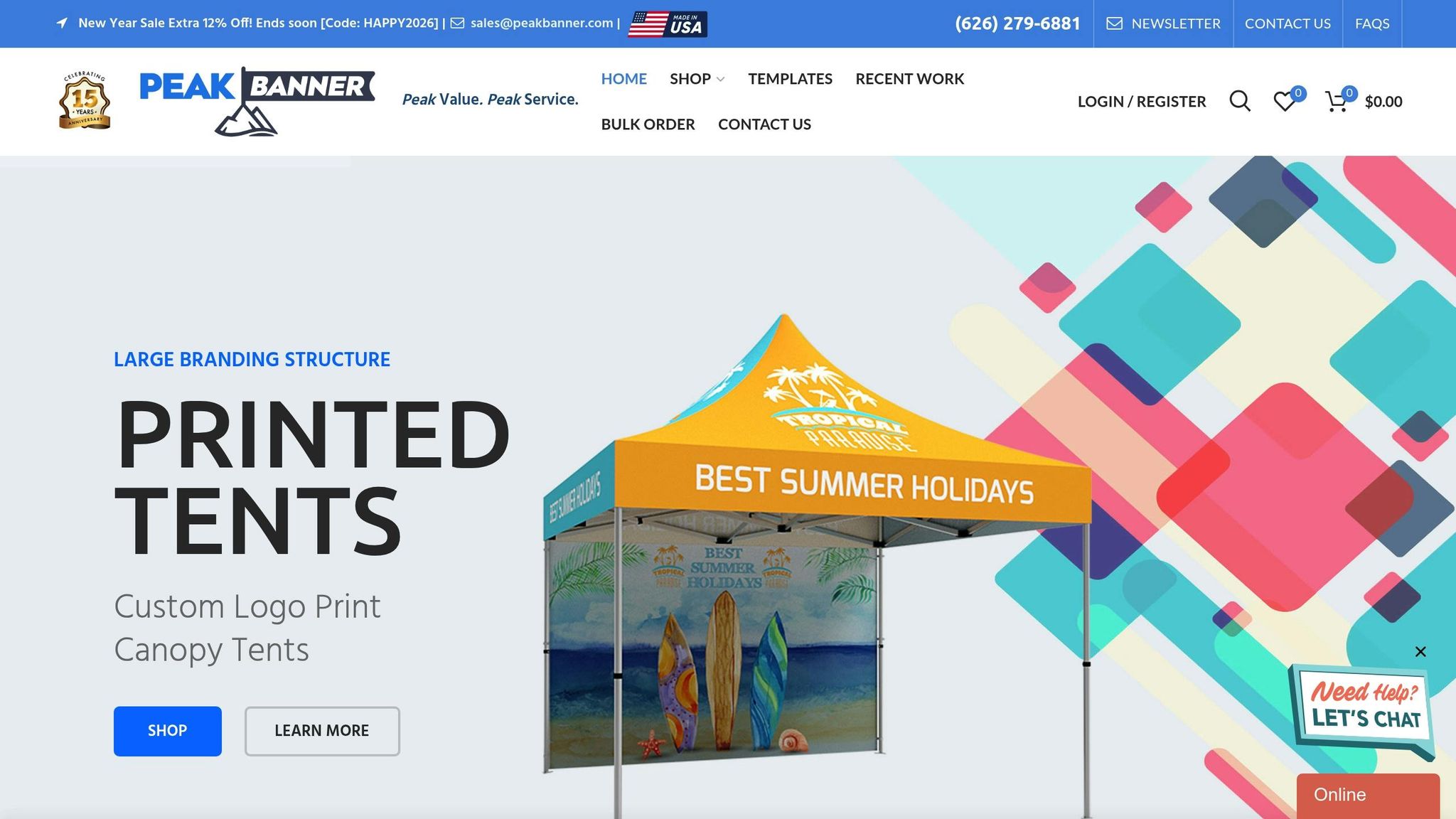
Peak Banner has crafted their 10×10 custom tents to tackle the common issues that plague budget options. Instead of skimping on materials or construction, they’ve opted for commercial-grade components specifically designed for trade shows. This thoughtful design ensures their tents deliver both dependable performance and a strong visual presence – key elements for standing out at any event.
Peak Banner 10×10 Custom Tent Features
These tents come equipped with a heavy-duty, powder-coated steel frame. For those seeking easier portability without compromising strength, there’s an option to upgrade to lightweight, rust-resistant aluminum. The canopy is made from thick 600D polyester, offering UV protection and water resistance to handle various weather conditions.
When it comes to branding, Peak Banner uses a dye-sublimation process that guarantees vibrant, fade-resistant graphics. This method supports full-bleed, edge-to-edge printing across eight areas, maximizing your branding potential. You’ll get full-color coverage on all printable sections (four peaks and four valances), plus free professional design support with 3D mockups delivered in just 1–2 hours.
"The printing process infuses the ink directly into the fabric fibers, resulting in vivid, fade-resistant colors that maintain their brilliance even after prolonged exposure to sunlight." – Peak Banner
Setting up the tent is a breeze, thanks to its tool-free, expand-and-snap mechanism that gets the job done in under 5 minutes. Once folded, the frame compacts to 58" x 9" x 9", making it easy to transport. Weighing approximately 55 lbs, it balances stability with portability. Production takes 5–9 business days, with rush options available in as little as 4–6 days. Customers have rated this tent a perfect 5.00 out of 5, with many applauding the sturdy materials and eye-catching colors that elevate their trade show presence.
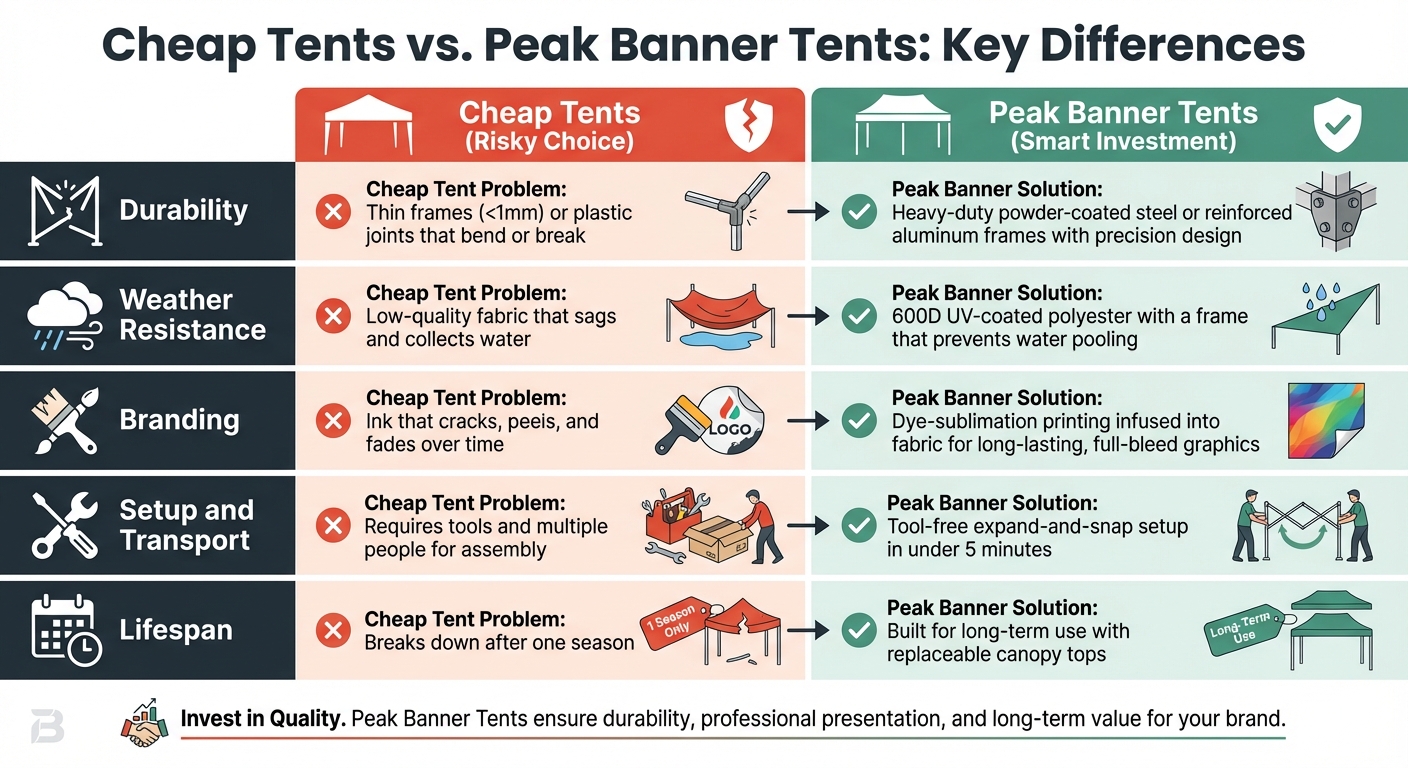
Each feature is specifically designed to address the weaknesses of budget tents. The comparison table below highlights how Peak Banner’s tents solve these common problems.
Cheap Tents vs. Peak Banner Tents
| Issue | Cheap Tent Problem | Peak Banner Solution |
|---|---|---|
| Durability | Thin frames (<1mm) or plastic joints that bend or break | Heavy-duty powder-coated steel or reinforced aluminum frames with precision design |
| Weather Resistance | Low-quality fabric that sags and collects water | 600D UV-coated polyester with a frame that prevents water pooling |
| Branding | Ink that cracks, peels, and fades over time | Dye-sublimation printing infused into fabric for long-lasting, full-bleed graphics |
| Setup and Transport | Requires tools and multiple people for assembly | Tool-free expand-and-snap setup in under 5 minutes |
| Lifespan | Breaks down after one season | Built for long-term use with replaceable canopy tops |
How to Choose the Right 10×10 Custom Tent
When picking a 10×10 custom tent, it’s crucial to think beyond the price tag. A good tent should deliver durability, functionality, and effective branding. Here’s how to make the right choice.
Check Materials and Build Quality
The frame is the backbone of your tent, so choose one with hexagonal aluminum legs (40–50mm diameter). These offer excellent stability, are lightweight, and resist corrosion. A solid, professional-grade tent usually weighs about 55 lbs – light enough to transport but sturdy enough to withstand wear and tear.
For the canopy, go with 600D polyester, which is tough and reliable. Look for fabrics treated with a PU or acrylic coating to guard against water and UV damage. To ensure safety, check that the material meets CPAI-84 flame-retardant standards.
Once you’re confident in the tent’s durability, it’s time to think about how it can showcase your brand.
Focus on Customization Options
Your tent is a mobile billboard, so make the most of it. Opt for full-bleed, edge-to-edge printing on all eight printable panels to ensure your branding is visible from every angle. To maintain crisp, distortion-free logos, provide your vendor with vector files (like EPS or PDF). For consistent branding, confirm they offer Pantone-accurate color matching across all materials.
Now that your tent looks great and represents your brand, consider how easy it is to set up and transport.
Look for Easy Setup and Transport
A tent that’s easy to assemble can save you a lot of hassle. Look for features like tool-free assembly, quick-release buttons, and telescoping legs – these should allow two people to set it up in under 15 minutes.
For transport, the frame should collapse into a compact size, and a wheeled carry case with reinforced handles and padded compartments is a must. Always pack the tent dry to avoid mold and mildew during storage.
Conclusion
When it comes to 10×10 custom tents, cutting corners on quality can end up costing you more in the long run. Cheaper tents often come with flimsy frames, faded canopies, and frequent replacements that not only strain your budget but also weaken your brand’s presence. In fact, 80% of businesses report that durable materials like high-grade aluminum or powder-coated steel frames last much longer and contribute to a 20% boost in event foot traffic.
Think about it: your tent is often the first thing people notice about your booth. A sturdy, well-designed tent with features like hexagonal aluminum legs and vibrant, long-lasting graphics makes a strong, lasting impression. It’s not just about looking good – it’s about reliability and consistency. Research shows that 85% of consumers see brand consistency as a key factor in building trust, and a professional-grade tent helps you achieve just that.
Peak Banner tents stand out with features like tool-free assembly, durable materials, and fade-resistant printing that won’t crack or peel. This kind of quality doesn’t just protect your investment; it elevates your brand, improves engagement, and ensures your booth is ready to shine at every event. After all, your tent isn’t just a shelter – it’s a gateway to turning foot traffic into loyal customers.
FAQs
What’s the best frame material for a 10×10 trade show tent?
When it comes to choosing the best frame materials for a 10×10 trade show tent, steel and aluminum are top contenders. Aluminum is a popular choice thanks to its excellent resistance to corrosion and its long-lasting durability, making it perfect for frequent or extended use. Steel, on the other hand, offers impressive strength but may need extra care to avoid rusting over time. Your decision should depend on the specific requirements of your events and the conditions they’ll face.
How can I tell if a tent’s graphics will crack or fade?
When evaluating whether a tent’s graphics might crack or fade, pay attention to the printing process and the type of inks used. Using UV-resistant inks combined with UV-proof printing methods is crucial, especially in sunny regions. These elements help keep the graphics looking vibrant and intact for longer periods.
What should I look for in a tent for fast setup and easy transport?
Choose a tent that features a lightweight, foldable aluminum frame, a self-locking pop-up mechanism, and a wheeled carry bag. These details make setting up the tent simple and moving it around much easier.