













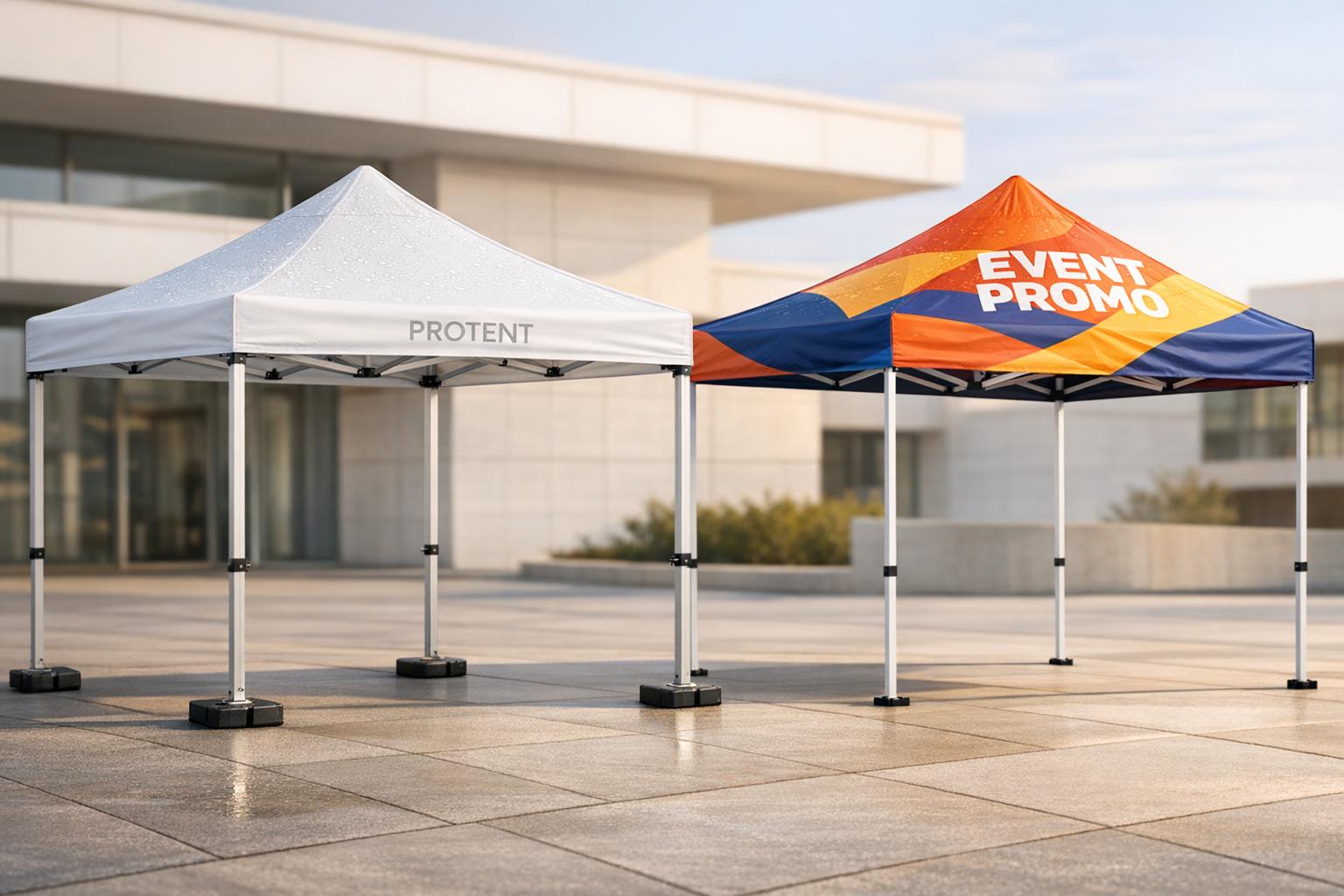
When choosing between commercial-grade and promotional tents, the decision comes down to durability, frequency of use, and branding needs. Commercial-grade tents are built for heavy use, harsh weather, and long-term reliability, using materials like anodized aluminum frames and PVC vinyl canopies. They can last 3–5 years or longer with proper care and are ideal for professional events like trade shows or festivals. Promotional tents, on the other hand, are lightweight, easy to set up, and focus on eye-catching designs for short-term use, making them perfect for casual events or promotional success.
Key Differences:
- Frame: Commercial tents use stronger materials like anodized aluminum or galvanized steel; promotional tents are lightweight with thinner aluminum or steel.
- Canopy: Commercial tents use durable, waterproof PVC vinyl; promotional tents use lighter polyester or polyethylene.
- Weather Resistance: Commercial tents handle winds up to 35–90 mph; promotional tents max out at 10–15 mph.
- Lifespan: Commercial tents last 5–7 years for canopies and 15–20 years for frames; promotional tents last 1–3 years.
- Setup: Promotional tents are quicker (5–15 minutes) and easier to transport; commercial tents take more time (20–60 minutes) and require more storage space.
Quick Comparison:
| Feature | Commercial-Grade Tents | Promotional Tents |
|---|---|---|
| Frame Material | Anodized aluminum/galvanized steel | Lightweight aluminum/thin steel |
| Canopy Material | PVC vinyl (16 oz, 1,000 denier) | Polyester/polyethylene (300D) |
| Weather Handling | Winds 35–90+ mph, waterproof | Winds 10–15 mph, water-resistant |
| Lifespan | 5–7 years (canopy), 15–20 years (frame) | 1–3 years |
| Setup Time | 20–60 minutes | 5–15 minutes |
| Cost | Starts at $600 | Starts at $100 |
Commercial tents are a long-term investment for frequent outdoor use, while promotional tents are budget-friendly for occasional, light-duty events. Choose based on your event needs, weather conditions, and branding goals.
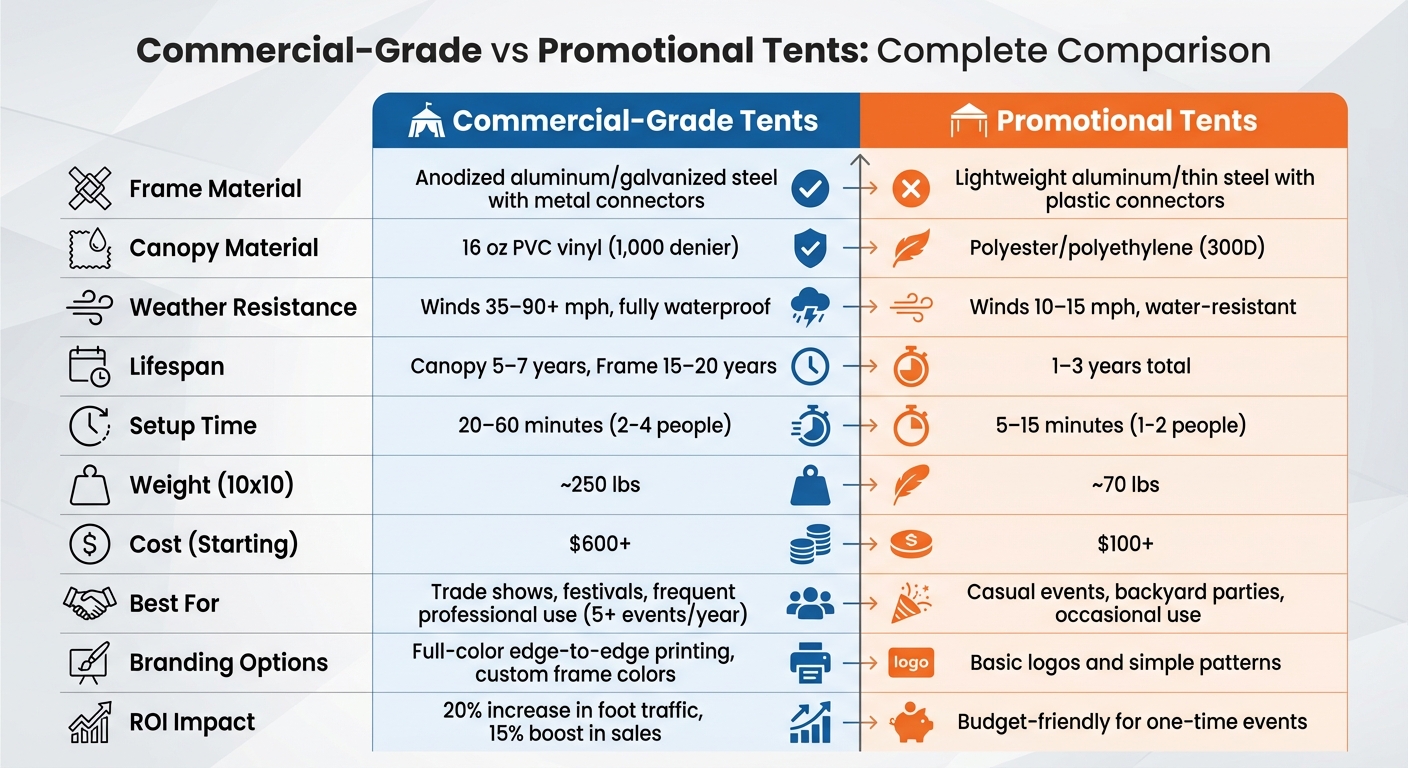
Commercial Grade vs Promotional Tents: Side-by-Side Comparison Chart
Materials and Construction Quality
The materials and construction methods are what set commercial-grade tents apart from promotional ones, especially when it comes to durability and performance. Here’s a closer look at the differences in frame and canopy construction.
Frame Materials and Design
Commercial-grade tents are built to handle tough conditions, using anodized aluminum or galvanized steel frames with metal connectors and bolts at every joint. These frames are designed to support heavy loads and withstand strong winds. Anodized aluminum frames, often found in high-end commercial models, can last 15 to 20 years without rusting or degrading.
On the other hand, promotional tents prioritize portability over strength. They typically use lightweight aluminum or thin steel with scissor-style pop-up designs. While these frames are easy to set up, their plastic or nylon connectors are prone to breaking under stress. This makes them less reliable for frequent use or challenging environments. For larger tents – those over 30 feet wide – commercial models often include double-tube aluminum poles, which are 300% stronger than the single poles found in promotional tents.
"Double tube poles are 300% stronger. They add some cost to the tent, but it is well worth the investment for the additional safety and durability for larger tents." – Tony Ehrbar, Owner & CEO, American Tent
Canopy Fabrics and Protective Coatings
The choice of canopy fabric is another major factor that distinguishes commercial-grade tents from promotional ones.
Commercial-grade canopies use 16 oz. laminated PVC vinyl with a 1,000 denier rating, the highest available for tent fabrics. These canopies are fully waterproof, flame-resistant (meeting NFPA 701 and California Fire Marshal standards), and treated with UV stabilizers and antimicrobial coatings. With proper care, they can last 5–7 years.
In contrast, promotional tents use lightweight polyester, nylon, or polyethylene with lower denier ratings and basic water-resistant coatings. These materials are less durable, allowing sunlight to pass through and degrading quickly under UV exposure. Polyethylene canopies typically last 1 to 2 years, while polyester versions hold up for 2–3 years. Imported fabrics often show wear within 2 to 3 years, while domestically produced UV-resistant vinyl used in commercial tents can provide over 7 years of dependable service.
sbb-itb-c623e60
Durability and Weather Performance
How Each Type Handles Harsh Weather
When bad weather strikes, the difference between commercial-grade and promotional tents becomes impossible to ignore. Commercial-grade pop-up tents can withstand winds up to 35 mph when properly anchored, while promotional tents are typically rated for just 10–15 mph. The disparity grows with engineered commercial structures, which can handle wind loads of 70–90+ mph.
Achieving these wind ratings requires serious anchoring. For a 10×10 ft commercial tent, you’ll need about 200 lbs of ballast (50 lbs per leg). On grass, this means heavy-duty steel stakes driven deep into the ground. For concrete or asphalt, specialized 52-lb footplates or 55-gallon water barrels are essential. On the other hand, promotional tents often come with lightweight stakes or small sandbags, which struggle to hold up in anything more than a light breeze.
"A pop-up tent fails in the wind when the frame blows away, or the canopy tears." – TentCraft
Heavy rain exposes even more weaknesses. Commercial-grade canopies are built with factory-sealed seams, waterproof PVC laminates, and sloped designs to prevent water pooling. Promotional tents, lacking these features, are prone to leaks and fabric saturation during downpours. The frames tell a similar story – commercial tents use 12-gauge (2mm) aluminum with larger diameters (about 2 inches), making them sturdier and more resistant to corrosion. In contrast, promotional tents rely on thinner aluminum or low-grade steel, which bends under pressure and rusts quickly when exposed to moisture.
These weather-related challenges have a direct impact on the tent’s longevity, as explained in the next section on maintenance and wear.
Long-Term Wear and Maintenance
Harsh weather accelerates wear, making upkeep essential – especially for commercial tents. Over time, the quality gap between commercial and promotional models becomes even more obvious. Commercial tents typically last three times longer, with aluminum frames lasting 15–20 years and PVC fabric covers holding up for 6–8 years. Promotional tents, however, generally last 3–10 years before needing replacement.
Routine maintenance can significantly extend the life of commercial tents. Monthly checks for frame alignment, tight connections, and proper fabric tension can prevent up to 90% of premature failures. Cleaning the tent twice a year with mild detergents and storing it in a cool, dry place with humidity below 50% are also key. Lubricating metal joints annually with silicon-based products or lithium grease can add 25% more life to the connections.
On the other hand, promotional tents require less maintenance simply because their components – like plastic or nylon connectors and thinner fabrics – aren’t built for longevity. These tents are designed for occasional use and eventual replacement, making them less of an investment in long-term durability.
Customization and Design Options
Custom Printing and Branding Options
Promotional tents offer basic branding like logos and simple patterns, while commercial-grade tents take it to another level with full-color, edge-to-edge digital printing. This includes the canopy, valances, and sidewalls, creating what some in the industry call a "mobile brand headquarters."
"A custom pop-up tent is a great way to set up your business temporarily and gain exposure… the amount of customization and branding is endless." – Andrew Dodson, TentCraft
Commercial tents use fade-resistant inks on durable materials like 500D polyester or 18-oz vinyl, ensuring vibrant colors even after prolonged outdoor use. In contrast, promotional tents often use lighter 300D polyester, which is more prone to fading and peeling under UV exposure. Some commercial manufacturers even offer custom frame colors – like black powder-coated aluminum – to better align with a brand’s identity, a feature generally unavailable with standard promotional tents.
These professional-grade custom tents start at around $1,500, reflecting their higher durability and branding capabilities. With such advanced customization, these tents not only boost brand visibility but also allow for seamless integration of various accessories.
Add-Ons and Accessories
Accessories play a big role in setting commercial-grade tents apart from promotional ones. Commercial frames are built to support heavier add-ons, such as integrated LED lighting, heaters, and branded counters. On the other hand, promotional tents often lack the structural strength to handle these enhancements.
Commercial sidewalls offer more than just custom printing on both sides – they include functional upgrades like windows, doors, and mesh ventilation panels. In contrast, promotional sidewalls are typically plain fabric with limited options for adjustment. Commercial models also support additional features like peak flags, custom-printed counters, and even interior flooring, turning the tent into a fully branded environment rather than just a basic shelter.
Installation is also easier with commercial tents, thanks to tool-free systems like Keder tracks or snap connectors for sidewalls and accessories. Promotional tents, however, often rely on more complicated attachment methods, making setup less efficient.
Setup, Transport, and Storage
When comparing tent types, practical details like setup, transport, and storage play a big role in making the right choice.
Assembly Time and Difficulty
Promotional pop-up tents are all about simplicity. Thanks to their one-piece collapsible frame, they open up like an accordion, eliminating the need to piece together parts. Most setups take just 5 to 15 minutes, require only one or two people, and don’t involve any tools. Once collapsed, the tent becomes a compact vertical bundle that fits neatly into a protective roller bag.
On the other hand, commercial frame tents demand more effort. These tents are made up of 20 or more separate pieces, including poles, corner connectors, and pins, which must be manually assembled before attaching the canopy. For a standard 10×10 size, setup time ranges from 20 to 60 minutes, while larger tents can take 1 to 4 hours. A crew of 2 to 4 people is typically needed for most setups, though larger structures may require 3 to 6 people. Even with modern tool-free snap connectors, the sheer number of components makes setting up a commercial tent more time-intensive than a promotional one.
Weight and Storage Requirements
Weight is another major difference. A 10×10 promotional pop-up tent weighs about 70 lbs, while a commercial frame tent of the same size comes in at around 250 lbs – a difference of 180 lbs. This extra weight impacts everything from transport to storage.
Promotional tents collapse into a compact bundle that fits into a roller bag, making them easy to transport in most car trunks or SUVs. In contrast, commercial frame tents require much more space. Poles, which can exceed 10 feet in length, need to be stored separately from connectors and the heavy-duty vinyl canopy. Transporting these tents often requires a truck or trailer, and storage involves multiple bags and horizontal racks to keep long poles from warping.
While the added weight of commercial tents enhances their stability for long-term use, it also makes them less practical for frequent transport. Promotional tents prioritize ease of mobility, making them ideal for events with limited staff or multiple setups in a single day. Commercial tents, with their heavier build, are better suited for multi-day events where stability and durability are key.
When to Use Each Type and Price Differences
When Commercial Grade Tents Work Best
Commercial-grade tents are built for frequent, professional use, offering durability and branding options that make them ideal for events like trade shows, festivals, and pop-up shops. If you need a tent that can handle repeated use and still perform reliably, this is the way to go.
One key factor to consider is how often you’ll use the tent. If you plan to use it more than five to seven times, buying a commercial-grade tent is often more cost-effective than renting. Plus, these tents meet fire safety standards required by many public venues, making them a safer choice for professional settings.
When Promotional Tents Work Best
Promotional tents are a solid choice when you’re looking for something affordable and lightweight for short-term use. They’re perfect for casual events like backyard graduations, family reunions, or even indoor booths where weather isn’t a concern. Their lightweight design makes them easy to transport and set up, even by one person.
However, they’re not well-suited for professional outdoor events. The materials, like translucent fabrics and plastic connectors, don’t hold up well in wind or rain. Additionally, limited custom printing options may make them less effective for branding, which can be a missed opportunity in business settings.
Price Comparison and Return on Investment
The differences in durability and design naturally affect the cost. Promotional tents, often found at local stores, can start at around $100. On the other hand, professional-grade 10×10 custom-printed commercial tents typically begin at $600.
While promotional tents may seem like a bargain initially, they often need replacing within six to 12 months. In contrast, commercial-grade tents can last three to five years with regular use. This longevity, combined with better branding options, can deliver a strong return on investment. For example, branded commercial tents have been shown to increase foot traffic by 20% and boost on-site sales by 15%.
When it comes to larger tents, the cost comparison becomes even clearer. Renting a 20×40 tent might cost $450–$1,200 per event, while buying one ranges from $4,500 to $5,600. If you plan to use it multiple times, the purchase can pay for itself after just a few uses.
Choosing the Right Tent for Your Events
When it comes to selecting the perfect tent for your event, there’s more to think about than just materials and durability. You’ll want to factor in how often you plan to use the tent, the kind of weather it needs to handle, and how important branding is for your setup. If you’re hosting occasional backyard parties or indoor events, a promotional tent might be all you need. But for frequent outdoor use or events where branding plays a big role, a commercial-grade tent is the way to go. Let’s break it down further.
If you’re planning to use a tent for five or more events a year, investing in a commercial-grade option can save you money in the long run compared to renting. These tents are built to last, often holding up for three to five years with regular use. On the other hand, promotional tents are better suited for one-off or infrequent events since they’re not designed for long-term durability.
Commercial-grade tents are crafted with reinforced materials and metal connectors to stand up to wind and rain, making them ideal for outdoor events. In contrast, promotional tents use lighter materials and plastic joints, which are fine for mild conditions but might not hold up during bad weather.
Peak Banner offers options that cater to both needs. Their promotional tents start at $185, while professional-grade 10×10 custom-printed tents are priced around $600. Both options include full-color printing using advanced dye-sublimation techniques and come with design support. You can also choose between powder-coated steel frames for a budget-friendly option or lightweight aluminum frames if portability is key.
Ultimately, your choice should depend on how you’ll use the tent, the weather it needs to handle, and your branding goals – not just the initial price tag. While promotional tents might seem like a bargain upfront, they could fall short in demanding outdoor settings or fail to meet fire safety standards, potentially costing more in the long run.
FAQs
Do I need a commercial-grade tent or a promotional tent for my events?
When deciding on a tent, think about how often you’ll use it and what kind of durability you need. Commercial-grade tents are designed for heavy-duty, long-term use. They typically feature sturdy aluminum frames and tough fabrics, making them perfect for frequent or large events. On the other hand, promotional tents are a great option for short-term events like festivals or trade shows. These prioritize easy setup and bold branding to grab attention. Your choice should align with factors like event frequency, weather conditions, and how much emphasis you place on branding.
What anchoring do I need for wind and rain?
To keep a tent stable in wind and rain, start with heavy-duty stakes or anchors crafted from steel or other strong metals. Adding weight-based solutions, such as sandbags or water weights, can provide extra support, particularly in areas prone to heavy rain. Opt for a weatherproof canopy featuring a sloped top to allow water runoff, reinforced seams for added strength, and a sturdy frame made of aluminum or steel to handle tough weather conditions effectively.
Which tent is best for long-lasting custom branding?
Commercial-grade tents stand out as the ideal option for durable, long-term custom branding. Built with heavy-duty materials such as waterproof fabrics, sturdy frames, and reinforced seams, these tents are designed to handle frequent use and tough outdoor conditions. This means your branding remains intact and visually appealing, even with extended wear and tear. On the other hand, promotional tents are better suited for short-term events, as they lack the same level of durability and resilience.