








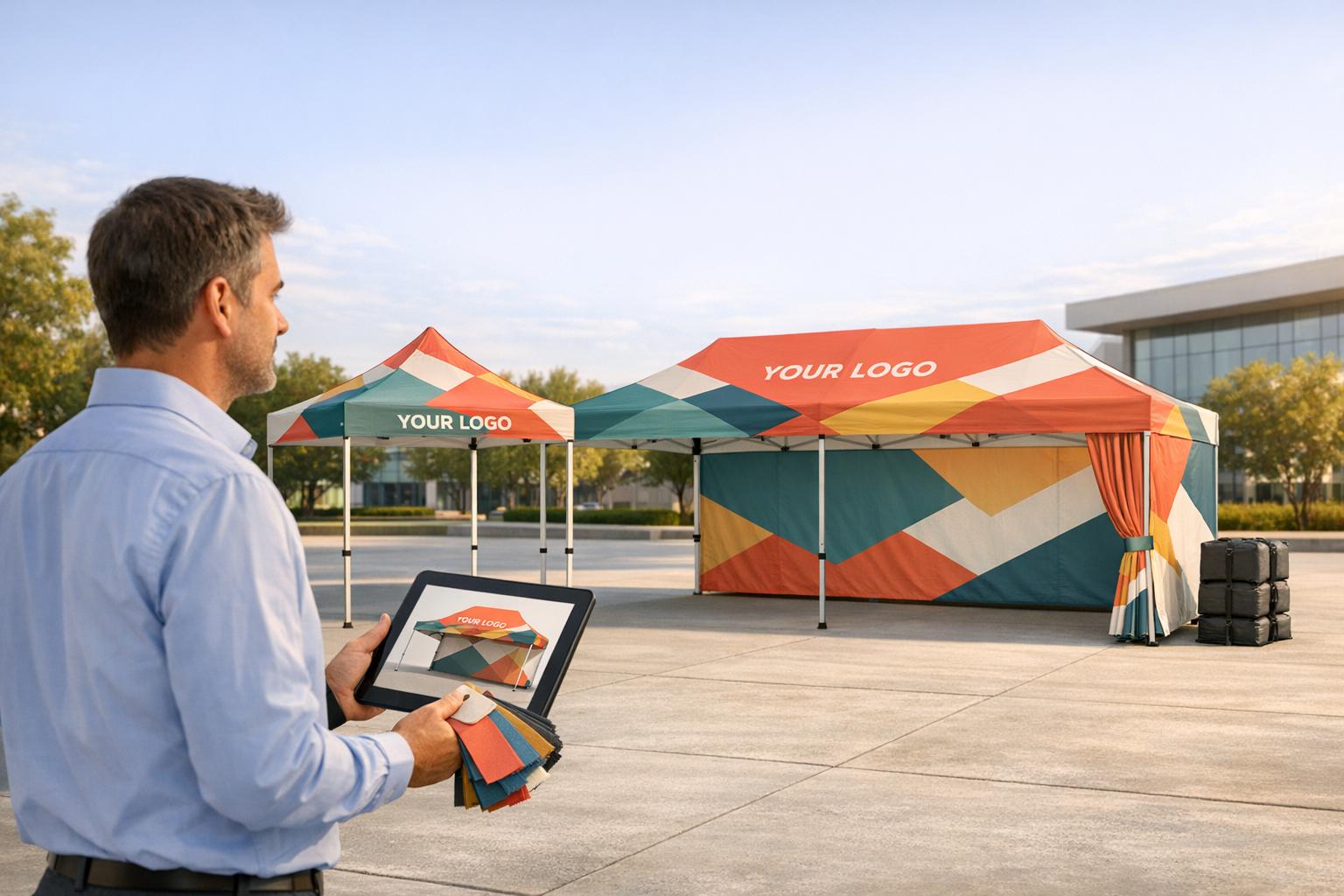
Custom printed tents are a cost-effective way to promote your business at events while providing shelter from weather. Prices depend on size, materials, and printing options:
- 10×10 tents: $300–$1,200+
- 10×20 tents: $1,000–$3,000
- Larger tents: $2,000–$8,000+
Key cost factors include frame material (steel vs. aluminum), canopy fabric durability (400D vs. 600D polyester), and printing complexity (simple logos vs. full-color designs). Accessories like sidewalls or table covers can add $500–$2,500+.
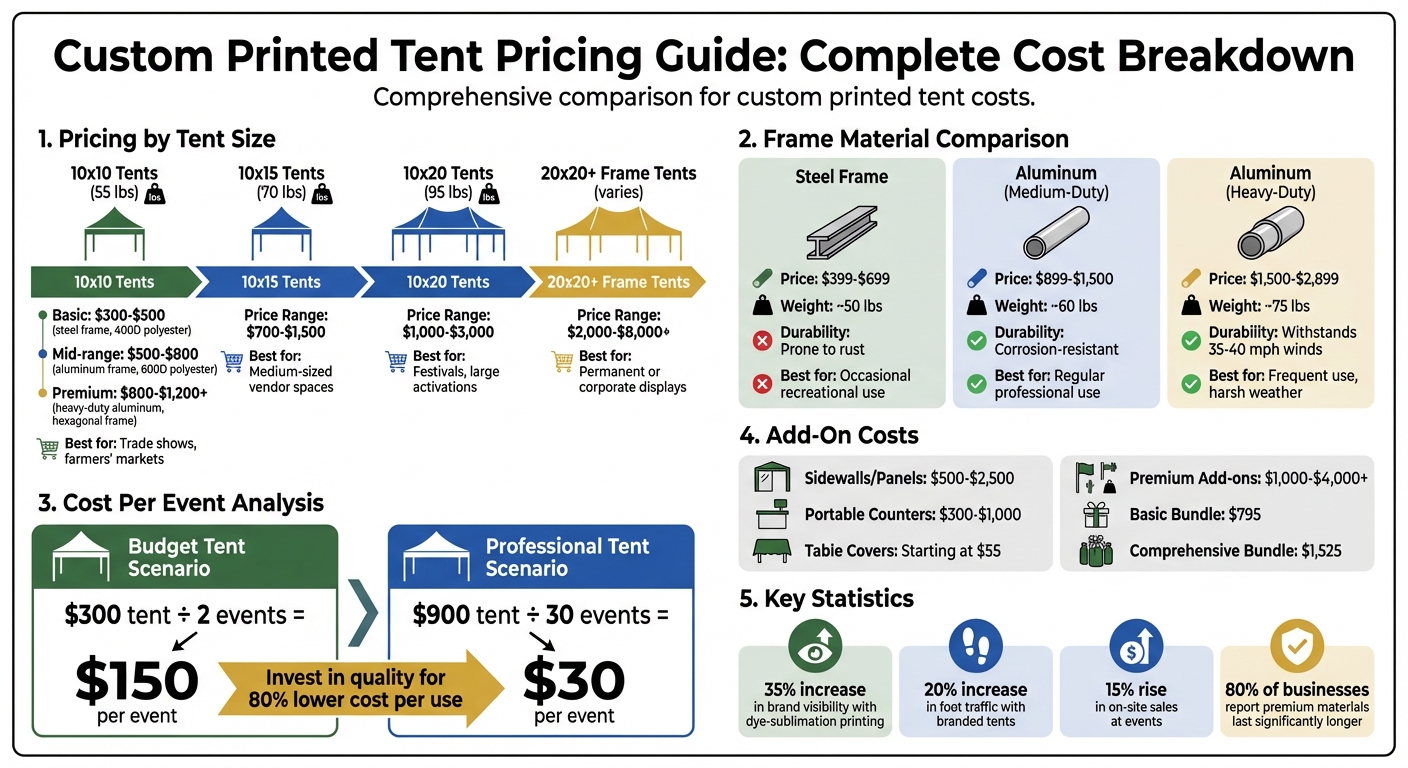
For frequent use, invest in higher-quality materials to save money over time. A $900 tent used 30 times costs $30 per event, while a $300 tent lasting two events costs $150 per use.
Plan ahead to avoid rush fees, focus on high-visibility branding areas, and consider bundled packages for savings. Aluminum frames and dye-sublimation printing offer durability and vibrant branding, making them ideal for professional setups.
Custom Printed Tent Pricing Guide by Size and Material
Custom Printed Tent Prices by Size
When it comes to custom printed tents, size plays a major role in determining the cost. A 10×10 tent, covering 100 square feet, is a popular choice for smaller setups, while a 10×20 tent doubles that space – and with it, the price – due to the added materials, sturdier frames, and increased shipping weight.
10×10 Tents: Compact and Versatile
The 10×10 tent is a go-to option for outdoor events. It’s perfect for trade shows, farmers’ markets, and similar setups. Weighing about 55 lbs., it’s easy for one or two people to assemble in just a few minutes.
Here’s a breakdown of pricing tiers for 10×10 tents:
- Basic models: Priced between $300 and $500, these typically feature steel frames and 400D polyester canopies. They’re ideal for occasional indoor events or light outdoor use.
- Mid-range options: Costing $500 to $800, these upgrade to aluminum frames and 600D polyester canopies, offering better UV protection and water resistance.
- Premium models: Starting at $800 and going beyond $1,200, these heavy-duty tents come with hexagonal aluminum frames designed to withstand windy conditions.
For example, Peak Banner offers unprinted 10×10 canopies starting at $185, with full-color custom vinyl printing available for around $595. Keep in mind, additional fees may apply – vendors often charge $50–$100 for design services and over $80 for shipping a 50-pound package. Production typically takes 5–9 business days after artwork approval.
"Mid-range tents often represent the strong value point for many small businesses and event vendors." – Taylor Morgan, BillyPrint
Now, let’s look at larger tents designed for more spacious displays and advanced structural requirements.
10×20 and Larger Tents: Expanding Your Display Area
A 10×20 tent offers twice the branding space of a 10×10 and weighs about 95 lbs., making it a better fit for festivals, corporate events, or any occasion where you need extra room for displays and visibility.
Here’s what you can expect for pricing:
- Standard 10×20 pop-up tents: Prices range from $1,000 to $3,000.
- Custom frame tents: Designed for semi-permanent or permanent setups, these cost between $2,000 and $8,000+ depending on the structure.
- Inflatable tents: Unique and eye-catching, these range from $2,000 to $5,000.
The higher price reflects the additional materials, stronger frames, and increased shipping costs. For frequent transport, aluminum frames are a smarter choice, as steel can be cumbersome at this size.
| Tent Size | Typical Weight | Price Range | Best For |
|---|---|---|---|
| 10×10 FT | 55 lbs. | $185–$1,200+ | Trade shows, farmers’ markets |
| 10×15 FT | 70 lbs. | $700–$1,500 | Medium-sized vendor spaces |
| 10×20 FT | 95 lbs. | $1,000–$3,000 | Festivals, large activations |
| 20×20+ (Frame) | Varies | $2,000–$8,000+ | Permanent or corporate displays |
sbb-itb-c623e60
What Affects Custom Tent Costs
When it comes to custom printed tents, the cost is influenced by three main factors: frame material, canopy fabric, and design complexity. Knowing how these elements impact pricing can help you plan your budget effectively.
Frame Materials: Steel vs. Aluminum
The frame material plays a significant role in determining the price. For a standard 10×10 tent, steel frames usually cost between $399 and $699, while aluminum frames range from $899 to $2,899. Steel is heavier (around 50 lbs. for a 10×10 tent) and prone to rust, making it less durable over time. Entry-level steel frames often feature thinner walls (1mm) and smaller leg diameters (1 inch), which can result in reduced stability during windy conditions.
Aluminum frames, however, are anodized to create a corrosion-resistant surface that’s exceptionally durable. Professional-grade aluminum frames typically have thicker walls (2mm) and larger leg diameters (2 inches). These frames are not only more durable but can also withstand winds of 35–40 mph without rusting.
"Steel is significantly heavier, making it sturdier but less portable. Steel also rusts when it corrodes… meanwhile, aluminum forms aluminum oxide, a hard substance that actually helps prevent further corrosion." – Dani Bell, Head Writer and Editor, eCanopy
If your tent use is limited to occasional backyard gatherings, a steel frame might do the job. But for frequent setups at farmers’ markets or trade shows, aluminum frames – with warranties ranging from 5 years to lifetime coverage – are a smarter investment in the long run.
The next factor to consider is the quality of the canopy fabric, which directly impacts both cost and durability.
Canopy Materials and Durability
The canopy fabric is another key element that affects both the price and lifespan of your tent. Fabric thickness, measured in denier (D), is a common indicator of durability. Economy tents with 400D polyester canopies are typically priced between $300 and $500. These are suitable for occasional indoor use or light outdoor activities.
For more demanding applications, upgrading to 600D polyester can raise costs to around $800 to $1,200 or more, offering better durability for regular use. High-end options, such as vinyl or PVC-coated materials, are designed for long-term installations or premium events and can range from $2,000 to $8,000 or higher. Adding specialized coatings for waterproofing, UV protection, or flame retardancy may increase the initial cost by 10–20%, but these features can extend the tent’s lifespan to 5–10 years. Notably, 80% of businesses report that tents made with premium materials last significantly longer than budget alternatives.
Finally, the complexity of your tent’s design and printing options can further influence the overall cost.
Printing Options and Design Complexity
Printing is another major factor in the cost of a custom tent. Adding full-color printing to a 10×10 tent can increase the price by $400 to $2,000, depending on the method and design. Simple, single-color logos are the most affordable choice. On the other hand, full-coverage, high-resolution images that wrap around the canopy will push the cost higher.
Dye sublimation is a popular method for achieving vibrant, long-lasting graphics, as it embeds ink directly into the fabric. Another high-quality option is digital printing, which offers photographic clarity with resolutions up to 1,440 DPI. For budget-conscious buyers, heat fusion is a cost-effective alternative, applying logos as patches to pre-colored fabrics.
Design complexity can add 10–20% to the cost. Additional prints on areas like valances, peaks, and sidewalls can also increase production expenses. Research shows that tents printed using dye sublimation can boost brand visibility by 35%, while multicolored designs may see up to a 40% higher engagement rate compared to single-color prints.
Balancing these printing options with your budget is essential for creating a visually impactful tent that aligns with your event needs.
| Frame Material | 10×10 Price Range | Weight | Best For |
|---|---|---|---|
| Steel | $399–$699 | ~50 lbs. | Occasional recreational use |
| Aluminum (Medium-Duty) | $899–$1,500 | ~60 lbs. | Regular professional use |
| Aluminum (Heavy-Duty) | $1,500–$2,899 | ~75 lbs. | Frequent use, harsh weather |
Add-Ons and Accessories: Extra Costs to Know
After choosing your tent frame and canopy, accessories can enhance both functionality and branding, though they do come with additional costs. These extras allow you to tailor your tent to meet specific needs while keeping your budget in check. Let’s take a closer look at how walls, panels, and other add-ons can improve your setup.
Walls and Panels: Half and Full Options
Adding sidewalls or back panels can cost anywhere from $500 to $2,500, depending on the level of coverage. Full walls offer the best weather protection and create an enclosed, professional-looking space, while half-walls are a great option for maintaining visibility and airflow – perfect for those hot summer events when ventilation is a priority.
"Adding sidewalls to your canopy tent increases the cost but offers many benefits. Sidewalls provide extra protection from wind and rain, give you more privacy, and create an enclosed space that looks more professional." – Sign Shark
Beyond just weatherproofing, walls also double as prime branding space, helping you make a strong visual impact.
Counters, Table Covers, and Other Add-Ons
Portable exhibit counters, priced between $300 and $1,000, offer a practical surface for displays or transactions. Custom table covers, starting at $55, provide a polished look while hiding storage underneath. For a more premium setup, you can explore options like interlocking flooring tiles, LED lighting, or weighted anchors, which could add anywhere from $1,000 to over $4,000 to your total investment.
Stabilizing accessories such as sandbags and weight plates are a must for safety and to maintain warranty compliance. For added visibility, consider peak flags or banners to give your display extra height and ensure your branding stands out from afar.
Bundle Pricing: Getting More for Your Money
If you’re looking to save, bundled packages can be a smart choice. For instance, Peak Banner’s Event Bundle Set starts at $795 and includes a custom tent, flags, and a table cover – offering significant savings compared to buying each item individually. More extensive bundles, which include back walls and additional flags, start around $1,105, while comprehensive marketing packages with three walls can climb to $1,525.
These bundles often come with perks like all-inclusive pricing, no hidden setup fees, and full-color designs at no extra cost. Many vendors also include free professional design services and visual mock-ups in the package. If you’re ordering multiple tents for various locations, be sure to inquire about volume discounts, as manufacturers often offer reduced per-unit pricing for bulk orders.
How to Budget for Custom Printed Tents
Estimating Total Costs Based on Event Needs
Start by evaluating how often you’ll use your tent and the conditions it needs to endure. A standard 10×10 tent with custom printing and basic accessories usually costs between $500 and $800, with an additional $200 to $500 for items like weights, a carry bag, and stabilizing gear. If you’re planning for a larger setup, such as a 10×20 tent or a more elaborate design, the total cost can range from $1,000 to $3,000.
"Mid-range tents (~$500–$800) offer the best balance of durability, print quality, and cost for most small businesses." – BillyPrint
If you’re attending more than two events annually, buying a tent is more cost-effective than renting. Renting not only limits branding opportunities but can also become pricier over time.
The tent fabric you choose should match your usage needs. For occasional indoor or outdoor events, 400D polyester is durable enough while keeping costs low. For frequent outdoor use, especially in unpredictable weather, 600D polyester offers a longer lifespan (up to 5–10 years with proper care). These choices help you balance durability and cost while maximizing your tent’s branding potential.
Now, let’s look at ways to save money without sacrificing quality.
Reducing Costs Without Losing Quality
Cutting costs doesn’t mean cutting corners. Here are some tips to keep expenses manageable while maintaining a professional appearance:
- Plan ahead: Order your tent 3–4 weeks before your event to avoid rush fees. Standard production usually takes about 10 business days, so give yourself time to review and approve designs.
- Opt for heat fusion printing: If your brand colors match a manufacturer’s stock fabric, you can use heat fusion printing instead of full dye sublimation. This method applies your logo to pre-colored fabric, keeping costs lower while still delivering sharp, professional results.
- Focus on key areas: Instead of printing across the entire canopy, limit designs to high-visibility spots like the valance or a single peak. This approach reduces printing costs while keeping your branding impactful.
To avoid additional fees, always provide high-resolution files at 300 DPI or higher. Low-quality images may require vendors to redraw or enhance your logo, which can lead to extra charges. Using Pantone Matching System (PMS) codes ensures consistent colors across all your marketing materials and avoids costly reprints due to mismatched hues.
When choosing a frame, consider your setup needs. Steel frames are more affordable and ideal for stationary setups, while aluminum frames are lightweight and rust-resistant, making them better for frequent transport. If you’re ordering multiple tents for different locations, ask about volume discounts to save even more.
Conclusion: Picking the Right Custom Printed Tent
Selecting the ideal custom printed tent depends on how often you’ll use it and what you’re willing to spend. Options range from affordable 10×10 models to larger, heavy-duty tents, as covered earlier. To get the best value, calculate the cost per event. For example, a $900 professional-grade tent used 30 times costs $30 per event, while a $300 budget tent that only lasts two events costs $150 per event. This comparison highlights the importance of investing in quality.
When it comes to frames, aluminum stands out for its lightweight design and long-lasting durability compared to steel. For graphics, dye-sublimation printing is the top choice, offering rich, full-color visuals that boost brand visibility by 35% and resist cracking or peeling over time.
"Selecting the right event tent brand is a strategic decision that bridges the gap between logistical necessity and marketing gold." – Branded Canopy Tents
Ensure your tent meets safety standards like NFPA 701, CPAI-84, or CAN/ULC-S109. Properly anchoring your tent is also key – use at least 200 lbs for a 10×10 tent and 370 lbs for a 10×20 tent to withstand winds up to 35 mph. By choosing high-quality materials and ensuring safety compliance, you elevate both the performance and credibility of your setup.
Custom printed tents aren’t just functional – they’re effective marketing tools. Businesses using branded tents report a 20% increase in foot traffic and a 15% rise in on-site sales at events. With their professional look, weather resistance, and branding power, a well-made custom tent quickly proves its worth. Prioritize durability, certified safety, and standout design to turn your tent into a smart, long-term investment for your events.
FAQs
What size tent should I buy for my events?
When selecting a tent for your event, the size you need will depend on the type of gathering and the number of attendees. For smaller events, like intimate gatherings or markets, a 10×10 ft tent usually works well, providing enough room for a few tables or displays. If you’re hosting a larger event, you might want to opt for a 10×20 ft or even a 20×20 ft tent to ensure ample coverage. Keep in mind factors like the size of your crowd, the equipment or furniture you’ll set up, and your budget to make the best choice.
Is an aluminum frame worth the higher price?
An aluminum frame is a smart investment if you’re looking for durability, strength, and a longer lifespan. Compared to steel, aluminum frames are sturdier and built to withstand tough conditions, thanks to their thicker components. While steel frames might be more affordable upfront, they often fall short in terms of lasting power. For those who use their equipment regularly or professionally, the extra cost of an aluminum frame pays off with its superior performance and longevity.
How much do sidewalls and other add-ons usually add?
Sidewalls and other accessories can add anywhere from $200 to $1,000 or more to your overall cost. The final price depends on factors like the type of add-ons, their size, and how customized they are. Think about what your event requires and how much you’re willing to spend to decide which extras make the most sense for you.