









Which printing method is better for your canopy? It depends on your needs. Dye sublimation embeds designs into polyester fabric, creating vibrant, long-lasting prints that feel soft and breathable. Vinyl wrap, on the other hand, applies designs as a layer on top of the material, offering durability and weather resistance, especially for outdoor use.
Here’s the key difference: Dye sublimation is ideal for high-quality, detailed designs and indoor events, while vinyl wrap works best for cost-effective, temporary outdoor branding.
Key Points:
- Dye Sublimation: Photographic quality, washable, soft texture, works only on polyester, higher upfront cost.
- Vinyl Wrap: Budget-friendly, waterproof, durable for outdoor use, can peel or crack over time.
Quick Comparison:
| Feature | Dye Sublimation | Vinyl Wrap |
|---|---|---|
| Durability | Embedded ink, won’t peel/crack | Surface layer, may peel/crack |
| Weather Resistance | Washable, not waterproof | Fully waterproof |
| UV Resistance | Moderate, fades over time | High, UV-coated |
| Best Use Case | Indoor events, detailed designs | Outdoor events, simple branding |
Choose dye sublimation for premium indoor displays or recurring events. Opt for vinyl wrap when you need durable, low-cost solutions for outdoor branding.
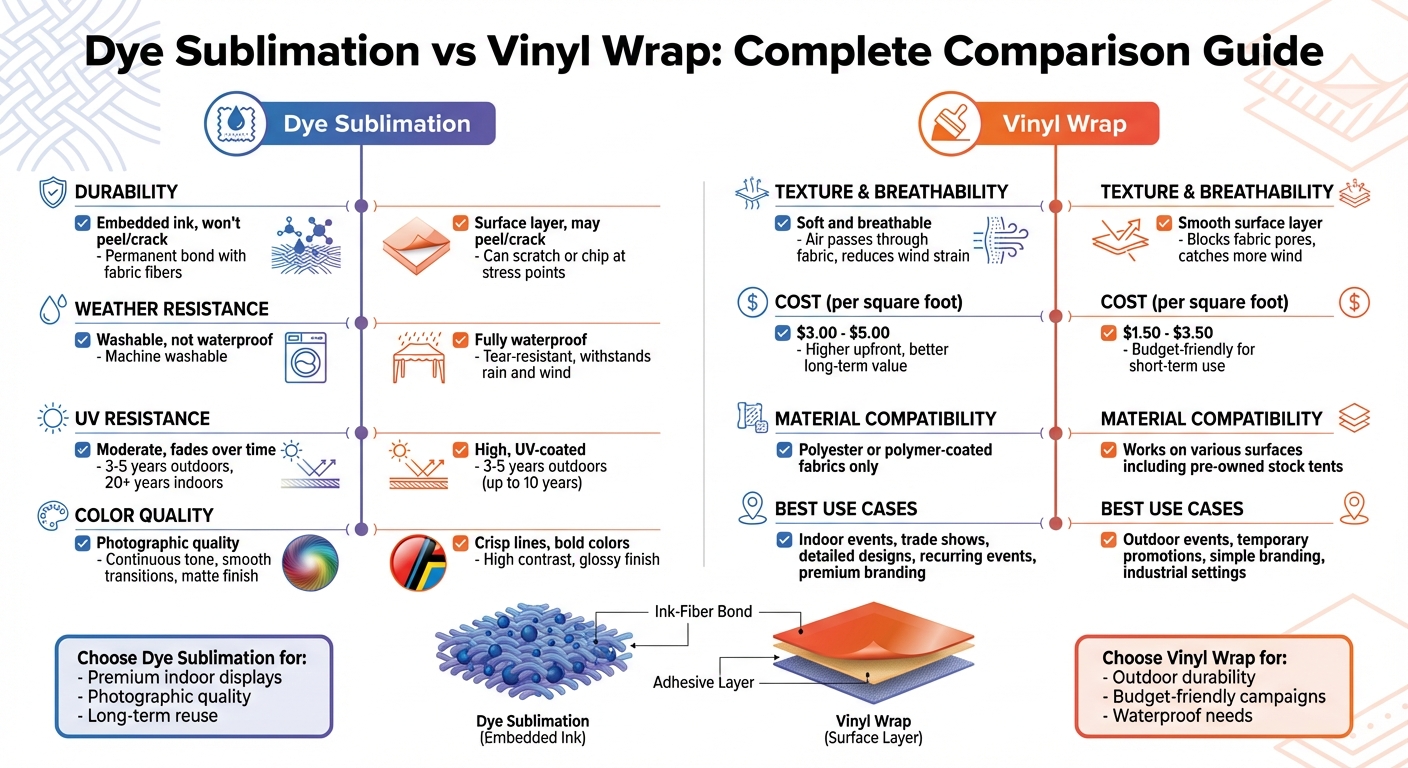
Dye Sublimation vs Vinyl Wrap Canopy Printing Comparison Chart
What Is Dye Sublimation Printing?
Dye sublimation is a printing process that embeds ink directly into polyester fabric at the molecular level. Unlike other techniques that apply ink to the surface, this method uses heat to transform solid dye into gas, allowing it to penetrate deep into the fibers. Once cooled, the gas solidifies within the fabric, permanently locking in the color.
This unique process ensures the ink becomes part of the material, rather than sitting on top where it could crack, peel, or scratch. The result is a soft, breathable canopy that feels like regular fabric – not stiff or plastic-like – and maintains its vibrant appearance through sun, rain, and repeated use.
Barry K. Brown, a signage and display expert at Visigraph, explains:
"Because the dye is converted to gas, [it] creates a fabulous photograph-like continuous tone print, which is especially impressive on finer threaded fabrics."
However, this technique only works on polyester or polymer-coated materials. Natural fabrics like cotton can’t bond with the gasified dye, as the ink simply passes through without creating a lasting image. While this material limitation is important to note, it’s also what makes dye sublimation prints highly durable and machine-washable.
How the Dye Sublimation Process Works
The process involves several precise steps:
- Your design is created digitally and mirrored. The mirroring is crucial because the image will be reversed during the transfer process. This mirrored design is then printed onto special heat-resistant transfer paper using sublimation inks.
- The transfer paper and polyester fabric are placed together in a heat press set between 380°F and 420°F (195°C to 215°C). At these high temperatures, the solid ink skips the liquid phase and transforms directly into gas. This gasified dye penetrates the polyester fibers, which expand under the heat to absorb the color.
- As the fabric cools down, the fibers contract, permanently trapping the dye inside. Since there’s no surface layer, the print won’t wear off or fade. After printing, the fabric panels are sewn together to create the final product, like a canopy top.
Industrial dye sublimation printers can handle large-scale production, printing up to 3,800 square feet of fabric per hour, making it suitable for both custom projects and bulk orders.
Benefits of Dye Sublimation
One of the biggest advantages of this method is durability. Because the dye is embedded within the fibers, the graphics remain intact – no cracking, peeling, or scratching – even after years of use.
Another standout feature is the color quality. Dye sublimation uses continuous-tone technology, meaning each dot can be any color. This results in photographic-quality images with smooth transitions and no visible dots or graininess. Colors stay vivid and bright for 3 to 5 years outdoors, and indoor displays can last over 20 years with minimal fading.
The fabric itself stays soft and breathable, which is especially useful for outdoor setups. Air can pass through the material, reducing strain on the frame during windy conditions. Plus, if the canopy gets dirty, you can machine-wash it without worrying about damaging the design.
"The print is infused into the fabric instead of being applied on top, so the print will not crack, fade or peel under normal use." – Above All Advertising, Inc.
Dye sublimation also supports full-bleed, edge-to-edge printing, meaning every inch of your canopy can display custom graphics with no blank spaces or borders.
Drawbacks of Dye Sublimation
While dye sublimation offers many benefits, it does come with a few limitations:
- Material restrictions: This process only works on polyester or polymer-coated fabrics. It’s not compatible with vinyl, PVC, or other non-fabric materials.
- Higher upfront costs: For smaller orders, dye sublimation can be pricier than vinyl wraps due to the specialized equipment, transfer paper, and setup involved. However, the cost per unit decreases significantly for larger orders, making it more economical for bulk production.
- UV fading over time: Although highly durable, prolonged exposure to intense, direct sunlight can cause gradual fading over the years. To extend the lifespan of your canopy, store it in a cool, dry place and avoid leaving it in constant sunlight when not in use.
These factors are important to weigh when deciding between dye sublimation and other printing methods, like vinyl wrapping.
sbb-itb-c623e60
What Is Vinyl Wrap Printing?
Vinyl wrap printing involves transferring designs onto vinyl sheets, which are then applied to canopy surfaces. Unlike dye sublimation, where ink is embedded into the fabric, vinyl wrap forms a solid layer on top of the material, essentially creating a decorative sticker effect.
This method is commonly used for spot branding on stock-colored canopies. For example, it’s ideal for adding logos to the peaks or valances of tents in standard colors like white, black, blue, or red. However, since vinyl remains a surface layer, it impacts both the look and longevity of the design.
The printed vinyl market is booming, with a global valuation of $28.4 billion and projections to hit $45.7 billion by 2034, growing at an annual rate of 9.2%. This surge highlights vinyl’s flexibility across different uses – ranging from vehicle wraps to event canopies.
Emma Davis from 4over4 explains:
"Vinyl printing empowers businesses to turn almost any surface into a branding opportunity. From fleet vehicles to office walls, it offers a cost-effective and high-impact way to boost visibility."
Still, Andrew Dodson of TentCraft points out potential downsides: "When you are essentially attaching a sticker to your canopy tent, it’s susceptible to crack and even peel off over time."
Next, let’s dive into how the vinyl wrap process brings these designs to life on canopies.
How the Vinyl Wrap Process Works
The vinyl wrap process involves several steps to ensure high-quality results. First, the design is printed onto vinyl sheets using digital inkjet, UV, or latex printers, achieving resolutions up to 720 DPI for eco-solvent printing or 600 DPI for UV printing. A protective laminate layer is then added to shield the design from UV rays, scratches, and weather damage – key for outdoor durability.
Next, the vinyl is digitally cut to match the shape of your logo or graphic. The final step involves heat-bonding the vinyl to the canopy fabric using heat and pressure. This process, often called "dynamic adhesion", ensures the vinyl adheres securely to specific areas of a stock-colored canopy.
One thing to keep in mind: canopies with a special waterproof coating can pose challenges. The coating may repel the vinyl adhesive, leading to peeling or lifting over time.
Benefits of Vinyl Wrap
Vinyl wrap has several standout advantages, particularly for businesses with budget constraints or short-term branding needs:
- Affordable upfront cost: Small DIY iron-on decals for canopies typically range from $25 to $40, making vinyl a cost-effective option for spot branding.
- Material flexibility: Unlike dye sublimation, which works only on polyester, vinyl can be applied to various surfaces, including pre-owned stock-colored tents.
- Durability for temporary use: High-quality cast vinyl designed for outdoor applications can last 5 to 7 years, making it suitable for seasonal or occasional events.
- Quick turnaround: The printing process is relatively fast, and replacing individual vinyl graphics is simple without redoing the entire canopy.
These qualities make vinyl wrap a practical solution for boosting brand visibility at events, especially when time and budget are top priorities.
Drawbacks of Vinyl Wrap
Despite its benefits, vinyl wrap comes with some limitations, particularly in terms of long-term performance:
- Durability concerns: Since vinyl forms a surface layer, it’s prone to cracking, peeling, or chipping – especially at stress points where the canopy folds or flexes.
- Less vibrant colors: While vinyl delivers good-quality graphics, its colors lack the brightness and photorealism of dye sublimation prints. The vinyl layer also creates a slightly plastic-like texture rather than the soft feel of sublimated fabric.
- Reduced breathability: Vinyl blocks the fabric’s pores, limiting airflow. This can make the canopy catch more wind, putting extra strain on the frame during outdoor events.
To maximize the lifespan of vinyl graphics, it’s important to handle the canopy with care. Removing it from the frame and folding it properly between uses can help prevent ink wear or damage during storage. Leaving the canopy on the frame may cause the graphics to scrape or degrade faster.
Dye Sublimation vs Vinyl Wrap: Side-by-Side Comparison
Let’s break down the differences between these two methods to help you decide which one aligns with your event branding needs.
Comparison Table
| Feature | Dye Sublimation | Vinyl Wrap |
|---|---|---|
| Durability | Permanent bond; won’t peel or crack | Surface layer; can scratch or peel |
| Weather Resistance | Washable but not waterproof | Fully waterproof and tear-resistant |
| UV Resistance | Moderate; fades with prolonged sun | High; often UV-coated for longer life |
| Lifespan (Outdoor) | 1–3 years | 3–5 years (up to 10) |
| Color Quality | Photographic, continuous tone | Crisp lines, bold colors, high contrast |
| Texture | Soft, bonds with fibers | Smooth, sits on surface |
| Breathability | High; does not block fabric pores | Low; vinyl layer acts as a solid barrier |
| Best Use Case | High-end event branding, complex logos, long-term indoor use | Temporary outdoor signs, simple text-based banners, dark surfaces |
What the Differences Mean
The key distinction lies in how the ink interacts with the material. Dye sublimation integrates ink into the fabric fibers, making it part of the material itself. In contrast, vinyl forms a surface layer, which is more prone to peeling or cracking under stress.
"Dye sublimation infuses the ink directly into the fabric of the banner, resulting in a high-quality image that’s both durable and long-lasting."
Dye sublimation produces photographic-quality images with rich tones and minimal glare, ideal for indoor settings. Vinyl, on the other hand, delivers sharp, high-contrast graphics that excel in visibility, especially from a distance, but its shinier finish can look more plastic-like. A survey shows that 78% of indoor event photographers prefer dye-sub backdrops for their non-reflective, matte finish, while 67% of outdoor event organizers choose vinyl for its weather resistance and bold colors.
The breathability of dye sublimation is another advantage. It retains the fabric’s natural airflow, reducing wind resistance and keeping the material soft to the touch. Vinyl, however, acts as a rigid barrier, blocking fabric pores and increasing the strain on frames during outdoor events.
Maintenance also differs significantly. Dye-sublimated materials can be machine-washed or hand-washed without affecting the print, making it easier to clean. Vinyl requires gentler care – wiping with a cloth and mild detergent is the safest option. Additionally, vinyl must be rolled carefully during storage to avoid "white breakage", where cracks in the ink layer expose the base material.
Next, we’ll explore cost and production considerations to help you determine which option aligns best with your needs.
Cost and Production Factors
Upfront Costs and Long-Term Value
When it comes to upfront expenses, vinyl printing is the more economical choice. For instance, 13 oz vinyl costs between $1.50 and $2.50 per square foot, while heavy-duty 18 oz vinyl ranges from $2.00 to $3.50 per square foot. In comparison, dye sublimation fabric typically costs $3.00 to $5.00 per square foot, making it about twice as expensive as standard vinyl.
"Vinyl banners are a great ‘cheap’ temporary sign solution, although fabric is not a lot more expensive any more." – Barry K. Brown, Sign, Banner, Decal and Display Expert, Visigraph
For larger orders, however, the price gap narrows, making dye sublimation a practical option even for budget-conscious projects. Plus, dye-sublimated banners offer durability that can’t be overlooked – they can last over 20 years indoors, while vinyl banners generally endure 3–5 years outdoors. If you’re planning recurring indoor events like trade shows or retail displays, dye sublimation offers a clear advantage. These banners can be washed and reused without concerns about peeling or cracking. On the other hand, vinyl remains the go-to for permanent outdoor use, where its weather resistance justifies the shorter lifespan.
How Long Production Takes
Speed is another factor to consider, and both methods can deliver quick results. However, their processes differ significantly. Vinyl printing is a straightforward, single-step process where ink is applied directly to the banner’s surface. In contrast, dye sublimation involves a two-step process: first, the design is printed onto transfer paper, and then it’s heat-pressed into the fabric. While this adds complexity, it’s still efficient for intricate designs.
For basic text-based designs, vinyl printing is often quicker since it skips the transfer step. But when it comes to photographic images or detailed, multi-colored logos, dye sublimation can actually save time. Vinyl requires extra manual work, like removing excess material and layering colors for complex designs. Dye sublimation simplifies this with its print-and-press method, where heat-pressing takes only 25 to 75 seconds, depending on the material. For large-scale projects, dye sublimation’s streamlined process makes it easier to produce high-quality banners in bulk.
These differences in production time and complexity can heavily influence which method is best for your event branding needs.
Which Method to Choose for Your Event
When deciding between dye sublimation and vinyl wrap, it’s all about understanding the specific needs of your event. Let’s break it down based on the strengths of each method.
When Dye Sublimation Is the Better Choice
Dye sublimation shines in indoor settings like trade shows, conventions, and high-end corporate events. Its matte finish reduces glare from bright lighting and camera flashes, making it perfect for professional photo backdrops or step-and-repeat walls. For venues with harsh fluorescent lighting, dye-sublimated fabric avoids reflecting light back at attendees or photographers, ensuring a polished look.
Another advantage? It’s lightweight and foldable, which makes it a practical choice for brands traveling to multiple events. You can fold and transport these canopies repeatedly without damaging the graphics, thanks to the ink being embedded into the fabric fibers.
If you’re hosting recurring events, dye sublimation offers a washable and reusable solution. Whether machine-washed or hand-cleaned, the fabric maintains its pristine appearance, which is especially useful for indoor events where presentation matters. Plus, the soft texture and photographic quality give off a premium vibe – perfect for brands aiming to make a professional impression without coming across as cheap or low-quality.
However, if your event involves heavy outdoor exposure, you might want to consider a different option.
When Vinyl Wrap Is the Better Choice
Vinyl wrap is the go-to choice for permanent outdoor setups or long-term storefront displays. It’s built to withstand the elements – rain, wind, UV rays, and more – making it ideal for canopies that need to endure constant exposure without warping or fading.
For events held in dusty, greasy, or industrial settings, vinyl’s wipeable surface is a game-changer. Whether it’s a construction site, a warehouse, or a festival near food vendors, vinyl doesn’t absorb odors or stains. A quick wipe with a damp cloth and mild detergent is all it takes to keep it looking clean.
Vinyl also excels in budget-friendly, high-volume campaigns where visibility is key. Its glossy finish and sharp, vibrant colors make it stand out, even from a distance. For temporary promotions or outdoor events where durability and cost-effectiveness matter more than premium aesthetics, vinyl delivers reliable results without breaking the bank.
Conclusion
Deciding between dye sublimation and vinyl wrap comes down to your event environment and how long you need the product to last. Dye sublimation delivers a sleek matte finish, perfect for indoor venues with controlled lighting. Its lightweight, foldable fabric can last decades indoors. On the flip side, vinyl wrap is designed to withstand the outdoors – it’s weather-resistant and holds up for 3–5 years outside when properly maintained.
Budget is another key factor. While dye sublimation has a higher upfront cost, its durability and reusability make it a smart choice for brands that frequently participate in events. Vinyl, however, is a more affordable option for short-term promotions or temporary setups, especially when bold, attention-grabbing visuals are a priority.
"If visual elegance matters, go fabric. If durability matters, go vinyl." – PrintDrill
Choose dye sublimation for vibrant indoor displays and ease of transport. For outdoor events or challenging conditions like rain and wind, vinyl’s durable, easy-to-clean surface is the better choice.
FAQs
Which printing method looks better in photos?
Dye sublimation tends to shine when it comes to photographs, thanks to its ability to produce vibrant, high-resolution images with lifelike color accuracy. This process embeds the ink directly into the fabric, creating a glare-free, bold finish that enhances the overall visual appeal. It’s a go-to choice for achieving detailed, photo-quality designs that grab attention in event branding. In contrast, techniques like UV or digital printing often fall short in delivering the same level of sharpness and intensity for photographic images.
Will my canopy get damaged in wind?
When it comes to windy conditions, the durability of your canopy hinges on two key factors: how well it’s anchored and the materials used in its construction. Proper anchoring is essential – use heavy-duty stakes, weights, or tie-downs to keep your canopy secure. Additionally, opt for a frame designed to withstand strong winds.
It’s worth noting that the printing method, whether dye sublimation or vinyl wrap, only influences the durability of the graphics, not the canopy’s wind resistance. To protect your setup during gusty events, prioritize sturdy construction and reliable anchoring methods.
How do I clean and store each print type?
Dye Sublimation Prints: Gently clean using a soft cloth or sponge with mild soap and warm water. Steer clear of harsh chemicals. Allow the banner to air dry completely before rolling it up carefully. Store it in a cool, dry spot, away from direct sunlight.
Vinyl Banners: Wipe down with a soft cloth and a mix of cold water and mild soap. Avoid using bleach or abrasive materials. Once fully dry, roll the banner and store it in a cool, dry place, keeping it out of sunlight and extreme temperatures.