











Feather flags are great for outdoor advertising, but windy conditions can quickly damage standard options. The key to longevity is choosing the right materials, pole systems, and anchoring solutions. Here’s a quick breakdown of what works best:
- Reinforced Polyester Flags: Made from 110–115 gsm knitted polyester, these flags resist tearing, UV damage, and abrasion. They last 6–12 months and handle winds up to 46 mph.
- Flexible Fiberglass Poles: Unlike rigid aluminum, fiberglass poles bend with gusts, reducing stress and lasting over 5 years. They’re ideal for winds exceeding 60 mph.
- Ground Spike Anchoring Systems: These secure the flag in place with a 360-degree rotating base, allowing it to align with wind direction and reduce strain.
For the best results, combine durable polyester flags, flexible poles, and a stable ground spike base. This setup ensures your display stays intact and professional even in tough weather.
1. Heavy-Duty Feather Flag with Reinforced Polyester
Material Durability
Heavy-duty feather flags are built to tackle the challenges of harsh weather, especially strong winds, by using reinforced materials. These flags are crafted from 4 oz (110–115 gsm) knitted polyester, which is significantly sturdier than the lighter 2 oz or 3 oz fabrics. This weightier polyester reduces the snapping motion that often tears lighter materials in windy conditions. The 2-ply spun construction – two layers of fabric bonded with twisted staple fibers – adds extra toughness, making the material resistant to abrasion and the fluttering forces that typically wear down standard flags.
"Polyester is a synthetic, polymer-based material consisting of small, tightly bonded fibers that give it the strength to handle prolonged outdoor use without tearing or fraying easily." – Mendy Rimler, CEO, NorthCoast Banners
The tightly bonded fibers also resist pilling and fraying, ensuring the flag maintains a polished, professional look over time. Additionally, the polyester is UV-stabilized and fast-drying, offering protection against sun damage and mildew. This ensures the flag retains its appearance for 6–12 months, even with regular outdoor use.
Wind Resistance Design
The design of these flags further enhances their ability to withstand windy conditions. Reinforced polyester excels at managing wind stress. Single-sided heavy-duty flags can endure sustained winds of up to 46 mph and remain stable in gusts surpassing 62 mph. This resilience is partly due to the fabric’s wind permeability, which allows air to pass through the surface, reducing strain on the pole and base. The heavier weight of the polyester (115–130 gsm) also helps absorb high-frequency snapping, minimizing violent fluttering and slowing edge wear.
Dye sublimation printing embeds ink directly into the fibers, ensuring the design won’t crack or peel, even with repeated flexing. For the best stability, consider custom logo printed outdoor feather flags that are 8–10 feet tall. This thoughtful engineering not only extends the flag’s lifespan but also ensures your brand remains visible and professional during outdoor events.
sbb-itb-c623e60
2. Premium Wind-Resistant Feather Flag with Flexible Poles
Pole System Strength
Durable pole systems are key to keeping feather flags intact in high winds. Poles made entirely of fiberglass are designed to flex with gusts, reducing the chance of snapping or tearing the flag. Unlike rigid aluminum poles, which are prone to breaking under stress, these flexible poles bend and allow the flag to move freely without losing its shape.
"Full fiber-glass aviation grade feather flag poles are the gold standard when it comes to durability and strength." – Lush Banners
Fiberglass poles offer a lifespan of over 5 years, far outlasting the 1–2 years typical of poles made from a mix of aluminum and fiberglass. They can handle sustained winds up to 46 mph and gusts exceeding 62 mph, while standard aluminum poles often fail around 32 mph. This flexibility ensures the flag remains functional even in challenging weather conditions.
Wind Resistance Design
The system’s design goes beyond just flexible poles to handle gusty conditions effectively. One smart feature is using slightly shorter flags than the poles they’re mounted on – for instance, pairing a 12-foot flag with a 15-foot pole. This setup reduces strain on the hardware, allowing the flag to flutter naturally while maintaining stability. The extra pole length also adds visual height, making the display more noticeable.
Another crucial element is the pole sleeve – the fabric pocket that holds the flag onto the pole. High-quality systems use heavy-duty Oxford fabric for this sleeve instead of standard polyester. This stronger material prevents the pole from poking through during high winds. Together with the flexible pole design, it ensures the flag can bend and sway without damage, helping maintain its professional look and extending its usability for outdoor events.
3. Custom Feather Flag with Ground Spike Anchoring System
A ground spike anchoring system takes stability to the next level, especially when dealing with strong winds. It pairs perfectly with durable materials and flexible poles to keep your custom feather flag standing tall.
Base and Anchoring Stability
Ground spikes are designed to hold your flag firmly in place, even in challenging weather. These spikes are driven about 25 inches into the ground, offering a secure foundation. Typically weighing between 2.65 and 3.4 lbs, they’re made from rust-resistant steel with a zinc or chrome finish, ensuring they can handle outdoor conditions without corroding.
The standout feature? A 360-degree rotating bearing system. This clever addition lets the flag rotate freely with the wind, much like a weather vane. By doing so, it reduces wind resistance by allowing the flag to align with the wind’s direction.
"The spike base has an integral rotating bearing so the flag can turn in relation to the wind direction. This allows the flag to be secure at higher wind speeds when compared to a basic ground spike without a bearing." – Printdesigns
This combination of a sturdy base and smart design ensures your flag remains stable and functional, even when the wind picks up.
Material Durability
The flags designed for use with ground spike systems are made from 110 to 115 gsm knitted polyester, striking the perfect balance between lightweight movement and tear resistance. This fabric has been tested to handle wind speeds of up to 35 mph. To further protect the setup, an Oxford fabric pole sleeve prevents the pole from penetrating the material. Double hemming along the edges provides extra reinforcement, reducing damage from whipping winds.
For areas prone to high winds, single-sided flags are a smart choice. They move more easily with the wind and still offer good visibility, as the design appears as a mirrored image on the reverse side.
Wind Resistance Design
The ground spike not only anchors the flag securely but also works with the overall design to manage wind energy effectively. By holding the base firmly in place, it allows the fiberglass pole to bend naturally without shifting or lifting. This setup enables the flag to sway with the wind while the base remains steady.
For larger flags over 12 feet, it’s best to use heavy-duty or screw-in spikes. These should be driven deep into compacted soil for maximum stability. Adding a bungee cord or adjustable clip helps keep the flag taut, preventing slack or tangling during gusty conditions.
Pros and Cons Comparison
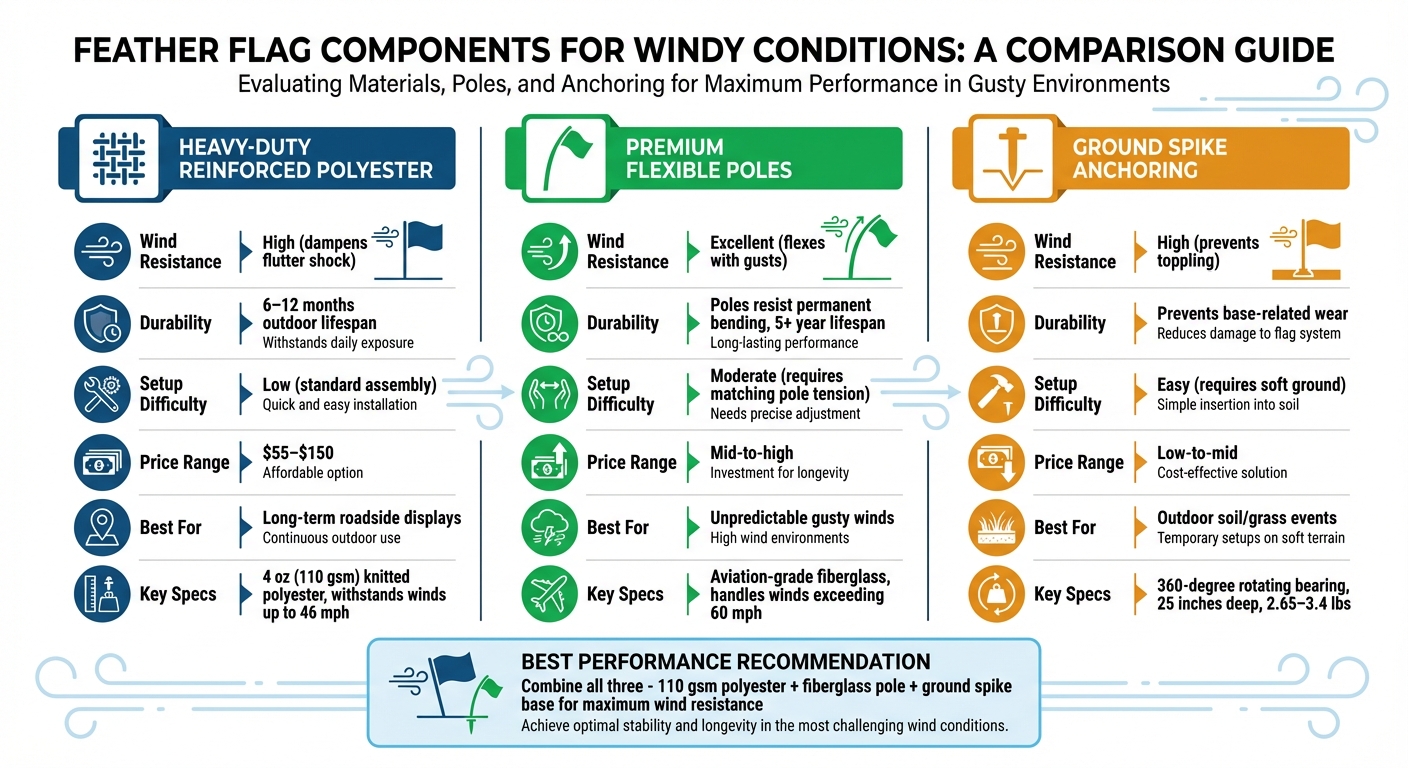
Feather Flag Components Comparison: Wind Resistance and Durability Guide
Each feather flag option has its strengths, and knowing these differences can help you find the best fit for your needs. The heavy-duty reinforced polyester flag is built to last, offering resistance to tears and UV fading, thanks to its 4 oz (110 gsm) fabric weight. It’s a great choice for long-term roadside displays, though it comes with a mid-to-high price tag, ranging from $55 to ranging from $55 to $150 depending on the size.50 depending on the size, such as a 16ft custom outdoor feather flag.
The premium flexible pole system is designed to handle wind gusts effectively, flexing without snapping or bending permanently. Fiberglass poles are more flexible than aluminum ones, making them ideal for gusty conditions, with some models rated for winds up to 30 mph. However, this flexibility adds to the cost and makes them slightly bulkier to transport.
For outdoor stability, ground spike anchoring systems are a solid choice. These systems include a rotating bearing that allows the flag to turn with the wind, reducing strain on both the pole and fabric. They’re easy to set up – just drive the spike into soft ground – and they fall into the low-to-mid price range. This setup also helps minimize base-related wear, extending the flag’s lifespan.
Here’s a quick breakdown of the key differences:
| Feature | Heavy-Duty Reinforced Polyester | Premium Flexible Poles | Ground Spike Anchoring |
|---|---|---|---|
| Wind Resistance | High (dampens flutter shock) | Excellent (flexes with gusts) | High (prevents toppling) |
| Durability | 6–12 months outdoor lifespan | Poles resist permanent bending | Prevents base-related wear |
| Setup Difficulty | Low (standard assembly) | Moderate (requires matching pole tension) | Easy (requires soft ground) |
| Price Range | $55–$150 | Mid-to-high | Low-to-mid |
| Best For | Long-term roadside displays | Unpredictable gusty winds | Outdoor soil/grass events |
For the best performance, consider combining these features. A 110 gsm polyester flag paired with a fiberglass pole and ground spike base offers excellent wind resistance and durability, though it requires a higher upfront investment. If you’re working with a tighter budget, focusing on a sturdy anchoring system and flexible poles can help avoid common issues in windy conditions. This comparison can guide you toward a flag system that meets your event’s demands.
Conclusion
Selecting the right feather flag for windy conditions means focusing on materials and design features that can handle your outdoor environment. Reinforced 110 gsm (4 oz) polyester flags are a great choice for long-term roadside use, as they resist tearing and hold up well in challenging weather. Aviation-grade fiberglass poles are another must-have – these poles flex with wind gusts over 60 mph without breaking, making them perfect for coastal or consistently windy areas. Pair these with ground spike anchoring systems for grass or soil installations, which allow the flag to rotate naturally with the wind. This setup reduces stress on both the fabric and the hardware, ensuring your flag remains reliable and visible during tough conditions.
For added durability, go with teardrop, single-sided designs to minimize flapping and reduce wear and tear.
"Full fiber-glass aviation grade feather flag poles are the gold standard when it comes to durability and strength… providing exceptional flexibility and resistance to bending or breaking." – Griffin Miller, Graphic Designer, Lush Banners
Proper installation is just as important as choosing the right materials. In areas with sustained winds over 35 mph, aviation-grade fiberglass poles with a lifespan of 5+ years outperform aluminum poles, which typically last only 1–2 years. Stick with flags around 8 to 10 feet tall for better stability – larger flags catch more wind and are more prone to damage. If you’re setting up on concrete or pavement, use a heavy plate base or a cross base with a water bag weighing about 34 lbs to prevent tipping.
FAQs
What wind speed is too high for a feather flag?
Feather flags are best suited for wind speeds up to 18-25 mph, which corresponds to Force 4-5 on the Beaufort scale. When secured with a ground spike, higher wind speeds can lead to instability or even damage to both the flag and the pole system.
Which flag shape holds up best in strong wind?
The convex feather flag stands out as the go-to choice for durability in strong winds. Its gently rounded bottom corners are not just about aesthetics – they play a key role in improving stability and minimizing strain on the material. This makes it a dependable option for outdoor settings, even when the weather is less than ideal.
What base should I use on concrete or asphalt?
For hard surfaces like concrete or asphalt, it’s best to go with a drive-on base or a weighted base. These are specially designed for solid ground. Choices such as a heavy-duty square base or a car tire base provide excellent stability, even in windy weather, ensuring your feather flags stay firmly in place.