











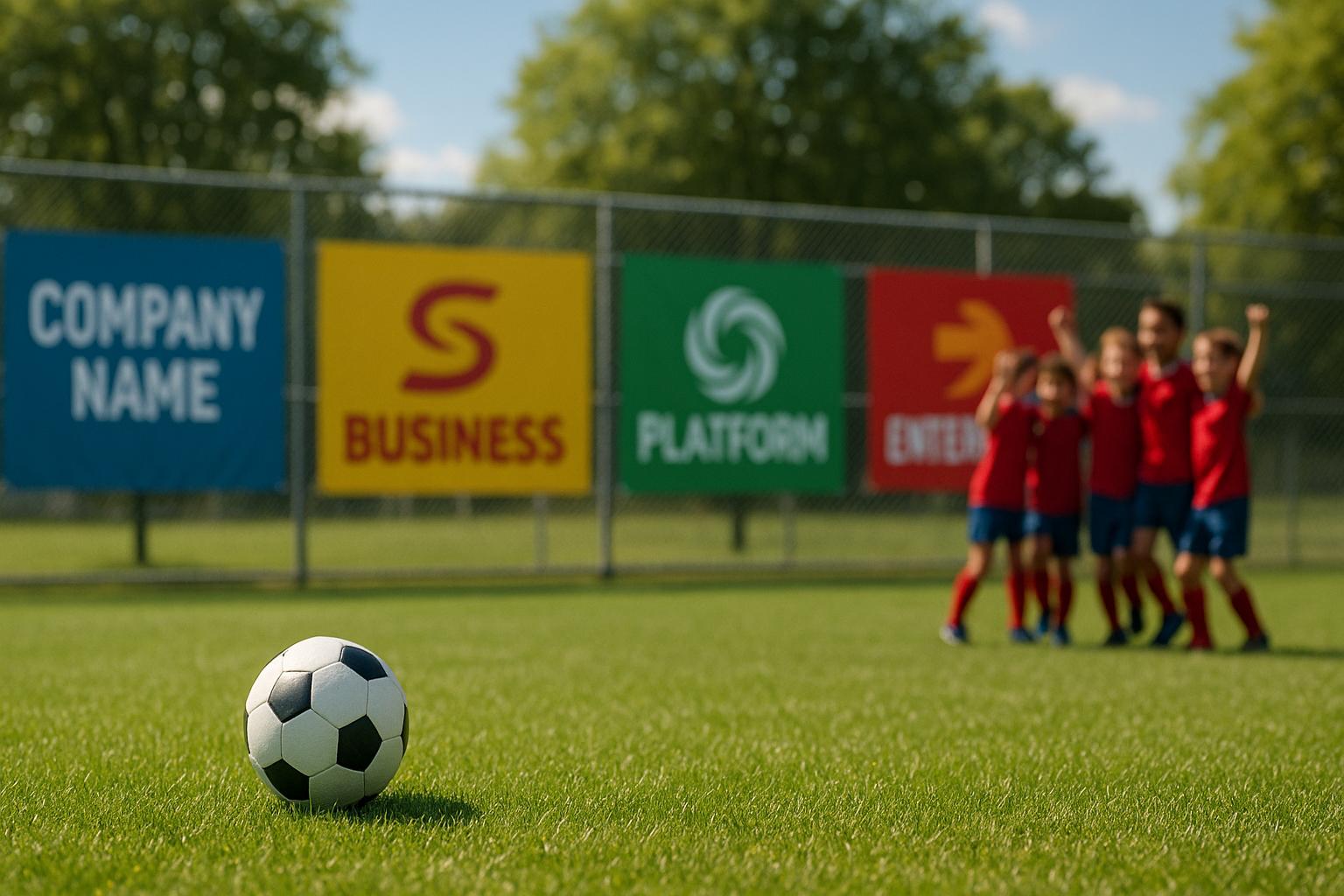
Sponsorship banners are a simple way to support youth sports teams and promote local businesses. Teams get funding for essentials like uniforms and equipment, while businesses gain visibility at community events. Here’s how to create effective banners:
- Placement: Choose high-traffic spots like outfield fences, gym walls, or entrance gates for maximum exposure.
- Materials: Use durable vinyl for outdoor banners or fabric for indoor use.
- Design: Prioritize sponsor logos, maintain team branding, and use clear fonts with strong color contrast.
- Sponsorship Tiers: Offer levels like Bronze, Silver, and Gold to attract businesses with different budgets.
A well-designed banner not only supports the team but builds lasting relationships with sponsors by showing their investment’s impact.
What Sponsorship Banners Do
Sponsorship banners serve a dual purpose: they provide advertising opportunities for local businesses while helping youth sports teams manage their expenses.
Main Functions of Sponsorship Banners
At their core, these banners promote local businesses to an engaged audience. Attendees at games and events are exposed to sponsor messaging repeatedly, creating a lasting impression. The funds raised through sponsorships directly benefit the team. For instance, a single banner sponsorship might cover the cost of new team jerseys, while multiple sponsors can help with expenses like field upkeep, equipment, or tournament fees. This financial support helps keep youth sports more affordable, making it accessible to more families.
"Local businesses consistently rank youth sports sponsorships as one of the most effective ways to connect with families in their community." – SeeMyLegacy
Beyond their practical benefits, well-designed banners enhance the overall look of sports venues. They reflect a strong sense of community support, which can influence parents considering programs for their children and reassure sponsors that their investment is making a real impact. Seeing familiar business names on banners reinforces the idea that local partners are committed to the success of the team.
Understanding these benefits is key to placing banners where they’ll make the biggest impact.
Where to Place Banners
Strategic placement is essential to ensure banners grab attention and deliver value.
- Outfield fences and gym walls: These spots guarantee repeated exposure during games, practices, and tournaments.
- Premium locations like behind home plate or near dugouts: These areas often appear in game photos, extending the sponsor’s reach beyond the event itself.
- Concession and merchandise areas: High-traffic zones where families gather for snacks or gear provide great visibility.
- Entrance gates: Every attendee passes through these points, ensuring sponsor messages are seen by all.
For additional exposure, sideline and bleacher placements work well. Horizontal A-frame signs are particularly effective here, as their double-sided design ensures visibility from multiple angles. In multi-field complexes, yard signs along pathways between fields can capture attention during tournaments.
The goal is to position banners in areas where people naturally gather or pass by, ensuring sponsors get consistent exposure throughout the season.
Next, we’ll look at how choosing the right materials and sizes can amplify your banner’s effectiveness.
Choosing Materials and Sizes
Picking the right material and size is key to creating banners that last and grab attention.
Material Options for Different Locations
For outdoor banners, vinyl is a go-to choice. It’s tough, holds up well against the elements, and keeps its colors vibrant over time. If your banner will face windy conditions, mesh vinyl is a smart option – it’s designed to reduce wind resistance, making it perfect for open, breezy spaces. On the other hand, fabric banners work best indoors or in covered areas. They’re lightweight, have a matte finish to cut down on glare, and keep logos looking sharp. However, fabric isn’t built to withstand outdoor weather, so it’s best saved for protected locations.
Once you’ve chosen the material, the next step is deciding on the right size to ensure your banner stands out while fitting the space perfectly.
Sizing Banners for Your Venue
After settling on the material, it’s time to focus on dimensions. The size of your banner should depend on how far away viewers will be and how much room you have for mounting. For larger outdoor spaces like fences, go with bigger banners that can grab attention even from a distance. Smaller banners work well in areas where people are closer, such as near dugouts, entrances, or concession stands, without sacrificing readability.
Make sure to balance sponsor logos with your team’s branding. The banner should be easy to read from afar while leaving enough space around the edges for secure mounting. If you’re using multiple banners, keeping their sizes consistent will give your setup a polished, unified appearance.
Designing Effective Sponsorship Banners
Once you’ve settled on the materials and sizes for your banners, the next step is crafting a design that grabs attention and delivers your message clearly.
Placing Sponsor Logos
Sponsor logos should stand out and be easy to identify. To achieve this, arrange them with a clear visual hierarchy – larger or more prominent sponsors at the top or center. Leave enough space around each logo to avoid a cluttered look, and always maintain the original colors of the logos to respect brand identity.
Including Team Branding
Your team’s branding is important, but it shouldn’t overshadow the sponsor logos. Dedicate a specific area – such as the top or side – for your team name and logo. Use your team colors sparingly as accents to keep the design balanced. Avoid adding too many extra elements to maintain a clean, focused layout.
Using Color and Contrast
Strong color contrast is key to making your banner easy to read. Pair light and dark colors for the background and text to ensure visibility. Choose bold, sans-serif fonts like Arial or Helvetica for maximum clarity. Keep your color palette simple, allowing sponsor logos and team branding to remain the focal points of the design.
sbb-itb-c623e60
Keeping Sponsors Satisfied
A great banner might kick off a sponsorship, but keeping sponsors happy requires more than just eye-catching design and good placement. To build lasting relationships, you need to show sponsors the real value their investment brings.
Setting Up Sponsorship Tiers
Creating sponsorship tiers – like Bronze, Silver, and Gold – allows you to cater to different budgets while offering clear benefits at each level.
- Bronze Tier: Perfect for businesses just stepping into youth sports sponsorship. These sponsors typically get a smaller logo placement on team banners, grouped with others at the same level.
- Silver Tier: Offers more visibility, with larger banner placements and possibly a logo spot on the team website or other online platforms.
- Gold Tier: The top tier includes the most prominent banner placements, often prime spots, along with perks like logo placement on team uniforms or promotional materials.
When setting prices, balance your team’s financial needs with what local businesses can afford. For reference, college programs like Millersville University offer sponsorships ranging from $2,500 to $10,000, but youth sports teams usually work with smaller figures. Price each tier to reflect the increasing exposure and benefits. And always frame the benefits in a way that resonates with sponsors. For instance, instead of saying, "Logo on team banner", highlight the audience reach: "Your brand displayed at every home game, connecting with hundreds of attendees throughout the season."
To calculate reach, estimate attendance at games, practices, and tournaments where banners will be visible. This gives sponsors a clear idea of the exposure they’ll receive.
Showing Sponsors Their Return on Investment
Sponsors want proof that their contributions are making an impact. With youth sports families spending over $800 annually on average, your audience represents a financially engaged, local community.
Start by tracking attendance at games, practices, tournaments, and other events. This total audience number provides a measurable way to show how many people see their branding.
Social media is another powerful tool. Share photos of banners on display, tag sponsors, and track metrics like impressions and interactions. Compile these stats into a brief one- or two-page report that outlines their digital reach. Encourage sponsors to share this content on their own social platforms to amplify visibility.
To show direct engagement, consider using trackable promotions. Add QR codes or unique discount codes to banners, allowing sponsors to measure responses directly. This makes it easier for them to see the value of their sponsorship and consider renewing.
Studies have shown that companies effectively promoting their social responsibility efforts can see profitability increase by 3.5% [1]. Help your sponsors leverage this by sharing updates regularly. Send them high-quality photos of their banners in action, dynamic shots of players, and highlights of team achievements. These materials can be repurposed for their own marketing campaigns.
Finally, create simple mid-season and end-of-season reports for each sponsor. Include key stats like attendance figures, social media metrics, photos of their banner at events, and testimonials from team families. Keep these reports concise – one or two pages – to quickly and effectively showcase the impact of their support. Just like a well-designed banner, clear data builds trust and long-term partnerships.
Printing, Installing, and Maintaining Banners
Vinyl banners are tough and built to handle the elements, making them a great option for outdoor events. Keeping them in good shape protects your team’s image and ensures sponsor logos stay sharp and visible.
Working with Banner Printers
When ordering banners, always supply your printer with high-resolution files – at least 150 DPI – for large-format printing. Choose the right material, such as vinyl, mesh vinyl, or fabric, depending on where the banner will be displayed. For secure mounting, request grommets spaced 18-24 inches apart along the edges. Many printers also offer finishing touches like hemmed edges or pole pockets, which add extra durability. To ensure colors, especially sponsor logos, are accurate, ask for a proof before the final print run.
Installing Banners Securely
A well-installed banner not only looks professional but also holds up against the weather. For fences, use zip ties or bungee cords through the grommets, keeping the banner taut to avoid sagging. On walls or solid surfaces, screws and washers at the grommet points work best. Temporary setups near entrances or concession areas can benefit from portable banner stands with weighted bases. In windy spots, mesh vinyl is a smart choice as it reduces stress on the mounting points. Before installing banners on public property or shared spaces, make sure to check local rules and regulations.
Maintaining and Storing Banners
Once your banner is printed and installed, taking care of it is key to keeping it looking great. Clean banners regularly with mild soap and water to remove dirt – skip harsh chemicals that might fade the colors. Inspect grommets and edges for any signs of wear, and repair damage right away to prevent further issues. When not in use, roll vinyl banners instead of folding them to avoid creases. Store them in a cool, dry place away from direct sunlight. For easy organization, label each rolled banner with the sponsor’s name and season. With proper care and secure installation, your banners can stay in excellent condition for multiple seasons.
Conclusion
When creating sponsorship banners, it’s all about finding the right balance between functional design and smart material selection. Use vinyl for outdoor settings due to its durability, and fabric for indoor events where a polished look matters. The goal is to ensure sponsor logos are clearly visible while maintaining your team’s identity. Achieve this by strategically placing logos, using bold fonts, and choosing contrasting colors that stand out even from a distance.
Planning plays a crucial role in making your banners effective. With a reported 14% annual rise in visual clutter at sports events, simplicity is your best friend. A clean, well-thought-out design will always outshine a chaotic one. Rushing the process often leads to errors that can tarnish your team’s image and disappoint sponsors.
As discussed in the "Keeping Sponsors Satisfied" section, setting up tiered sponsorship levels is key to managing expectations and offering fair value to contributors. This approach not only attracts more sponsors but also simplifies banner design, ensuring every supporter gets appropriate recognition.
Don’t overlook maintenance. Keeping banners in good condition ensures they last for multiple seasons and keeps sponsor logos looking sharp. Well-maintained banners show sponsors their investment is valued, boosting retention rates and making it easier to bring new partners on board.
Whether you’re designing your first banner or improving an existing setup, focus on clarity, professional craftsmanship, and strategic placement. Your banners are a reflection of your team and the businesses that back you, so make them count. By tying these final steps into the earlier guidelines, you’ll create a banner strategy that benefits everyone involved.
FAQs
What are some creative ways to ask local businesses to sponsor youth sports teams?
When reaching out to local businesses for sponsorships, focus on highlighting the shared advantages. Explain how their support can boost their presence in the community while associating them with a meaningful cause.
Offer tiered sponsorship packages to accommodate different budgets. For instance, you might create options ranging from $250 to $1,000, with varying benefits like featuring their logo on banners, acknowledgments during games, or shoutouts on social media.
Establishing personal relationships is crucial. Take the time to visit businesses in person, and bring along a letter or flyer that outlines your team’s goals. Clearly detail how their sponsorship will make a difference, emphasizing the community connection and how their contribution helps local kids succeed both on and off the field.
What’s the best way to measure the impact of sponsorship banners for youth sports teams and their sponsors?
To evaluate the success of sponsorship banners, start by examining brand awareness and how well attendees remember the sponsor’s logo or message. This can be done through surveys or casual feedback, giving you insights into how effectively the banner grabs attention and sticks in people’s minds.
Next, analyze the reach and impressions by estimating how many people actually see the banner during events. Factors like attendance numbers and the banner’s placement play a big role here. To go a step further, consider asking the sponsor if their involvement translated into increased interest or sales for their products or services – this helps gauge their return on investment.
Lastly, keep the lines of communication open with sponsors. Their feedback is invaluable for tweaking future banner designs to align more closely with their marketing goals.
What mistakes should I avoid when designing and placing sponsorship banners for youth sports teams?
When designing sponsorship banners for youth sports teams, there are a few pitfalls you’ll want to avoid to ensure the banners are effective and eye-catching.
First, don’t just slap a sponsor’s logo on the banner without thinking about how it fits with the team’s identity or the event’s overall vibe. The best banners strike a balance between showcasing the sponsor’s branding and celebrating team spirit. A cohesive design makes all the difference.
Second, avoid cramming the banner with too many details or logos. Overloading the space can make it look messy and hard to read, especially from a distance. Instead, aim for a clean, simple layout that prioritizes readability and impact.
Lastly, placement is everything. Make sure the banner is installed in a high-traffic or highly visible spot – like near the field or where attendees naturally gather. A poorly placed banner risks going unnoticed, which doesn’t help your sponsors or the team.