










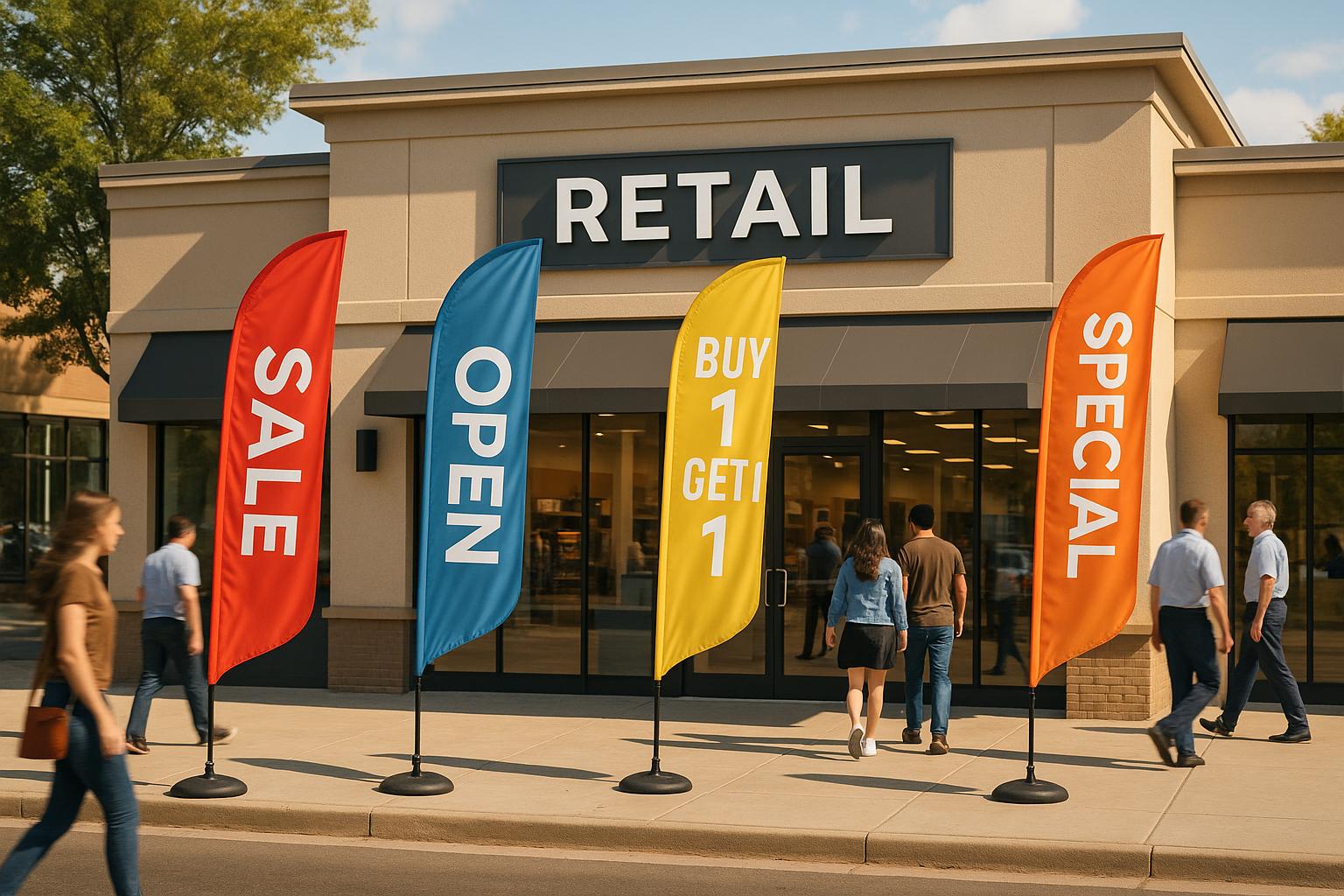
Feather flags are a simple, low-cost way to grab attention and increase foot traffic. Businesses like Toyota, McDonald’s, and State Farm have effectively used them to boost visibility, promote sales, and connect with local communities. Their movement and bold colors naturally draw the eye, while strategic placement ensures they’re seen by the right audience.
Key takeaways:
- Affordable: Starting at $49, they’re a cost-effective alternative to expensive ads.
- Attention-Grabbing: Motion and bright colors make them hard to miss.
- Reusable: Durable materials mean they can be used across multiple campaigns.
- Placement Matters: Positioning near roads, entrances, or intersections maximizes their impact.
Feather flags are a practical tool for businesses looking to stand out without overspending. Pairing them with clear designs and concise messages ensures they deliver results.
How Feather Flags Increase Visibility and Customer Traffic
Feather flags are a smart way to grab attention because they tap into our natural tendency to notice movement and bright colors. Unlike regular signs that just sit there, these flags sway and flutter with even a slight breeze, making them hard to miss. Plus, they’re often mounted high enough to rise above parked cars or groups of pedestrians, ensuring your message gets seen well before someone even reaches your storefront. Let’s break down why movement and color make these flags so effective.
Why Movement and Color Make Feather Flags Noticeable
Our eyes are naturally drawn to motion, which is why feather flags work so well. When the wind moves the flag, it creates a dynamic display that stands out far more than a stationary sign. Add bold, contrasting colors – like red and white or blue and white – and you’ve got a visual combination that’s hard to ignore, even in a busy urban setting. To maximize their impact, keep the message on the flag simple and easy to read at a glance.
The materials used for these flags also play a role. High-quality feather flags are made from lightweight, weather-resistant fabrics that move fluidly in the wind without tangling. This ensures they remain visually appealing and effective throughout the day, regardless of the weather.
Where to Place Feather Flags for Best Results
Placement is just as important as the design. To get the most out of your feather flag, you’ll want to position it where it can engage potential customers before they’ve made a decision – not after they’ve walked past or driven away. Strategic placement can make all the difference.
- Roadside Visibility: Place your flag where it’s easy for drivers to spot without obstructing their view of the road. Make sure you follow local rules about signage placement.
- Corner Locations: Use multiple flags on different sides of an intersection to catch attention from various directions.
- Entrances: Flank your doorway with flags to create a welcoming path and guide customers toward your business.
- Parking Lots: Use flags as markers to help visitors navigate large or confusing spaces, especially if they’re new to the area.
- Pedestrian Areas: Position flags near your storefront so people walking by can quickly absorb your message.
For added impact, consider using several flags with complementary messages. For example, one could showcase your logo, another could promote a sale, and a third could point out the entrance.
When choosing a spot, avoid obstructions like trees, poles, or parked cars, and check the visibility from multiple angles to ensure nothing blocks the view. In windy areas, place the flag where it can catch the breeze, and in calmer spots, look for natural airflow to keep it moving. Finally, make sure your flag is securely mounted with the right base or hardware for the surface it’s on.
Case Studies: How Retailers Used Feather Flags Successfully
Real-world examples show that feather flags, when used strategically, can increase showroom visits, spotlight limited-time offers, and improve local visibility. Let’s take a closer look at how three well-known brands have effectively incorporated them into their marketing efforts.
Toyota Dealerships: Drawing More Visitors to Showrooms
Toyota dealerships faced stiff competition in local markets and needed a way to stand out. They turned to custom feather flags with bold colors, consistent branding, and clear promotional messages. Placed at high-visibility entrances, these flags grabbed the attention of both drivers and pedestrians. The result? More people walked into the showrooms, inquired about vehicles, and scheduled test drives – proving that a simple yet impactful strategy can make a big difference.
McDonald’s: Highlighting Limited-Time Menu Offers
In the fast-paced world of quick-service restaurants, McDonald’s knows the value of promoting urgency. To advertise limited-time deals and seasonal menu items, they used feather flags with concise, eye-catching messages. Positioned in high-traffic areas, the flags acted as both advertisements and directional guides, steering customers toward their restaurants. The combination of visibility and urgency encouraged diners to act quickly, boosting sales during promotional periods.
State Farm: Enhancing Local Presence and Community Trust
Service-based businesses like State Farm have also found feather flags to be a powerful tool for building local connections. By placing branded feather flags in areas with heavy foot traffic, they increased visibility for local agents while promoting their insurance offerings. These flags didn’t just attract potential customers – they also strengthened trust within the community. Coupled with participation in local events and sponsorships, this approach allowed State Farm to measure the effectiveness of their campaigns and refine future strategies.
These examples illustrate that feather flags, when paired with specific goals and smart placement, can deliver impressive results. Whether it’s increasing showroom visits, driving urgency for time-sensitive deals, or connecting with the community, feather flags prove to be a versatile and effective marketing tool. In fact, outdoor signage like feather flags can boost foot traffic by up to 20% when used thoughtfully[1].
Why Feather Flags Are Affordable Marketing Tools
Feather flags are not just eye-catching; they’re also a budget-friendly way to enhance visibility. With prices starting at just $49 and typically capping around $150 for larger or custom designs, they provide a one-time investment that eliminates the need for ongoing expenses. This makes them an excellent choice for businesses looking to stretch their marketing dollars while boosting outdoor presence.
Low Upfront Cost and High ROI
Compared to marketing channels with recurring fees, feather flags require a much smaller upfront investment. Once purchased, you can use them repeatedly for various campaigns – whether they’re stationed outside your store, featured at community events, or spotlighting seasonal promotions. By rotating them across different initiatives, you maintain their effectiveness in driving foot traffic and increasing brand awareness.
This repeated use ensures a strong return on investment. Plus, their durability adds to the value, as they’re built to last and perform over time.
Durable and Reusable
High-quality feather flags are designed to endure outdoor elements. They resist fading, tearing, and other wear-and-tear from weather, ensuring they stay vibrant and functional across multiple campaigns. From grand openings to holiday sales, these flags can handle it all. To keep them looking fresh, a quick hand wash with mild soap and water, followed by proper drying, does the trick.
Their reusability makes them a smart choice for businesses aiming to get the most out of every marketing dollar. Feather flags are a versatile and long-lasting tool that keeps your message front and center, long after the initial investment.
sbb-itb-c623e60
Practical Tips for Using Feather Flags Effectively
Feather flags can grab attention and amplify your marketing efforts, but their success depends on smart design and thoughtful integration with your overall strategy. Here’s how to make them work for you.
Design Guidelines for Maximum Impact
Your feather flag has just a few seconds to make an impression, so every design choice matters. Start with high-contrast colors that stand out in any environment. For example, a bright yellow flag with bold black text is hard to miss, while red and white create a striking visual impact. Avoid subtle color pairings like light blue text on a white background – they can disappear from view even at short distances.
Keep the text short and bold – no more than five words. Sans-serif fonts like Arial or Helvetica ensure readability from afar. Phrases like "Grand Opening Saturday" or "New Arrivals Inside" get the message across without overwhelming the viewer. Fancy script fonts might look nice up close, but they blur into illegibility when viewed from a distance.
Your logo is important, but it shouldn’t dominate the design. Place it at the top or bottom of the flag, making sure it’s visible without overshadowing the main message. The goal is to pair brand recognition with a clear call to action.
Don’t forget about viewing angles. Feather flags move and rotate with the wind, so design both sides if possible. If printing on one side only, center your most critical information so it remains visible no matter how the flag shifts.
Before committing to a design, test it. Print a full-size version or view it on a screen from 30-50 feet away. If the message isn’t instantly clear, simplify it further.
Matching Feather Flags with Your Overall Marketing
The real power of feather flags comes from how well they integrate with your broader marketing efforts. Use them to reinforce the messages you’re already sharing through other channels.
For example, if you’re promoting a "Summer Sale" on social media, email, and in-store signage, make sure your feather flags carry the same message. This consistency builds recognition and strengthens your campaign across all customer touchpoints. Stick to your brand colors for a cohesive look – customers should immediately associate the flag outside with the experience inside.
Timing is crucial. Deploy flags when you have something specific to promote. For example, flags advertising a holiday sale should go up about a week before the event and come down as soon as it ends. Leaving the same flags out year-round diminishes their impact. Rotating your flags regularly keeps the messaging fresh and engaging.
Placement matters too. Coordinate your feather flags with other marketing efforts. If you’re running radio ads for a weekend event, position your flags at high-traffic intersections nearby during peak drive times. This reinforces your message and increases visibility.
Feather flags can also serve as directional tools. Hosting an event in a tricky-to-find location? Use a series of flags to guide visitors from main roads straight to your entrance. Arranging flags sequentially ensures a smooth flow of traffic.
To get the most out of your investment, treat feather flags as adaptable marketing tools. Swap out messages based on seasons, promotions, or inventory changes. For example, a coffee shop might display "Iced Coffee Season" flags in summer and replace them with "Pumpkin Spice Is Here" in the fall. This approach keeps your marketing fresh and ensures your flags remain a valuable asset over time.
Conclusion: Do Feather Flags Work?
Absolutely – when used strategically, feather flags can significantly boost foot traffic and enhance brand visibility. Real-world examples from Toyota dealerships, McDonald’s, and State Farm illustrate how these simple tools can drive showroom visits, highlight special promotions, and foster stronger connections with local communities in various retail settings.
What makes feather flags so effective? Their eye-catching movement and bold colors naturally draw attention in ways that static signs simply can’t. Even in busy commercial areas, they stand out, making them hard to miss.
From a financial perspective, they’re a no-brainer. A complete feather flag setup costs less than $60 with no ongoing expenses. Compare that to billboards, which can cost anywhere from $750 to $15,000 a month, and the value becomes crystal clear. Plus, their durability and reusability make them an excellent investment for businesses of all sizes – from small shops to major national brands.
The key to their success lies in their design and placement. Their movement and vibrant colors grab attention, while a simple, high-contrast design ensures your message is understood at a glance. When incorporated into your broader marketing efforts, they amplify your campaigns without breaking the bank.
Feather flags aren’t a one-size-fits-all solution, but they are a proven, cost-effective, and versatile marketing tool. With thoughtful design and strategic placement, they can help retailers stand out, attract more customers, and strengthen their presence in any market.
FAQs
Are feather flags a cost-effective and visible option for outdoor advertising?
Feather flags are a budget-friendly and flexible option for outdoor advertising, often coming in at a fraction of the cost of billboards or digital displays. Thanks to their lightweight build and portability, they’re perfect for businesses aiming to grab attention quickly without overspending.
Although they don’t provide the broad visibility of larger formats like billboards, feather flags stand out with their dynamic movement and customizable designs. They’re especially effective in areas with foot traffic, making them a smart choice for local events, storefronts, or special promotions to attract attention and connect with potential customers.
How can I design feather flags that grab attention and communicate my message effectively?
To make feather flags that grab attention and communicate your message effectively, keep the design simple and bold. Stick to short, action-packed phrases that people can read instantly. Use high-contrast colors to make sure your flag stands out, even from a distance. Avoid overloading it with text or graphics – focus on your main message or branding to avoid clutter.
Where you place your feather flag matters just as much. Set it up in busy, high-traffic spots where your target audience is likely to see it. Before finalizing the design, test it by viewing it from various distances and angles to ensure it stays clear and visually appealing. A well-thought-out feather flag can help you catch eyes and increase brand awareness.
How can businesses evaluate the effectiveness of feather flags in increasing foot traffic and sales?
To see how well feather flags work for your business, start by comparing foot traffic and sales numbers before and after using them. Track how many customers visit your store and monitor daily sales over a specific period. Then, put up the feather flags and measure those same metrics during the campaign.
For a deeper analysis, you could use tools like customer surveys to find out how people discovered your business or track promotional codes featured on the flags. These approaches can help you gauge the return on investment (ROI) and see if the flags are making a real impact.