










When deciding between teardrop and feather flags for events, the best choice depends on your goals, setting, and message. Here’s a quick breakdown:
- Teardrop Flags: Best for windy conditions and indoor events. Their taut, droplet shape keeps your message clear and professional, even in strong winds. Ideal for short, bold messages like logos or "SALE."
- Feather Flags: Great for grabbing attention with movement. Their tall, fluttering design works well in light winds or busy outdoor settings. Perfect for longer text like "GRAND OPENING" or detailed branding.
Quick Comparison:
| Feature | Teardrop Flags | Feather Flags |
|---|---|---|
| Shape | Rounded top, tapered bottom | Curved top, straight bottom |
| Movement | Minimal, taut fabric | Fluttering in light winds |
| Wind Resistance | High, stable in strong winds | Moderate, less stable in gusts |
| Printable Area | Smaller, bold logos/text | Larger, detailed designs |
| Height Range | 7.5 ft to 17.7 ft | 6.5 ft to 18 ft |
| Cost | Slightly higher | Lower starting price |
Teardrop flags excel in stability and clarity, while feather flags stand out for visibility and dynamic movement. Choose based on location (windy vs. calm) and the type of message you want to convey.
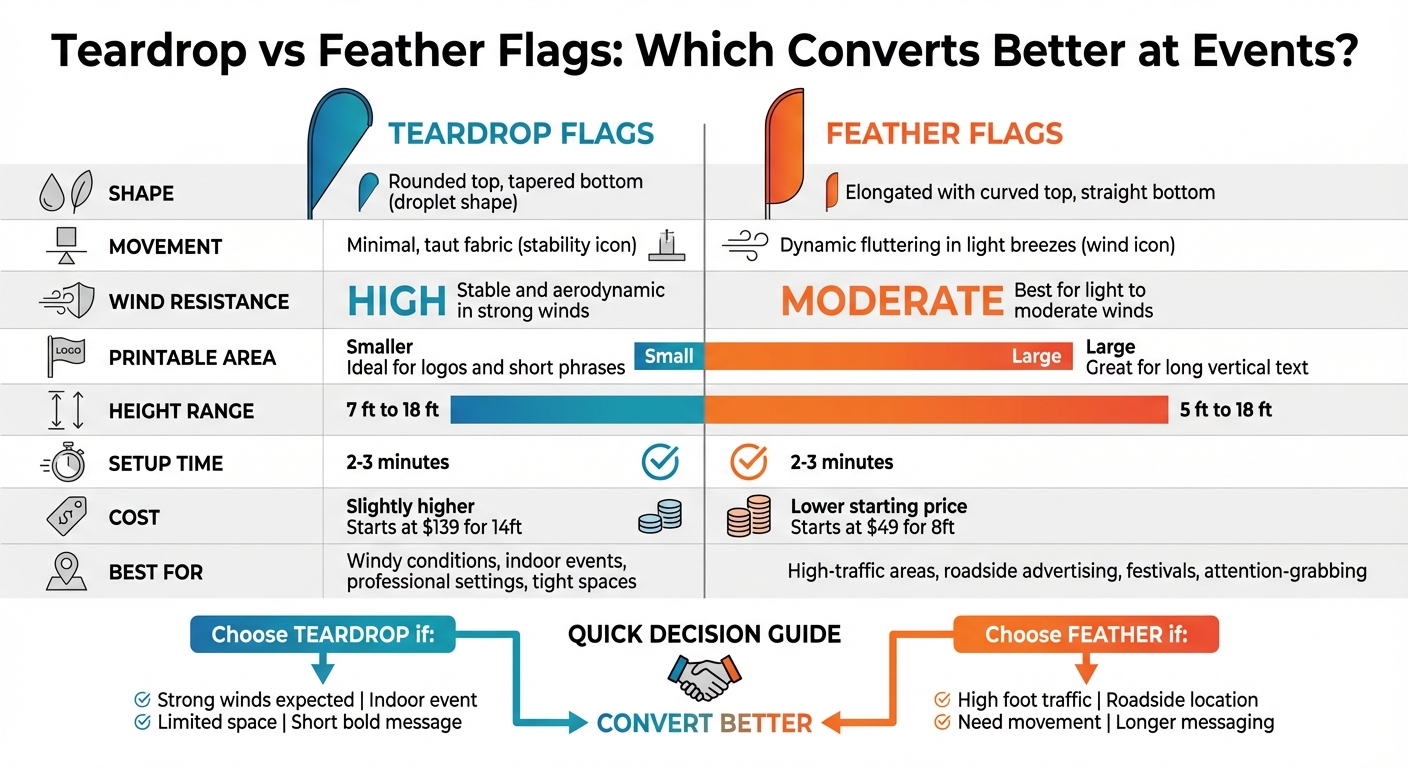
Teardrop vs Feather Flags: Complete Feature Comparison Chart
Teardrop Flags: Design and Features
Teardrop flags get their name from their droplet-like shape, featuring a rounded top that tapers to a point at the bottom. This design keeps the fabric stretched tightly along the pole, creating a smooth, wrinkle-free surface that stays steady even in breezy conditions. The result? A flag that’s always easy to read, no matter the weather.
The shape isn’t just about looks – it’s also about performance. The aerodynamic design allows wind to flow around the flag rather than pushing against it. This helps prevent the fabric from wrapping around the pole or flapping excessively. As UPrinting explains:
"Unlike regular banners, teardrop flags retain their form in strong winds. This makes them perfect for outdoor advertising at the beach, ski trail, or anywhere else windy conditions are expected."
- UPrinting
These flags come in various sizes, typically ranging from about 7.5 feet to nearly 15 feet tall. The widest part at the top naturally draws attention downward through your branding or message. They’re also quick to set up – just 2 to 3 minutes – and are built with durable materials like fiberglass rods and aluminum poles. The flags themselves are often made from 110g to 210gsm knitted polyester, offering weather resistance and durability.
Another advantage is their compact footprint, which takes up less horizontal space compared to other flag types. Plus, the taut design minimizes fabric flapping, making them quieter – a nice bonus for both indoor and outdoor use.
Benefits of Teardrop Flags
Teardrop flags shine in windy conditions. Their aerodynamic shape and consistently taut fabric make them ideal for areas with strong gusts, such as beaches, parking lots, or outdoor festivals. This stability ensures your message stays clear and readable, even when other flags might struggle.
The taut fabric also creates a polished, professional look. With no wrinkles or sagging, these flags are perfect for everything from indoor trade shows to outdoor events. The rounded top section is great for showcasing bold logos, while the tapered shape naturally guides viewers through your message.
Because the fabric stays still, teardrop flags are easy to read from a distance. Many models feature double-sided printing, which is particularly useful for events where people approach from multiple directions. In fact, about 80% of teardrop flags sold include this option, boosting visibility even further.
Their compact design makes them perfect for tight spaces, allowing you to maximize visibility without taking up too much room. This makes them especially effective in indoor settings like conference halls or retail stores, where their sleek appearance stands out.
Drawbacks of Teardrop Flags
While teardrop flags have plenty of advantages, they do come with a few limitations.
First, their tapered shape means a smaller printable area compared to feather flags. This limits the amount of text or detail you can include, making them better suited for simple, bold messages like "SALE" or "OPEN." If your design requires detailed information or multiple lines of text, the available space might feel restrictive.
Another consideration is their lack of movement in light winds. While their stability ensures readability, it also means they don’t attract attention through motion in low-wind or indoor environments. This makes thoughtful design and strategic placement even more important.
Finally, the specialized curved hardware needed for their unique shape can lead to higher upfront costs. The custom pole structure and varying widths add complexity to manufacturing, which can increase the overall price compared to other flag types.
sbb-itb-c623e60
Feather Flags: Design and Features
Feather flags are designed with a sleek, blade-like shape featuring a curved top and a straight bottom edge. Typically standing between 6 and 18 feet tall, their vertical structure makes them highly visible, even in crowded spaces. This towering design ensures they grab attention at busy events, standing out above the noise of other signage.
The free-hanging fabric adds a dynamic element, fluttering naturally in even the slightest breeze. This movement catches the eye of both drivers and pedestrians, making them an effective tool for drawing attention.
The straight vertical edge provides ample space for printing, making it ideal for vertical text like "SALE," "OPEN," or "WELCOME," as well as detailed logos and longer messages. Compared to teardrop flags, feather flags offer more room for intricate designs. Crafted from weather-resistant polyester and printed using dye-sublimation techniques, they boast vibrant, fade-resistant colors. Meanwhile, the poles – made from lightweight fiberglass or aluminum – are easy to disassemble and transport.
Feather flags also come with versatile base options to suit different surfaces. For soft ground like grass or sand, ground stakes can be driven 8 to 12 inches deep. For hard surfaces like concrete, weighted cross bases provide stability. This adaptability makes them a go-to choice for both indoor events like trade shows and outdoor settings such as roadside promotions.
Benefits of Feather Flags
One of the standout features of feather flags is their ability to grab attention through motion. The constant fluttering acts as a visual magnet, especially in crowded or visually busy environments. This makes them particularly effective for high-traffic locations like retail areas, car dealerships, and real estate displays where immediate impact is crucial.
Their tall, narrow design ensures they rise above the crowd at festivals, trade shows, and outdoor markets. For instance, a 15-foot feather flag can soar above surrounding signs, making it an excellent marker to guide people to a specific booth or storefront.
The larger printable surface also provides greater creative flexibility. Whether it’s longer messages, multiple lines of text, or detailed graphics, feather flags offer the space to bring your vision to life. For vertical layouts, text can be rotated to read from bottom to top, fully utilizing the elongated design.
Drawbacks of Feather Flags
While feather flags have plenty of strengths, they do come with a few challenges.
Their fluttering movement, while eye-catching, can become problematic in strong winds. Excessive motion may obscure the printed message and cause the fabric to wear out faster. In gusty conditions, the flag might wrap around the pole or become unreadable, defeating its purpose at a key event.
The curved top of the flag also limits usable graphic space. High-placed elements risk being distorted or cut off, so it’s best to position critical information toward the center or lower sections for better visibility.
Stability can also be an issue if the base isn’t properly weighted. On hard surfaces like concrete, feather flags require weighted cross bases or water bags to prevent tipping, adding extra setup considerations. On soft ground, ground stakes work well, but they still need to be secured deeply enough to handle wind.
Finally, the constant fluttering creates friction over time, leading to wear and tear. Regularly inspect the edges for fraying to ensure your flag maintains a polished, professional look.
Teardrop vs Feather Flags: Direct Comparison
This comparison breaks down the important differences between teardrop and feather flags, helping you decide which option fits your event needs. Both styles are easy to set up and highly portable, but they perform differently when it comes to visibility, stability, and overall effectiveness.
The shape of the flags plays a major role in how they behave. Custom feather flags have a long, curved-top design that flutters even in light winds, creating movement that grabs attention. On the other hand, teardrop flags have a rounded top that tapers to a point, staying taut and ensuring the message stays clear, even in windy conditions.
"Feather flags offer more branding space and height for maximum visibility, while teardrop flags provide better stability and consistent readability in changing weather conditions." – John Leatherbarrow, Signs and Graphics Expert, Banner World
Here’s a side-by-side look at the key features:
| Feature | Feather Flags | Teardrop Flags |
|---|---|---|
| Shape | Elongated with a curved top | Rounded top, tapered bottom (droplet shape) |
| Movement | Dynamic fluttering in light breezes | Taut with minimal movement |
| Wind Resistance | Moderate; best for light to moderate winds | High; stable and aerodynamic in strong winds |
| Printable Area | Large; great for long vertical text | Smaller; ideal for logos and short phrases |
| Portability | Lightweight; sets up in 2–3 minutes | Lightweight; sets up in 2–3 minutes |
| Cost | Starts at $44 | Slightly higher due to tensioned poles |
| Available Sizes | 5 feet to 18 feet | 7 feet to 18 feet |
These distinctions highlight how each flag type can impact visibility and engagement at your event, depending on your specific goals and conditions.
Visibility and Engagement at Events
What Affects Visibility
When it comes to event flags, visibility is shaped by a few key physical factors. Height is one of the most important – flags that tower over crowds and competing signage are much easier to spot. Feather flags, for example, can stretch as high as 17–18 feet, while teardrop flags typically range from 7.5 to nearly 18 feet tall.
Movement also plays a major role, but its impact varies depending on the setting. Feather flags are designed to flutter naturally in light breezes, creating motion that grabs the attention of both pedestrians and drivers. This makes them especially effective along roadsides or outside storefronts. On the other hand, teardrop flags are built for stability. Their aerodynamic shape keeps the fabric taut and stationary, ensuring your message stays clear and readable even in windy conditions – perfect for open fields or beachside events.
Finally, color contrast and placement are just as important as the flag’s design. High-contrast colors make your message stand out from a distance, while proper placement – using ground spikes on soft surfaces or weighted bases on hard ones – keeps the flag stable and visible.
Together, these factors determine how well each flag type performs in different settings.
How Each Flag Type Drives Engagement
Visibility and engagement go hand in hand, and different flag types bring their own strengths to the table when it comes to capturing attention.
Feather flags are all about grabbing attention right away. Their height and natural fluttering motion make them hard to miss, especially in busy areas like sidewalks, storefronts, or car lots. Plus, their large vertical design allows for more text, making them ideal for messages like "GRAND OPENING" or "WELCOME" that need to be seen and understood quickly.
"Feather flags deliver energetic movement and tall visibility, while teardrop banners offer stability and elegance." – Diana Rueda, Senior E-Commerce Specialist, Lush Banners
Teardrop flags, on the other hand, focus on consistent readability. Thanks to their taut fabric, your branding stays sharp and legible even in environments with no wind, such as indoor events or calm outdoor settings. This makes them a great choice for trade shows or conferences, where clarity is key. Their compact design works best with bold logos or short phrases like "SALE", ensuring they’re easy to read from any angle. Double-sided printing is another advantage, as it ensures your message is visible from both sides without any mirrored text.
Each flag type has its own way of engaging audiences, making it easier to tailor your approach based on the specific needs of your event.
Conversion Performance and Metrics
While visibility is crucial, the true measure of success lies in conversion metrics. Simply put, the effectiveness of event flags hinges on their ability to drive tangible results, whether that’s drawing more people to your booth or boosting sales.
Example Scenarios
Feather flags excel at grabbing attention in high-traffic areas. Their height and fluttering motion naturally catch the eye of passing drivers, creating a sense of urgency. This makes them perfect for storefronts, car dealerships, or grand openings where the goal is to turn drive-by traffic into walk-ins. Their tall, vertical design provides ample space for bold, action-driven messages like "SALE", "NOW OPEN", or "REGISTER HERE", encouraging immediate responses.
Teardrop flags, on the other hand, prioritize brand clarity and professionalism. Their design ensures your logo and message stay crisp and readable, no matter the conditions. This reliability builds trust, especially at trade shows or corporate events where a polished appearance is essential. Plus, double-sided printing ensures your message is visible from every angle, avoiding the mirrored text issue often seen with single-sided designs.
"Feather flags give off a bold and dynamic vibe, perfect for businesses or events that want to make a big impression from a distance. On the other hand, teardrop flags offer a more refined, sleek appearance that can work wonders in tight spaces or more upscale environments." – Dave the Printer
To measure how well these flags drive conversions, focus on specific performance metrics.
Metrics to Track Performance
Start by tracking foot traffic. Monitor how many people visit your booth or enter your space during the event compared to baseline numbers when no flags are used. This helps determine the direct impact of your flag display.
Sales data is another critical metric. Look for patterns in revenue during the flag’s use and ask customers how they found you. Simple questions at checkout can reveal whether the flag influenced their decision. For a more tech-savvy approach, include QR codes or unique URLs on your flags to track online engagement generated by their presence.
Lastly, consider durability as part of your conversion analysis. A flag that fades or tears during an event can harm your brand’s image and waste your investment. Opt for polyester flags with UV-resistant inks to maintain vibrant colors throughout. Evaluating the flag’s lifespan and calculating its cost-per-impression can help you understand its long-term return on investment (ROI).
Best Event Types for Each Flag
Choosing the right flag for your event can make a big difference in how your message is received. Each flag type has unique strengths that suit different environments and objectives, helping you maximize visibility and impact.
When to Use Teardrop Flags
Teardrop flags shine in windy outdoor settings. Their aerodynamic design keeps them stable in gusty conditions, making them ideal for beaches, open fields, and coastal areas. Sports venues, in particular, benefit from their ability to stay upright and readable, even during outdoor games.
They’re also a smart choice for indoor events with limited space. In settings like trade shows, conference halls, or exhibitions, their compact shape (typically 7 to 18 feet tall) fits neatly without crowding the area. The taut fabric ensures a polished look, even without wind, making them a favorite for corporate events or professional gatherings where a sleek, modern aesthetic is key.
For high-traffic retail spots – think storefronts or car dealerships – teardrop flags are incredibly effective. Their double-sided printing ensures visibility from multiple angles, and their durable design reduces wear and tear, even in demanding environments. They’re perfect for guiding foot traffic while maintaining a professional appearance.
However, if you’re looking for a taller, more dynamic option, another flag style might be better suited.
When to Use Feather Flags
Feather flags are perfect for roadside advertising and busy retail locations. With heights reaching up to 17 feet, they’re hard to miss. Their fluttering motion naturally grabs attention from both drivers and pedestrians, making them a go-to for car dealerships, real estate open houses, and grand openings.
In crowded venues like festivals or large exhibitions, feather flags stand out by towering above the crowd. Their larger vertical printable area is ideal for longer messages like "GRAND OPENING" or "SEASONAL SALE", allowing you to communicate more without compromising readability. This makes them great for events where detailed messaging is needed.
Feather flags also perform well in low-wind conditions. Unlike teardrop flags, they don’t rely on tension to stay open, so even a light breeze can create movement that draws attention. They’re especially effective for temporary promotions or campaigns where you need to quickly capture interest and drive foot traffic.
Peak Banner Recommendations for Event Success
Peak Banner’s custom teardrop and feather flags are designed to stand out in event settings, ensuring your brand gets noticed. With these well-crafted flags, Peak Banner offers solutions tailored to meet the specific needs of any event.
Why Choose Peak Banner for Custom Flags?
Peak Banner handles all production in-house, ensuring top-notch quality control and quick turnaround times. Their pricing is competitive, with custom feather flags starting at $49.00 for 8-foot displays, and 14-foot teardrop flags beginning at $139.00.
These flags are made from durable, commercial-grade polyester fabric and printed using dye-sublimation techniques that resist fading, even with extended outdoor use. Plus, they back their feather flag poles with a lifetime warranty, giving you peace of mind. To top it off, they offer free professional design services, including adjustments to your logo, so your flags come out looking flawless.
"Peak Banner was able to rework our logo to be clear for no extra charge! Will def use Peak again for the future." – Verified Customer, Peak Banner
Customers frequently rave about the vibrant colors and sturdy materials. One review says it all:
"The flags I ordered were perfect for my business’s promotional needs. The fabric is durable and the colors are incredibly vibrant." – Verified Customer, Peak Banner
These standout features not only enhance the visual appeal of your display but also help drive engagement and conversions at events.
For those hosting events requiring a mix of display types – like tents, table covers, and flags – bundle deals are available starting at around $795.00, giving you more value for your budget.
How to Order Your Event Flags
Getting started is simple: send Peak Banner your logo files to receive a free mockup and pricing details. Their team will help position your artwork on templates and provide proofs for your approval before production begins. Once approved, they’ll handle the manufacturing process and keep you updated along the way.
If you’re planning for a high-traffic event, consider double-sided printing. Peak Banner uses two fabric layers with a block-out liner to ensure your message is clear from all angles, with no see-through issues. Each flag kit is designed for convenience, assembling in just 2–3 minutes and including a compact carrying bag.
Need your flags in a hurry? Let them know your event date upfront – Peak Banner is known for handling rush orders with ease.
FAQs
Which flag works best for my event location?
When choosing a flag, it’s all about matching it to your event’s setting and visibility requirements. Teardrop flags work great in windy outdoor spaces because their design keeps them steady and easy to read. On the other hand, feather flags shine in indoor or sheltered areas, where their taller structure and slight movement naturally grab attention. Think about the wind conditions and what you want to achieve with your display to pick the right fit.
How do I design a message that’s readable from far away?
To make sure your message is easy to read from a distance, stick with bold, simple text and focus on creating a strong contrast between the font and the background. Use large font sizes – a good rule of thumb is that each inch of letter height can be read from about 10 feet away. Keep your text short and to the point, ideally 1–3 words, and avoid any unnecessary clutter.
For better visibility, especially in outdoor settings, choose contrasting color combinations like blue and yellow or red and white. These choices help grab attention and ensure your message is quickly understood.
What base should I use on grass, sand, or concrete?
For grass or sand surfaces, use weighted bases or ground stakes like anchors or sandbags to keep your flags stable. On concrete, opt for a heavy or weighted base – something filled with water or concrete works well – to prevent tipping. Choosing the proper base ensures your flags remain steady and noticeable, no matter the surface.