









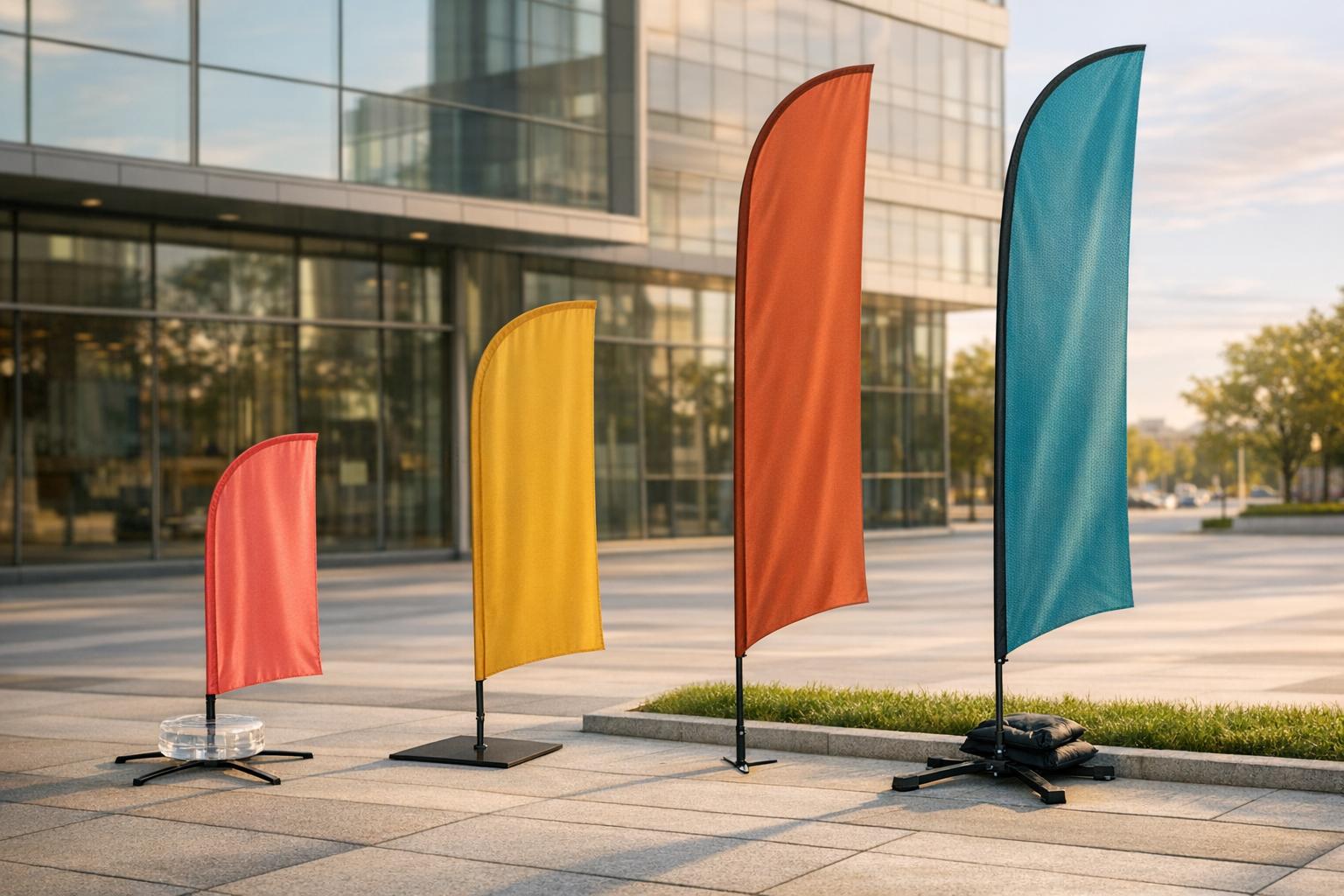
Custom feather flags are an effective way to grab attention for your business. Whether you’re advertising at a trade show, storefront, or outdoor event, choosing the right size, base, and fabric is key to maximizing their impact. Here’s a quick guide:
- Sizes: Flags range from 6 to 17 feet tall. Smaller sizes work well indoors or in tight spaces, while larger flags are best for outdoor visibility near roads or open areas.
- Bases: Options include ground stakes for soft surfaces, cross bases for hard floors, and water bags or square bases for added stability in windy conditions.
- Fabric: Standard polyester is durable for most uses, while premium polyester offers richer colors and lasts longer. Mesh polyester is ideal for windy locations. Single-sided printing is cost-effective, but double-sided printing ensures clear messaging from all angles.
Match these factors to your event needs for the best results. For example, an 8-foot flag with a cross base suits indoor trade shows, while a 15-foot flag with a ground stake is perfect for roadside promotions.
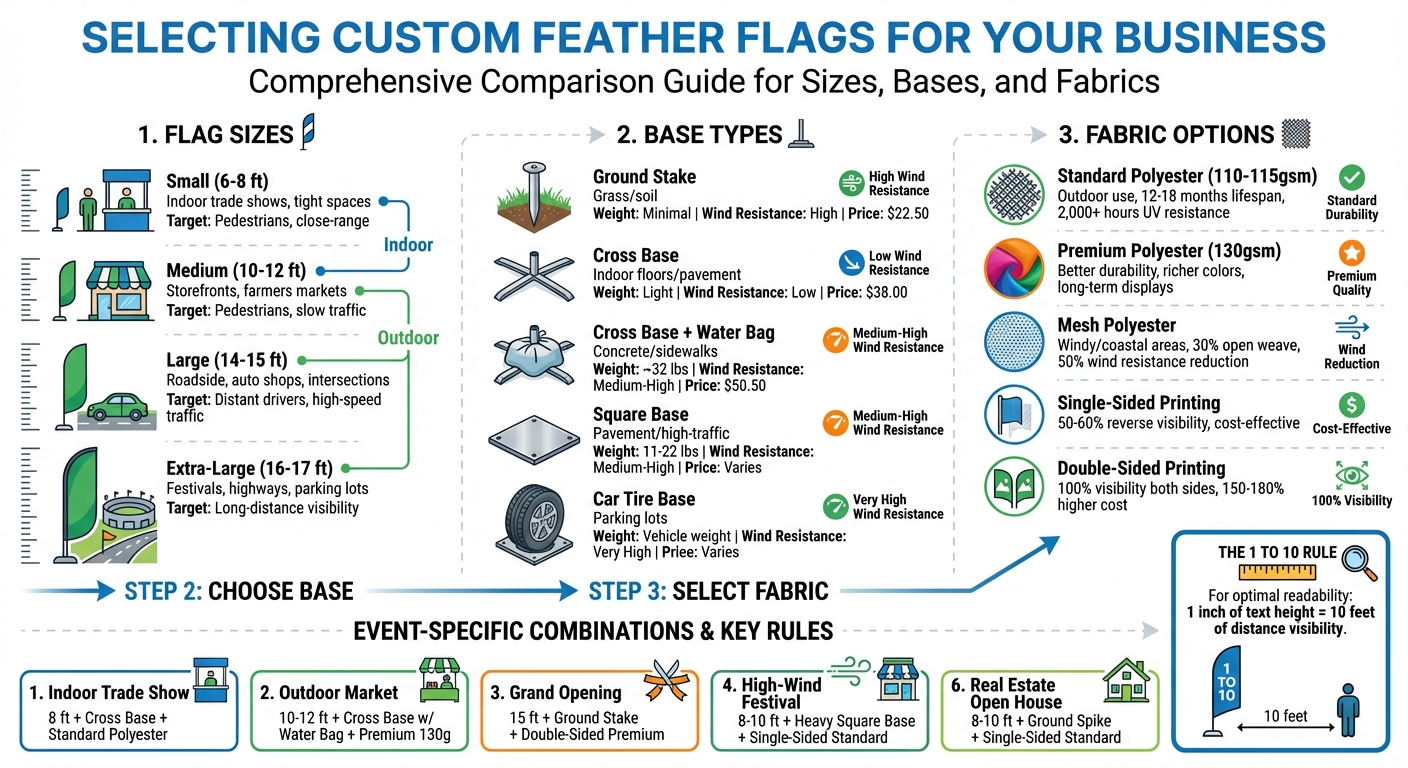
Feather Flag Selection Guide: Size, Base, and Fabric Combinations for Different Events
How to Choose the Right Flag Size
Selecting the right flag size is crucial to ensure it stands out and serves its purpose effectively, whether indoors or outdoors.
Common Feather Flag Sizes
Feather flags come in four general size categories, each suited for different scenarios:
- Small flags (6–8 feet): Perfect for indoor spaces like trade show booths or real estate open houses where height is limited.
- Medium flags (10–12 feet): A versatile choice for small businesses, these work well for storefronts, farmers markets, and local parades, offering visibility without overwhelming smaller spaces.
- Large flags (14–15 feet): Designed for outdoor use, these are great for car dealerships, grand openings, or intersections, as they grab attention from a distance.
- Extra-large flags (16–17 feet): Ideal for festivals, concerts, or locations near highways, these flags ensure maximum visibility across wide-open areas.
Keep in mind that the pole height exceeds the flag height. For example, a 12-foot flag typically uses a 15-foot pole to maintain proper tension and movement.
What to Consider When Choosing Flag Size
Once you know the size options, consider these factors to find the best fit for your needs:
Viewing distance is the most critical factor. Use the "1 to 10 Rule" – 1 inch of text height equals 10 feet of readability. For example, a 10-inch letter can be read from 100 feet away. Roadside flags targeting drivers should use lettering between 20–36 inches and keep messages concise, ideally under five words, to ensure readability on flags 13.5–17 feet tall.
Indoor vs. outdoor settings also influence your choice. Indoors, flags are usually limited to 8 feet due to ceiling heights and fixtures, so measure your space carefully. Outdoors, taller flags (12 feet or more) are more effective for standing out in larger areas. Be aware of local regulations, as some cities or HOAs may restrict flag heights.
Portability is another consideration. If you’re moving frequently, such as for real estate showings or mobile vending, smaller flags (6–8 feet) are easier to transport and set up. Larger flags, while more visible, require sturdier bases and more effort to handle.
| Flag Size | Best Use Case | Visibility Target |
|---|---|---|
| 6–8 feet | Indoor trade shows, sidewalk setups, tight spaces | Pedestrians and close-range viewing |
| 10–12 feet | Storefronts, coffee shops, farmers markets | Pedestrians and slow-moving traffic |
| 14–15 feet | Roadside advertising, auto shops, busy intersections | Distant drivers and high-speed traffic |
| 16–17 feet | Festivals, large parking lots, maximum visibility events | Long-distance visibility |
Up next, we’ll dive into how to choose the right base to keep your flag stable and secure.
sbb-itb-c623e60
How to Select the Right Base for Stability
Choosing the right base is key to keeping your feather flag secure and effective. Whether you’re setting up on soft grass, hard pavement, or smooth indoor floors, the right base ensures your flag stays put and performs as intended.
Types of Feather Flag Bases
- Ground stakes are perfect for soft surfaces like grass, soil, or sand. These zinc-coated steel stakes cost $22.50 and provide reliable stability. For windy conditions, screw-in ground spikes offer deeper anchoring.
- Cross bases (also called X-bases) are lightweight, foldable, and designed for flat, hard surfaces. Priced at $38.00, they’re ideal for indoor events, such as trade shows or mall displays. For outdoor use, they need extra weight to prevent tipping in moderate winds.
- Water bags are a practical add-on for outdoor setups. When paired with a cross base, a filled water bag adds 23 lbs of weight, bringing the total to about 32 lbs for better wind resistance on concrete or pavement. The combo costs $50.50, while the water bag alone is $12.50.
- Square bases are heavy metal plates, typically made from powder-coated iron to resist rust. These bases offer a polished look and are great for long-term displays. They also reduce tripping hazards in busy areas. Available in three weights – 11 lbs, 15 lbs, and 22 lbs – they’re suited for flags of various sizes.
- Specialized bases include car tire bases, wall mounts, tent leg brackets, and table clamps. Car tire bases use your vehicle’s weight for stability, while wall mounts and tent leg brackets are perfect for vertical surfaces or pop-up canopies. Table clamps work well for smaller flags in limited spaces.
Many of these bases feature dual-sealed ball bearing mounts, allowing your flag to swivel 360°, which prevents fabric from wrapping around the pole.
| Base Type | Best Surface | Weight | Wind Resistance | Price |
|---|---|---|---|---|
| Ground Stake | Grass, dirt, soil | Minimal | High | $22.50 |
| Cross Base | Indoor floors, pavement | Light | Low (unless weighted) | $38.00 |
| Cross Base + Water Bag | Concrete, sidewalks | ~32 lbs | Medium-High | $50.50 |
| Square Base | Pavement, high-traffic areas | 11–22 lbs | Medium-High | Varies |
| Car Tire Base | Parking lots, car shows | Vehicle weight | Very High | Varies |
How to Match Bases to Your Event
For grass or soft soil, ground stakes are a reliable choice. If you’re setting up in windy conditions or for a longer duration, consider upgrading to a screw-in spike for added security.
On pavement or concrete, a cross base paired with a water bag is a practical option. Transport the base and empty water bag separately, then fill the bag with water at your location for 32 lbs of stability. This setup is both portable and effective.
For indoor high-traffic areas, like retail entrances or convention centers, a square base or a cross base with a water bag is ideal. The added weight keeps your flag stable, while square bases minimize tripping risks.
In windy outdoor conditions on hard surfaces, opt for a heavy-duty water base or a square base. A standard cross base without extra weight won’t hold up. If you’re using a cross base on compacted dirt, secure it further with tent pegs through its pre-drilled holes.
When it comes to pop-up canopies at festivals or markets, tent leg brackets are a simple way to attach flags securely to the canopy’s frame.
For automotive displays, car tire bases are a smart solution. They use the weight of your vehicle for stability, making them perfect for car shows, parking lots, or mobile businesses like dealerships.
How to Choose the Right Fabric and Printing Options
Your choice of fabric and printing method plays a big role in how durable your flag is and how vibrant your branding looks, especially when exposed to outdoor conditions.
Fabric Options for Feather Flags
Standard polyester (110gsm to 115gsm) is the go-to material for outdoor feather flags. It’s lightweight yet tough enough to handle wind and rain without tearing. High-quality 115gsm polyester can endure over 2,000 hours of direct sunlight, as tested under ASTM G155 UV standards. This makes it a reliable option for outdoor use, typically lasting 12 to 18 months with regular exposure.
Premium polyester (130gsm) is a heavier material that offers better durability and richer color saturation. It’s perfect for long-term displays or high-traffic areas where maintaining a polished, professional look is essential.
For windy or coastal areas, mesh polyester is an excellent choice. Its 30% open weave reduces wind resistance by 50% compared to solid fabrics, minimizing stress on the flagpole and preventing the flag from getting tangled during strong gusts.
Once you’ve picked the fabric, the next step is selecting the best printing method to bring your design to life.
Single-Sided vs. Double-Sided Printing
Single-sided printing applies the design to one side, with a faint reverse image visible on the back. This method provides 50% to 60% visibility on the reverse side and works best with bold, dark colors like reds, blacks, and blues. Light colors may appear washed out when viewed from the back.
"Single-sided flags are more translucent, which lets the flag design (and sunlight) shine through, while our more opaque, double-sided flags offer richer color saturation." – VistaPrint
Double-sided printing involves stitching two fabric layers together with a blockout liner in between. This prevents any see-through effect and allows for different designs on each side. While double-sided flags cost 150%–180% more and require stronger winds to fly due to their added weight, they provide 100% visibility on both sides. This makes them ideal for designs with text or dual messages.
Opt for single-sided printing if you’re working with a simple logo, using high-contrast colors, or need a cost-effective option. Double-sided printing is better for designs with important text that shouldn’t appear mirrored or for communicating different messages to traffic approaching from opposite directions.
Dye Sublimation Printing for Long-Lasting Results
For a vibrant, durable finish, consider dye sublimation printing. This advanced method ensures your flag’s colors stay bold and resistant to fading.
"Dye sublimation printing is a specialised process that embeds ink directly into the fabric of your feather flags. This ensures that the colours are bold, fade-resistant, and long-lasting, even after exposure to outdoor elements like wind and rain." – Sailflags
Dye sublimation works by using heat and pressure to transfer ink from paper to polyester fabric. The ink bonds at a molecular level, penetrating the fibers rather than sitting on the surface. This results in vibrant, fade-resistant colors that won’t crack or peel, even in challenging weather. Plus, it’s an eco-friendly option, using non-toxic inks and generating minimal waste during production.
For the longest lifespan, bring your feather flags indoors when they’re not in use. When designing your artwork, include a bleed area to ensure no white edges or gaps appear during production.
Choosing the right fabric and printing process ensures your feather flag stands out while withstanding the test of time outdoors.
How to Combine Size, Base, and Fabric for Different Events
Now that we’ve covered the basics of flag size, base options, and fabric types, it’s time to explore how these elements work together for various event applications. The trick is to consider three main factors: the available space, the surface you’ll set up on, and the weather conditions you’ll encounter.
Examples of Effective Combinations
For indoor trade shows, an 8 ft flag with a cross base and standard polyester is a smart choice. This size avoids issues with ceiling height or light fixtures, while the cross base provides stability on carpeted floors. Plus, it’s lightweight and easy to transport, making it perfect for busy event setups.
When setting up at outdoor markets on hard surfaces, stability is key. A 10 ft to 12 ft flag with a cross base and a water-filled weight bag ensures your display stays put. Pair this with premium 130g polyester fabric, which can handle light rain and wind, and you’ve got a reliable setup that’s portable and weather-ready.
For grand openings or roadside displays, visibility is everything. A 15 ft flag mounted on a ground stake grabs attention from passing drivers. Double-sided premium polyester ensures your message reads correctly from all angles, but keep in mind that this option costs 40% to 60% more than single-sided flags. The ground stake provides excellent anchoring, even in windy conditions.
At high-wind festivals, medium-sized flags (8–10 ft) are ideal. Use a heavy square base with single-sided standard fabric to minimize wind drag. The lighter fabric reduces stress on the pole, while the lower height helps prevent toppling in gusty weather.
Here’s a quick breakdown of these combinations:
Comparison Table of Combinations
| Event Type | Flag Size | Base Type | Fabric Type | Notes |
|---|---|---|---|---|
| Indoor Trade Show | 8 ft | Cross Base | Standard Polyester | Fits under ceilings; easy to transport |
| Outdoor Market | 10-12 ft | Cross Base w/ Water Bag | Premium 130g Polyester | Stable on concrete; weather-resistant |
| Grand Opening | 15 ft | Ground Stake | Double-Sided Premium | Maximum visibility for passing traffic |
| High-Wind Festival | 8-10 ft | Heavy Square Base | Single-Sided Standard | Reduced drag prevents tearing |
| Long-Term Storefront | 12-15 ft | Square Base or Heavy Plate | Double-Sided w/ Liner | Built for 24/7 outdoor exposure |
| Real Estate Open House | 8-10 ft | Ground Spike | Single-Sided Standard | Quick setup; fits in car trunk |
Conclusion
When selecting a feather flag, keep three key factors in mind: height, base stability, and fabric durability. For indoor events like trade shows, an 8-foot flag works well within ceiling limits, while a taller 14 or 15-foot flag is ideal for grabbing attention in roadside advertising. The base is just as important – choose a ground stake for grassy areas or a cross base with water bags for hard surfaces to ensure your flag stays upright and secure.
Fabric quality plays a major role in how long your flag lasts. While standard polyester is suitable for many uses, premium 130g knit polyester offers better resistance to fading and tearing, maintaining vibrant colors for 12 to 18 months outdoors. If you need visibility from both sides, double-sided printing with a blockout layer is a smart choice, especially in busy, high-traffic areas.
Match your flag to your specific event needs. For instance, an 8–10-foot flag with a ground spike is perfect for real estate open houses due to its portability. Meanwhile, a 12–15-foot double-sided flag on a sturdy base is better suited for long-term outdoor use, such as storefront advertising. Peak Banner offers custom feather flags starting at $49, featuring reinforced fiberglass poles, high-quality fabric options, and free design support to ensure you get exactly what you need.
Here’s what a satisfied customer had to say:
"Our flags had great quality – thick poles and the print was vibrant on a durable flag material. So much value for the low price we paid." – Ron S.
With production times as quick as 2 to 5 business days and a perfect 5.0-star rating from customers, Peak Banner combines quality, speed, and affordability for both single orders and bulk purchases.
FAQs
How many feather flags do I need for my location?
The number of feather flags you’ll need hinges on factors like your space, visibility goals, and the type of event you’re hosting. For smaller indoor spaces, 1–2 flags can draw attention effectively without making the area feel cluttered. On the other hand, larger outdoor venues or busy events might benefit from 3–5 flags, strategically positioned at key spots such as entrances or along walkways. Take a moment to evaluate your space, consider the viewing angles, and think about your branding objectives to create a setup that leaves a strong impression.
What wind speed is too high for a feather flag setup?
Feather flags are not designed to withstand wind speeds above 18-25 mph, which corresponds to Force 4-5 on the Beaufort scale. Exposing them to stronger winds can lead to damage to both the flags and their supporting hardware. Be sure to check local weather conditions regularly to keep your setup in good condition.
What file type should I use for my flag artwork?
When creating flag artwork, stick to vector file formats such as .eps, .ai, or .pdf. These formats maintain high-quality resolution and allow your design to scale perfectly, ensuring it looks crisp and polished no matter the size.